Ram TRX Suspension Upgrades: What Actually Changes and What to Skip
The TRX ships with a desert-tuned suspension built for speed over rough terrain, so most owners don't need to touch it right away. This guide walks through when an upgrade is worth it, what it changes, and what it doesn't.
Gear in this article
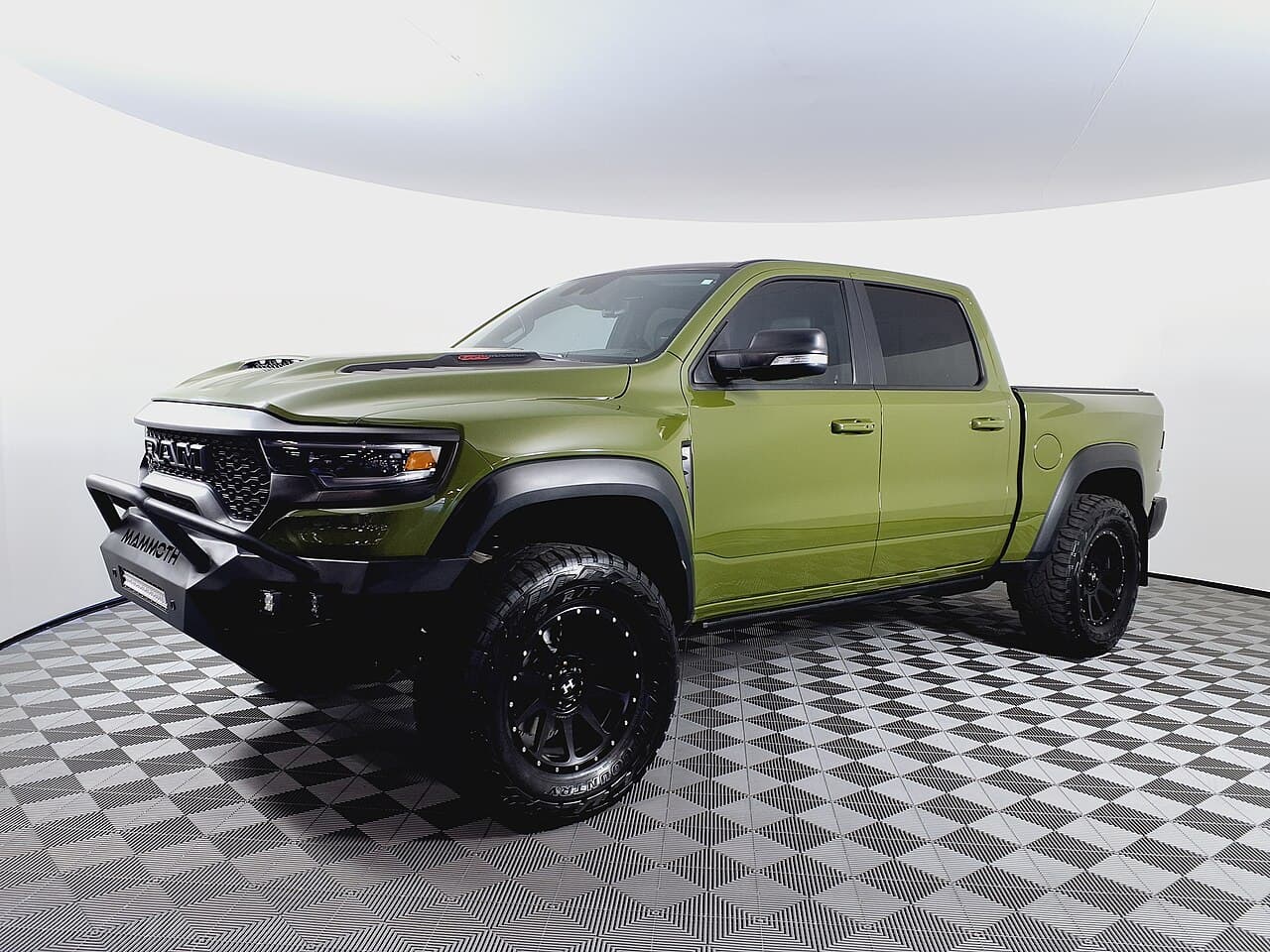
Most 2021-2024 Ram 1500 TRX owners do not need to touch the suspension to get what the truck was built to do. The factory setup is tuned for high-speed travel over rough terrain, not for looking a certain height in a parking lot, and the upgrades worth paying for solve specific problems: bigger tires, heavier front-end accessories, high-speed durability beyond what most owners will ever ask of it, or a ride that is too stiff or too soft for how you actually use the truck. If none of those describe you, the stock suspension is already doing its job.
This guide breaks down the three categories of suspension work people do to a TRX, what each one actually changes, and where the money stops being worth it.
What the factory suspension is actually built for
The TRX, across both the 2021-2024 generation and the new 2027 Ram SRT TRX, ships with a long-travel, high-speed-oriented suspension from the factory. That much is well established and is the whole reason the truck exists as a category. Beyond that broad description, we are going to stay hedged on purpose: exact wheel travel figures, damper internals, and spring rates vary by source and by model year, and a wrong number printed with confidence does more damage than no number at all. If you need the exact travel spec for your build, pull it from Ram's own documentation for your model year or ask a suspension shop that works on TRX trucks daily, not a forum post.
What matters for this guide is the intent behind the factory tune: it is set up to absorb big hits at speed, not to minimize body roll in a corner or to sit at a specific ride height. That tradeoff is also why most owners who buy a TRX for what it is, rather than for what they plan to make it, never feel a need to change it. For more on what that factory setup is actually good for versus where it runs out of room, see our breakdown of what the desert-tuned suspension is actually good for.
The 2027 SRT TRX has been in customer hands for a few weeks as of this writing. There is no aftermarket suspension track record for it yet, no long-term ride-quality consensus, and nothing worth reporting as a "known issue." Anything written about modding that truck's suspension right now is speculation dressed as advice. Treat it that way.
Leveling kit, lift kit, or shocks: what each one actually does
These three get lumped together by owners and sometimes by shops, but they solve different problems.
A leveling kit raises the front of the truck a small amount, usually to match a rear end that already sits higher from the factory rake. It does not add meaningful wheel travel and it does not change how the suspension absorbs impacts. It is a cosmetic and tire-clearance fix, most often bought by someone who wants to run a slightly larger tire without rubbing, or who just does not like the factory nose-down stance. Coilover spacer kits, like the ICON coilover spacer kit for the TRX and RHO, fall into this category: they raise ride height without replacing the damper itself.
A full lift kit replaces more of the suspension, including control arms in some kits, to gain real ride height and clear larger tires than a spacer alone allows. This is the right call for an owner planning to run a noticeably larger tire than stock and who wants the geometry corrected properly rather than just propped up. It is also the most expensive and most labor-intensive of the three paths, and it is where a bad install shows up fastest as uneven tire wear or clunking over bumps.
Shock and tuning upgrades leave ride height mostly alone and instead replace or re-valve the dampers themselves, sometimes with remote reservoirs or adjustable compression and rebound. This is the path for an owner who runs the truck hard at speed off-road and wants the suspension to hold up to repeated big hits without fading or overheating, or who wants to dial in ride quality for towing versus desert running. Packages built around aftermarket shocks, like the King Shocks complete package built for the TRX, sit here, as does a rear-specific option like the Foutz adjustable rear suspension kit for TRX and RHO for owners who want rear-end adjustability without a full kit.
Which one fits which owner
| Goal | Right upgrade | Who it is for |
|---|---|---|
| Fix a nose-down stance, minor tire clearance | Leveling kit / coilover spacer | Owner on stock-to-mild tire sizing, cosmetic priority |
| Run noticeably larger tires, correct geometry | Full lift kit | Owner building for off-road use with real tire growth |
| High-speed durability, dial in ride feel | Shock/tuning upgrade | Owner running trails or desert at speed regularly, or towing often |
If you are not sure which column you fall into, you probably fall into none of them yet, and that is a legitimate answer.
Check this before you touch anything
Before buying any of the above, read which TRX mods actually void your warranty and which don't. Suspension work is one of the most common places owners accidentally step outside factory coverage, and the rules are not the same for a bolt-on spacer as they are for a kit that replaces control arms and alters geometry. A dealer can deny a claim on a part the modification affected, even under the federal protections that are supposed to limit that. Know where that line is for your specific kit before you order it, not after a claim gets denied.
Suspension changes do not happen in isolation from tires
Any lift or leveling change almost always travels with a tire size change, and getting that pairing wrong is the single most common mistake we see in build threads. Fender clearance, gearing, speedometer accuracy, and factory ABS calibration all shift with tire diameter. Work through tires and lift options sized correctly for a TRX before you order either piece separately, and if wheels are part of the plan, something like the Method MR707 wheel built for the TRX is a common pairing worth checking against your intended tire diameter and offset.
What this actually costs
We are not going to hand you a shop-specific price because it swings too hard by region and by whether you are paying for parts only or parts plus a full install with alignment. In broad terms: a leveling kit or spacer sits at the low end of the budget, a shock or damper upgrade is a mid-range spend once labor is included, and a full lift kit with control arms and an alignment lands at the high end of what people spend on TRX suspension work short of a full off-road race build. Get a shop quote in hours of labor, not just a parts total, before you commit.
The alternative: buy one already built
If the number for a full lift-and-shock build is making you wince, it is worth asking whether someone has already done that work and priced it into a used truck. A tuned or already-lifted TRX on the used market can sometimes come in close to what a stock truck plus the build would cost you, minus the wait and the install risk. We cover that math directly in is a tuned Ram TRX worth buying used, which is worth reading before you spend four figures modifying a truck you could buy already modified.
The short version
- The factory TRX suspension is already tuned for high-speed off-road use; most owners do not need to upgrade it, and exact travel specs should come from Ram documentation or a specialist, not a forum thread.
- A leveling kit fixes stance and minor clearance, a full lift kit corrects geometry for real tire growth, and shock/tuning upgrades improve durability and ride feel without changing height much.
- Check the warranty impact before ordering anything, size tires correctly alongside any lift, and price a used tuned truck against a full build before committing to either one.