Ram TRX Off-Road Capability: What the Desert-Tuned Suspension Is Actually Good For
The TRX is built for high-speed desert running, not technical rock crawling, and that distinction decides whether it's the right truck for a given buyer. Here's what that capability actually means in practice and who doesn't need it.
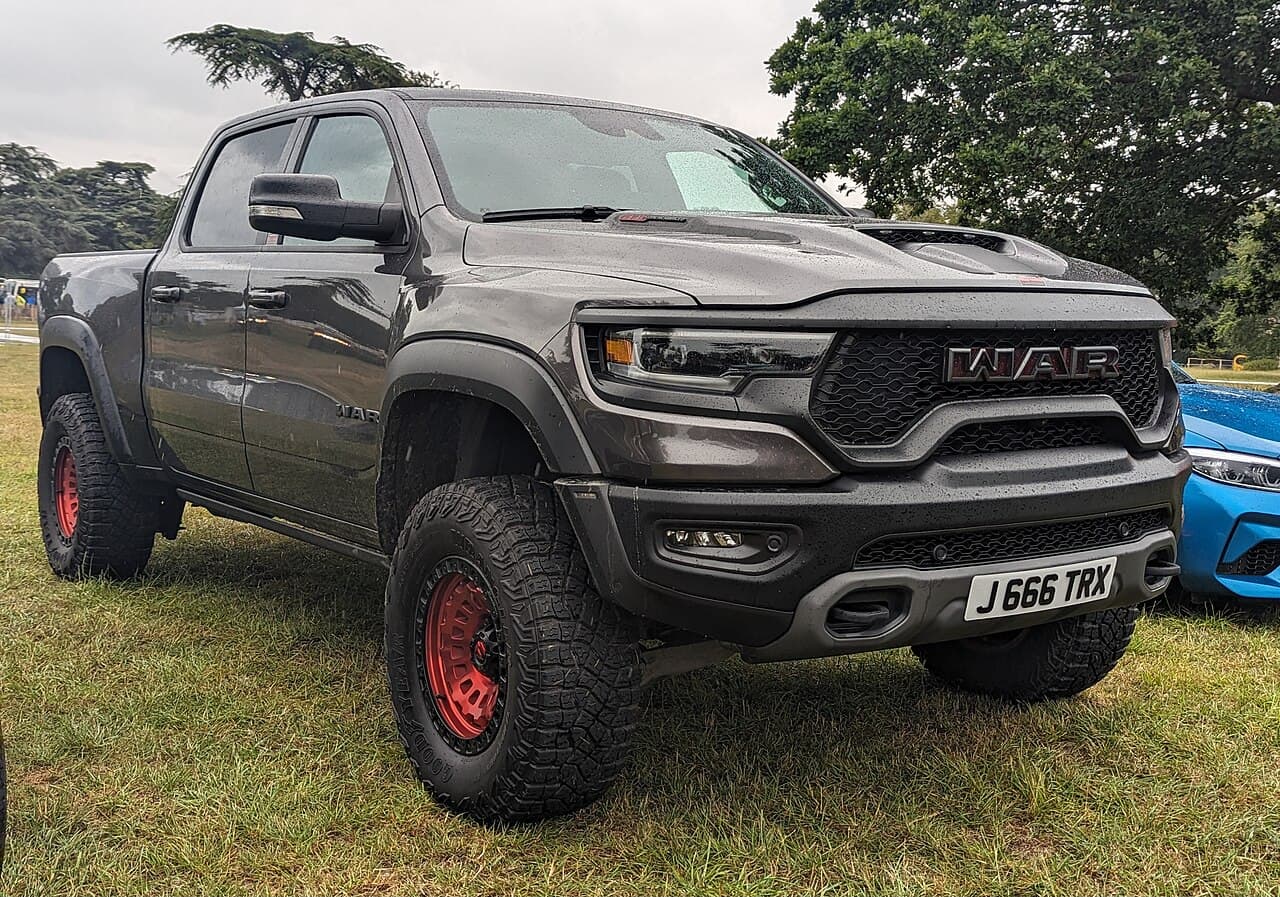
The Ram 1500 TRX was built to run fast across open desert, not to crawl slowly over rock ledges. That single design choice, long-travel suspension tuned for speed over washboard and whoops rather than articulation at a crawl, decides whether this is the right truck for a given buyer more than horsepower or price ever will. If your off-roading means Moab-style rock trails, a TRX is the wrong tool. If it means running a fast two-track or a desert wash at speed, it is built for exactly that.
What "desert-tuned" actually means
The TRX's suspension is a long-travel setup with external-reservoir shocks, the kind of hardware you see on desert race trucks, tuned to soak up repeated high-speed impacts without the dampers overheating and going soft (a problem called fade). Owners and reviewers commonly describe the factory shocks as position-sensitive dampers with a lot of travel front and rear, but we are not going to hang an exact travel figure, a shock brand, or a model name on this page unless we can verify it against the factory spec sheet for your specific model year. Suspension hardware and tuning details have shifted across the 2021-2024 TRX's production run, and we would rather send you to the window sticker or a dealer parts department than print a number that might be wrong for your truck.
What matters for buying decisions is the intent behind the hardware, not the exact stroke length. This suspension is tuned to let the truck carry speed over rough, open terrain, think desert whoops, sand washes, fast gravel roads, without the chassis getting out of shape. It is not tuned to maximize wheel articulation at 2 mph over a rock ledge, which is the thing a dedicated rock crawler is built around.
Ground clearance for trail obstacles
Marketing copy likes to talk about ground clearance in the abstract. The buyer-relevant question is narrower: can this truck's specific approach angle, departure angle, and belly clearance get over the obstacle in front of you without dragging a skid plate or a rocker.
The TRX's factory ground clearance and approach/departure numbers are strong for a full-size half-ton, but it is still a full-size half-ton. A 4-door, long-wheelbase truck with a wide track is never going to thread a tight rock garden the way a short-wheelbase Jeep or a purpose-built buggy can, regardless of how much vertical clearance it has. We cover the exact dimensions, wheelbase, and clearance numbers you should check before you buy on the TRX dimensions and fit guide, and that page is the one to read before you assume clearance alone solves a technical trail.
High-speed stability versus low-speed crawling
This is the actual split that decides fit. At speed, in open desert, the TRX's suspension geometry and damping are doing their job: absorbing hits, keeping the tires planted, letting you hold a line through whoops and washboard that would beat a stock-suspension truck (or its own driver) into submission. That is the truck's reason for existing.
At a crawl, picking a line over rock ledges, off-camber shelves, or deep ruts, none of that matters. What matters there is wheel articulation, low-end throttle modulation, a rear locker, and a short wheelbase, and the TRX's long-travel, high-speed-biased suspension does not change those fundamentals. Reviewers and owners widely describe the truck's low-speed crawling manner as competent but unremarkable for a truck this capable at speed, which tracks with what the suspension is actually tuned to do. We are intentionally not naming specific drive-mode settings here, because mode naming and behavior have had small changes across model years and we would rather you confirm the current mode list and behavior in your own truck's manual than read a name on this page that does not match your dash.
How this differs from the Rebel and the RHO
The Ram 1500 Rebel is the mild off-road trim: taller suspension than a base Ram, all-terrain tires, a locking rear differential option, built for moderate trails and weekend use without the price or the fuel bill of a TRX. It is not trying to be a desert runner, and it is not trying to be a rock crawler either. It is the truck for someone who wants capability above a standard half-ton without committing to a supercharged V8 and the insurance and fuel costs that come with it. The full comparison, including where the price gap actually buys you something, is on the site's TRX versus Rebel breakdown.
The Ram RHO sits in between: a turbocharged six-cylinder Hurricane engine instead of the TRX's supercharged 6.2L HEMI, off-road suspension hardware aimed at the same high-speed desert mission as the TRX but at a lower price point and without the TRX's peak output. It is closer in intent to the TRX than the Rebel is, just with less power and a different engine architecture. The direct breakdown of where the RHO lands against the TRX is in the honest TRX versus RHO comparison.
None of these three trucks, Rebel, RHO, or TRX, is built around rock-crawling as the primary mission. If technical rock trails are the actual use case, the conversation is a different one than any of these three nameplates.
Tires decide more of your real-world capability than the badge does
A huge share of what a TRX, or any desert-oriented truck, can actually do on dirt comes down to tire choice, not suspension spec. The factory tire is a compromise for street manners, noise, and all-season use. Swapping to a more aggressive all-terrain or a mild mud-terrain changes traction, puncture resistance, and how the truck behaves in sand or loose rock more than any suspension tweak short of a full shock package. We have a dedicated breakdown of what actually fits a TRX without rubbing, what lift pairs with what tire size, and where the diminishing returns start, on the tire and lift options guide. That is the page to read before you spend money assuming the suspension alone is the limiting factor.
What we actually know versus what we don't
Everything above about the TRX's desert-running character is based on the 2021-2024 Ram 1500 TRX, a truck with four model years, Sterling Heights Assembly Plant production from December 2020 through February 2024, and a real public track record of owners running it on trails, in sand, and at speed. That history is why we can talk about it plainly.
The 2027 Ram SRT TRX is a different story. It makes more power (777 hp and 680 lb-ft against the outgoing truck's 702 hp and 650 lb-ft), but it has been in customer hands for a matter of weeks, not years. There is no independent off-road durability data, no long-term shock or suspension failure history, and no owner consensus on how its chassis behaves after real trail mileage. We are not going to invent that track record to fill a section. If you want the deeper rundown of what actually changed on the 2027 truck versus what is still unknown, that is covered in what changed on the 2027 SRT TRX.
The short version
- The TRX, both generations, is tuned for high-speed desert running: whoops, washboard, open sand, fast two-track. It is not a technical rock crawler, and no amount of ground clearance changes that for a truck this long and this wide.
- Check the TRX dimensions and clearance guide before assuming your trail fits the truck.
- Tire choice moves the needle on real capability more than most suspension upgrades; start with the tire and lift guide.
- Everything here is based on the 2021-2024 TRX's established record. The 2027 SRT TRX has no independent off-road durability data yet, and that gap will not close for a while.
- If towing, not off-roading, is the actual use case, read what the TRX can actually pull before you pay for desert-race suspension you will never load past a gravel driveway.