Best Tires and Lift Options for a Ram TRX: What Fits Without Guesswork
A decision guide for TRX tire sizes and lift choices — fitment logic first, brand shopping second.
Gear in this article
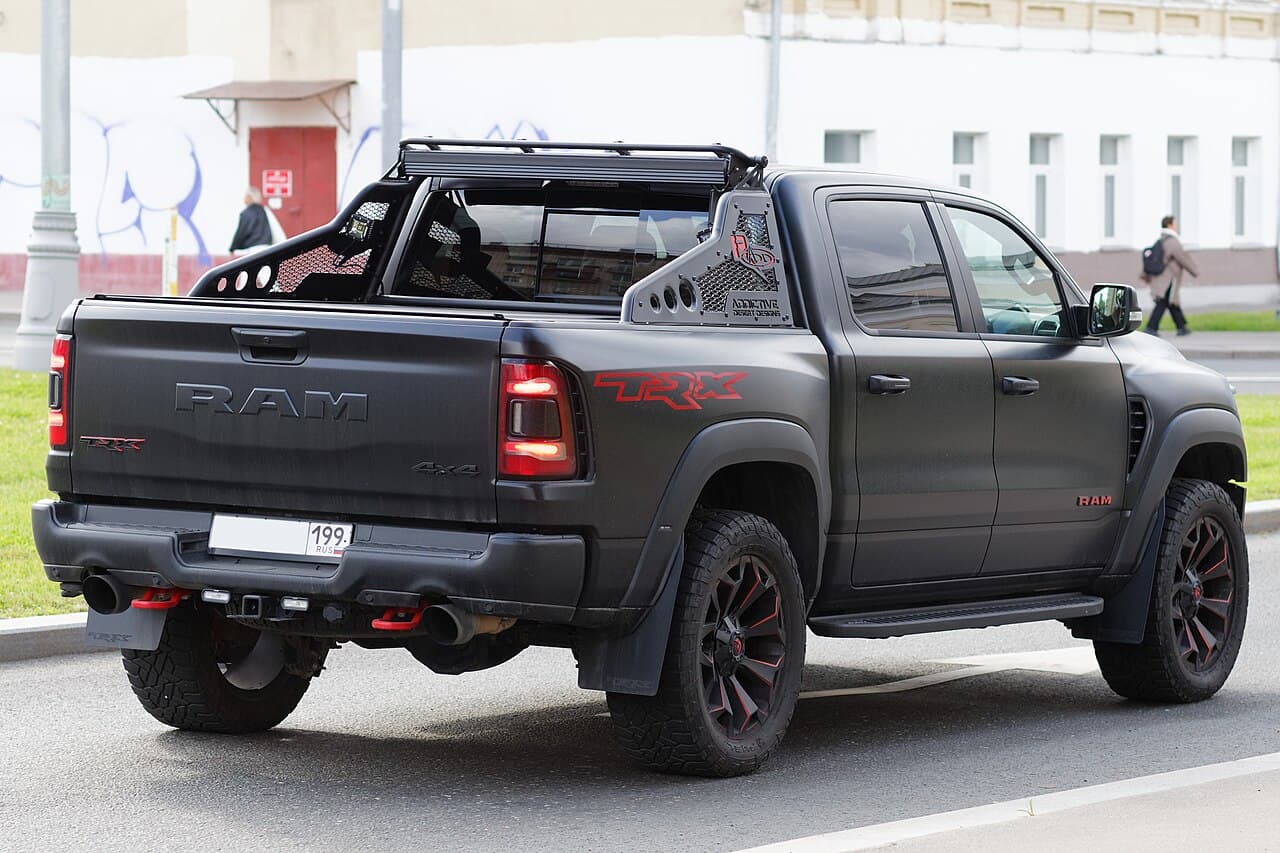
Stock Ram TRX tires are a 325/65R18 (35-inch-tall) all-season, per the full specs breakdown for both generations. That size clears the fender with zero rub at stock ride height on the 2021-2024 Ram 1500 TRX, which is why so many owners just replace those 35s with a better all-terrain and stop there. Going bigger than that, on either generation, means a lift, and the lift you need depends entirely on how big you're going and what you actually do with the truck.
This is not a "best tire" or "best lift" ranking. Every wheel and tire shop has a favorite brand, and most of them are fine. What actually matters is matching the tire to how you drive and matching the lift to what problem you're solving, because those two decisions are connected and most of the bad outcomes we hear about come from skipping straight to a tire size without doing the math on clearance, gearing, and warranty first.
What "Stock Fitment" Actually Means Here
The TRX ships from the factory with 18-inch wheels and a 35-inch tire because that combination was engineered around the truck's factory ride height, wheel offset, and fender liners. Nothing rubs, the speedometer reads correctly, and the factory gearing was calculated around that rolling diameter.
The moment you change tire diameter, you're changing three things at once: physical clearance to the fender and frame, the accuracy of the speedometer and odometer, and the effective final drive ratio the transmission is working against. Most tire threads on forums only talk about the first one. All three matter.
A 35-inch-tall replacement in the same 325/65R18 or an equivalent metric size (many owners run a 37x12.50R18 on a mild lift, more on that below) is a straight swap on stock height. Anything meaningfully taller than stock, roughly a 37-inch tire and up, needs additional clearance from either a lift or aggressive wheel offset, and often both.
Choosing a Tire Size by How You Actually Drive
Before you pick a brand, decide what the truck is for. That answer sets the size range, and the size range sets whether you need a lift at all.
| Use case | Typical tire size range | Lift needed? |
|---|---|---|
| Mostly street, occasional dirt road | 35-inch (stock size or equivalent) | No |
| Mixed street/trail, some rock and sand | 35-37 inch | Sometimes, depends on wheel offset |
| Desert running, high-speed whoops, dedicated off-road build | 37-40 inch | Yes, and usually a full suspension upgrade too |
Street and daily driver: stay at the stock 35-inch size and put your money into a better compound rather than more height. An all-terrain in the stock size rides closer to the factory tune, keeps the speedometer accurate, and does not touch anything else on the truck. This is the right call for most TRX owners who wanted the look and the power more than they wanted a rock crawler.
Mixed use, weekend trail runs: a 37-inch tire is the practical ceiling on a mild lift (roughly 2 to 3 inches) without cutting fender liners or running extreme wheel offset. You'll want to confirm backspacing on whatever wheel you choose, since a wheel like the Method MR 707 in the wrong offset will rub a 37 that would otherwise clear.
Desert and dedicated off-road: 38s and 40s exist on TRX builds, but at that point you're not doing a tire swap, you're doing a suspension build. That size needs real lift, usually a long-travel or coilover setup, sometimes trimmed fender liners, and it changes how the truck drives on pavement. Read what long-time builders have actually settled on in what TRX owners actually build before you commit to this path, because the people who went straight to 40s with a cheap lift are also the people who ended up redoing the job a year later.
What Changes When You Size Up
A taller tire changes your effective gearing the same way a different rear axle ratio would. The engine has to work the tire through more revolutions per mile of actual travel, which is felt most in the TRX's already thirsty fuel economy and in lower-end throttle response.
Your speedometer and odometer will also read differently once tire diameter changes meaningfully from stock. How far off depends on how much taller the tire is, and we're not going to hand you a fixed correction number here because it depends on the exact size you land on versus the exact stock size on your specific build. Some owners address it with a speedometer recalibration through the tuner or dealer; most just live with a few percent of drift on a mild upsize and treat GPS speed as the real number.
Load rating is the other number people skip. The factory tire on the TRX carries a load rating matched to the truck's payload and towing figures. If you're moving to an aftermarket all-terrain or mud-terrain in a different size, check the load range printed on the sidewall against what the tire you're replacing carried, and do not assume a bigger, more aggressive-looking tire automatically carries the same rating. This matters more on a TRX that actually tows or hauls near its rated 8,100 lb max tow and 1,310 lb max payload than on one that never sees a trailer.
Lift Kits: What They Actually Solve, and What They Don't
A lift is not one product, it's a category, and the category splits into two genuinely different jobs.
Leveling and spacer kits solve clearance for a modest tire upsize without touching the suspension's travel or damping. A coilover spacer kit like the one ICON makes for the TRX and RHO adds ride height in the front to match a taller tire, without replacing the shocks themselves. This is the right tool if your only goal is clearing a 37 and you're happy with the factory ride and damping otherwise.
Full suspension upgrades solve a different problem: they add travel, change spring rate, and often swap the entire shock for something built to handle sustained high-speed off-road use, which the factory Bilstein-based setup was not designed around at the far end of its range. A package built around King Shocks for the TRX, paired with a rear kit like the Foutz Adjustable Rear Suspension Kit, is aimed at owners who actually run desert trails or fast whoops, not owners who just want visual lift and a bigger tire.
The honest tradeoff: a spacer kit is cheaper, simpler, and lower-risk to your factory warranty coverage because it changes less. A full suspension build costs more, takes longer to install, and is the right call only if you're actually going to use the travel it buys you. Neither one is "better." They solve different problems, and buying the expensive one when you needed the cheap one is the most common expensive mistake in this category.
Warranty: What a Lift Does and Does Not Put at Risk
Ram's powertrain warranty on the TRX covers the engine, transmission, and drivetrain components against defects in materials and workmanship. It does not automatically void because you installed a lift kit, but it also does not cover a failure that a dealer can reasonably trace to the modification itself. If a lift kit's geometry change causes premature wear on a control arm bushing or a CV joint, that repair is a much harder conversation at the dealer than the same failure on a stock truck.
Federal law (the Magnuson-Moss Warranty Act) says a dealer cannot deny an unrelated warranty claim just because you have aftermarket parts on the truck. In practice, "unrelated" is the word that gets argued, and a service writer with an incentive to deny a claim will look hard for a connection. Keep your receipts, keep your alignment records, and know that a spacer kit from a reputable brand is a much easier claim to defend than a bargain lift with no install documentation.
A Note on the 2027 SRT TRX
The 2027 Ram SRT TRX has only been in customer hands for a few weeks as of this writing. There is no published aftermarket fitment data yet for lift kits or oversized tires on this specific chassis, and no owner track record on how a given lift or tire size behaves on it long-term. If you're shopping tires or lift for a 2027 truck, verify current fitment directly against the wheel and tire manufacturer's specs for that model year before you buy anything, and do not assume a part built for the 2021-2024 truck bolts up the same way. Chassis, suspension geometry, or fender clearance may carry over exactly, but that has to be confirmed, not assumed.
The short version
- Stock is a 35-inch tire (325/65R18) on both generations; that size needs no lift and keeps your speedometer and gearing accurate.
- Pick tire size by use case first: street stays at 35, mixed use tops out around 37 on a mild lift, desert-oriented builds run 38-40 with a real suspension upgrade.
- A spacer or coilover spacer kit clears a modest upsize; a full King Shocks-style build with a rear kit is for owners who actually use the extra travel, not for looks.
- Confirm load rating on any replacement tire against what you're hauling, and verify speedometer drift and current fitment specs before buying, especially on the 2027 SRT TRX, which has no aftermarket track record yet.
- Keep install and alignment paperwork; it is your best defense if a warranty claim ever gets questioned over a lift.