TRX Exhaust and Sound Mods: What to Know Before You Change It
The supercharger whine is already part of the TRX's appeal, which makes exhaust changes a more personal decision than on most trucks. Here's the framework for deciding whether a louder exhaust is worth the tradeoffs.
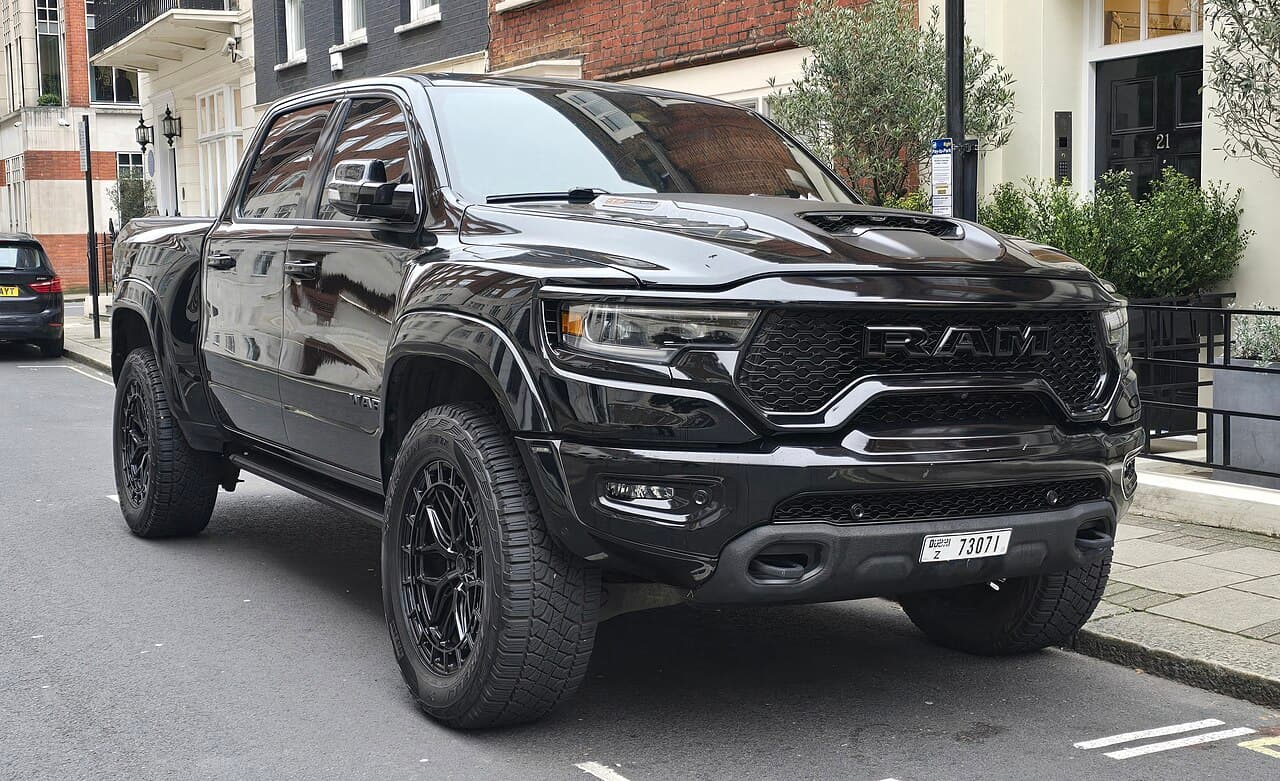
The stock supercharger whine on a Ram TRX is not a flaw to engineer away. It is the sound of a 2.4-liter blower spinning fast enough to force air into a 6.2L HEMI, and it is one of the most recognizable things about the truck. Changing the exhaust changes a different part of that voice, the deep V8 note underneath the whine, and whether that is an upgrade or a mistake depends entirely on what you actually want from the truck. There is no universally right answer here, which is why this is a framework, not a buying list.
What the exhaust actually changes (and what it does not)
An aftermarket cat-back exhaust (everything from the catalytic converters rearward) on a Ram 1500 TRX changes tone and volume, not the whine. The supercharger whine comes from the blower itself, sitting in the valley of the V8 under the hood, and it reaches your ears mostly through the intake and the engine bay, not through the tailpipes. Swap the exhaust and you will hear more V8 burble, more pop on lift-off in some setups, and a louder idle. The whine is still there, just now with more noise around it instead of under it.
On the 2021-2024 TRX (702 hp, 650 lb-ft) and the 2027 SRT TRX (777 hp, 680 lb-ft), the factory exhaust is tuned to let the supercharger stay the dominant sound. That is a deliberate choice from Stellantis, not an oversight. A cat-back swap does not touch horsepower in any meaningful way on a stock truck. People buy one for sound, full stop, and you should be honest with yourself about that before you spend the money.
Will it actually sound better, or just louder
This is the question that gets skipped. A straight pipe or an aggressive cat-back makes the truck louder at every rpm, including idle and low-speed driving around town, which is where you spend most of your time in it. The whine you bought the truck for is loudest under boost, meaning hard acceleration. If you mostly want more of that specific sound, a louder exhaust is a blunt tool: it raises the volume everywhere, including the moments where you probably do not want a flat-out exhaust note, like leaving your neighborhood at 6 a.m.
Some owners want the exhaust louder precisely to compete with the whine, not complement it. That is a legitimate preference, but know what you are choosing. A quieter cat-back aimed at deepening the tone without raising the ceiling is a different build than one aimed at being heard three blocks away, and the two experiences do not resolve to the same truck.
Warranty risk: what to actually check before you touch it
An aftermarket exhaust is a bolt-on part, and Stellantis cannot void your entire factory warranty just because you installed one, federal law does not allow blanket voids like that. But a dealer can and sometimes will deny a specific, related claim if they can show the exhaust caused or contributed to the failure, and that argument gets made more often around anything downstream of the catalytic converters, like oxygen sensor codes or exhaust leaks. The real exposure is narrower than people assume, but it is not zero.
This matters more on a 2021-2024 TRX still inside its factory powertrain warranty, or a 2027 SRT TRX that is brand new and should be fully covered for years. We cover exactly which components are actually at risk and which ones dealers cannot touch in our breakdown of which TRX mods void warranty coverage and which don't. Read that before you buy anything, not after a service writer brings it up.
Emissions and legality: this is a state-by-state problem, not a truck problem
Whether a given exhaust is street-legal where you live depends on your state and sometimes your county, and the rules genuinely vary: some states have specific decibel limits enforced at inspection, some only enforce "modified exhaust" visually, some states with no emissions testing for trucks this size barely enforce anything on this front at all. Removing or modifying catalytic converters is federally illegal for a street-driven vehicle, separate from whatever your state does or does not check at inspection.
We are not going to cite a specific decibel number or a specific state code here, because citing one wrong number is worse than citing none, and the honest answer is that you need to check your own state's current law and your county's inspection requirements before you buy, not after. If you live somewhere with real exhaust noise enforcement, or you drive through one on a regular commute, that changes the math on this mod more than anything about the truck itself does.
What it does to resale
A loud exhaust narrows your buyer pool when you sell. Some buyers want exactly that sound and will pay for a truck that already has it done. A lot of buyers, especially anyone cross-shopping a clean low-mile truck, hear an aggressive aftermarket exhaust and either walk or lowball, because it signals a truck that has been modified, and they do not know what else was touched. A tasteful, quieter cat-back reads differently than a straight-piped truck with a check-engine light from a deleted sensor.
The practical move if resale matters to you: keep the factory exhaust, store it, and reinstall before you sell. That is extra labor and garage space, but it means the next buyer is looking at the truck exactly as the factory built it. We go through what actually shows up in live dealer listings, including how modified trucks price against stock ones, in our look at TRX resale value.
The decision framework, plainly
Ask yourself these in order:
- Do you want more sound everywhere, or more sound specifically under boost? If it is the second, a louder exhaust is a mismatched tool.
- Do you know your state's and county's current exhaust noise and modification rules? If not, find out before you buy, not after a ticket.
- Are you still inside the factory powertrain warranty, and have you read what is actually at risk versus what is not?
- Do you plan to keep this truck long enough that resale does not matter, or will you be selling into a market that penalizes a modified exhaust?
If you answer all four and still want it, that is a real decision, not an impulse buy. For a wider look at what TRX owners actually build, including where exhaust falls in the list of popular mods, see our survey of what owners actually build on the 2021 TRX and browse the full mod database for what else is out there before you commit to one piece.
The short version
- The supercharger whine is not changed by an exhaust swap, it comes from the blower, not the tailpipes. An aftermarket exhaust adds volume and tone underneath it, it does not replace or compete with it directly.
- Warranty exposure is real but narrow, confirm the specifics before you buy.
- Legality is a state and county question with no single national answer, check your own jurisdiction.
- Resale takes a hit with aggressive exhausts for most buyers; keeping the stock exhaust to reinstall before a sale is the safe move if resale matters to you.