Is a Tuned Ram TRX Worth Buying Used?
How to evaluate a modified TRX on the used market — what to verify, what to walk away from — without invented dyno claims.
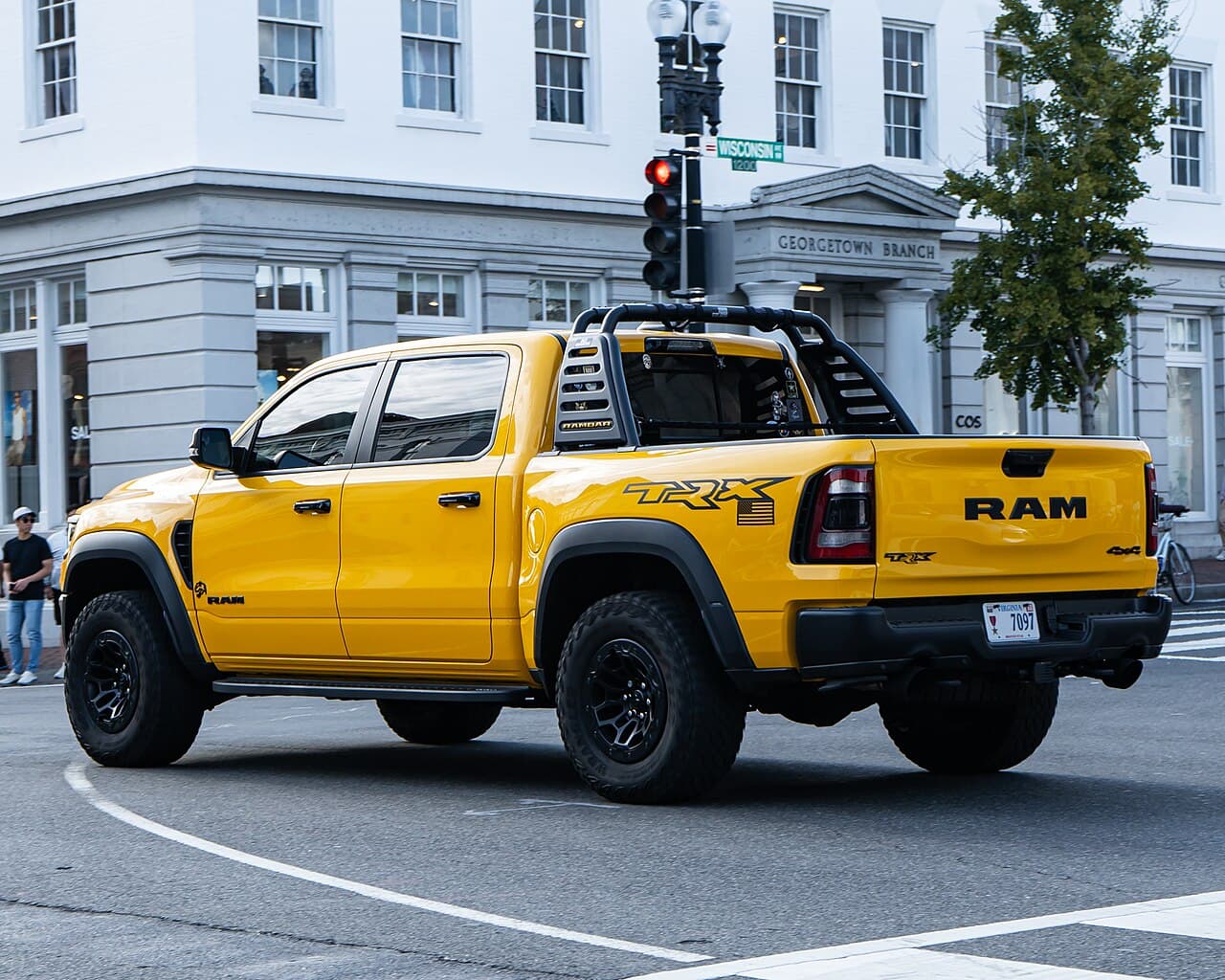
A tuned Ram 1500 TRX is worth buying used only when the seller can hand you a paper trail that proves what was done, when, and by whom, and only when the price reflects that a modified truck is harder to resell than a stock one. Absent that paper trail, a "tuned" TRX is just a stock TRX with an unknown history and a lower resale ceiling, and you should price it, or walk from it, accordingly.
That is the whole decision in one paragraph. The rest of this is how to actually run that check before you sign anything.
Stock vs tuned ownership risk are two different purchases
Buying a stock 2021-2024 TRX and buying a tuned one are not the same transaction with a different sticker. They are different risk profiles.
A stock TRX carries the risk every used performance truck carries: mileage, accident history, tire and brake wear, how it was driven. You can inspect all of that with a pre-purchase inspection and a vehicle history report, the same way you'd check any used TRX.
A tuned TRX adds a second layer that a VIN check cannot see: what the previous owner changed about how the engine, transmission, and drivetrain actually operate, and whether they changed it competently. A supercharger upgrade, a piggyback tuner, or even a "simple" flash tune touches fueling, boost, shift points, and in some cases the factory knock-detection strategy. Done right, by a shop that documents its work, that is a known quantity. Done by someone chasing a number on a forum with no data logs kept, it is not. You are not just buying the truck's mechanical condition, you are buying someone else's judgment.
That is not a reason to avoid every modified TRX. Owners built plenty of good ones, and a well-documented build can be a better truck than a neglected stock one. It is a reason to treat "tuned" as its own line item in your evaluation, not a footnote to the mileage.
What to demand before you hand over a deposit
Ask for these before you drive it, not after:
- The tune file or a written description of what the tune does. A shop-installed flash tune (from a company that sells for the 6.2L supercharged HEMI) should have a name, a revision, and ideally a dyno sheet or data log from the install, not a verbal "it's stage 2." If the seller cannot tell you which tuning company or which specific calibration, that is a gap, not a detail.
- Receipts for every supporting modification. A tune alone changes very little that is safe to push hard; a tune paired with a supercharger upgrade, an intake, and a cat-back exhaust is a coherent build if the parts and the tune were matched to each other. A tune with no supporting mods, run at aggressive settings, is the combination that worries a shop doing a pre-purchase inspection.
- Install and service dates, ideally from an invoice, not a memory. When was the tune installed, on what mileage, and has it been re-flashed or adjusted since.
- Maintenance records that predate the tune. Oil change intervals, any belt or supercharger service, and whether the factory recommended fluid and interval schedule was followed. A tuned truck with sparse maintenance records is a worse buy than a stock truck with sparse records, because you have less margin for deferred maintenance on top of altered engine parameters.
- Whether the seller ever had a dealer visit for a drivetrain issue after the tune was installed, and what the dealer said. Not because a dealer visit is automatically bad news, but because a seller who mentions it unprompted is more credible than one who does not bring it up at all.
- Confirmation of what, if anything, was reverted before sale. Some sellers flash back to stock calibration before listing. If that happened, ask when, and ask to see the tune history, not just the current state.
None of this proves the truck will or will not have a problem. It proves whether you are buying a documented build or a mystery. Those are different prices.
Pricing a modified truck against a stock one
Ram TRX used prices are already trending in a direction worth knowing before you negotiate anything. Averages across live listings run roughly $68,500 for a 2021, up to about $93,000 for a 2024, with the usual spread for trim, mileage, and region. Those numbers are for stock or effectively-stock trucks. A modified truck does not slot cleanly into that curve.
A tune and a light supporting build (intake, exhaust, tune, no drivetrain changes) generally should not command a premium over a comparable stock truck at the same mileage, even if the seller spent real money installing it. The reason is resale, not performance: the pool of buyers who want a tuned TRX is smaller than the pool who want a stock one, and a chunk of that smaller pool wants to pick their own tune, not inherit someone else's settings. Some buyers will pay for a proven Whipple-based build with full documentation. Most will discount it, because they are buying uncertainty along with the horsepower.
A heavier build, with a bigger supercharger upgrade, built axles, or transmission work, should be priced closer to "parts value plus labor you'd have to pay again" than to "stock value plus what the seller spent." Sellers routinely price toward what they put into the truck. Buyers should price toward what they can verify and what they would spend to duplicate or undo it.
This is the part where the honest answer is that modified trucks are genuinely harder to price than stock ones. There is no clean published average for tuned TRX transactions the way there is for stock listings, because every build is different and most private-party tuned sales do not get reported anywhere with the mod history attached. Use the stock averages by model year as your floor, adjust down for unverifiable claims, and adjust up only for a build with receipts, a shop name you can call, and a maintenance history that holds together.
When a tune is a feature, and when it is a red flag
A tune is a feature when:
- It comes from a named tuning company with a specific calibration you can identify, not "a guy."
- There are receipts for the tune and for any supporting hardware it assumes (injectors, intake, exhaust, cooling upgrades if the build calls for them).
- The maintenance history around it is complete: oil changes on schedule, no gap that lines up suspiciously with when the tune went in.
- The seller can answer specific questions about settings, install date, and mileage at install without hesitating or contradicting the paperwork.
- The truck was reverted to stock calibration for sale, or the seller is transparent that it was not and why.
A tune is a red flag when:
- The seller cannot name the tuning company, the file, or the shop that installed it.
- There is a tune with no supporting mods at an aggressive setting, or supporting mods with no tune adjustment to match them.
- Maintenance records stop or thin out around the same time the tune appears.
- The price is anchored to what the seller spent rather than to comparable stock market data minus a documentation discount.
- The seller gets vague or defensive about a pre-purchase inspection, especially one that includes a data log pull.
There is no version of this for the 2027 Ram SRT TRX yet. That truck has been in customer hands for a few weeks. There is no used tuned market for it, no aftermarket tune history to check, and no honest way to write a section on evaluating a modified example, because none exist with any meaningful ownership history behind them. If you are choosing between a modified 2021-2024 TRX and a new SRT TRX, that gap in data is itself part of the decision.
The short version
- Treat a tuned TRX as a different purchase than a stock one, not a stock truck with extra parts.
- Demand the tune file or calibration name, supporting-mod receipts, install dates, and maintenance records before you negotiate price.
- Price against stock-truck averages by model year, then discount for anything you cannot verify. Modified trucks are genuinely harder to price than stock ones; do not let a seller's spend total set your number.
- A documented build from a named shop is a feature. An undocumented tune with thin maintenance records is a reason to walk, not a reason to negotiate harder.