Buying a Salvage or Rebuilt-Title Ram TRX: What You're Actually Risking
A cheap TRX with a rebuilt title can look like a bargain next to clean-title listings, but the discount comes with real trade-offs in financing, insurance, and resale. Here's what to weigh before taking that risk.
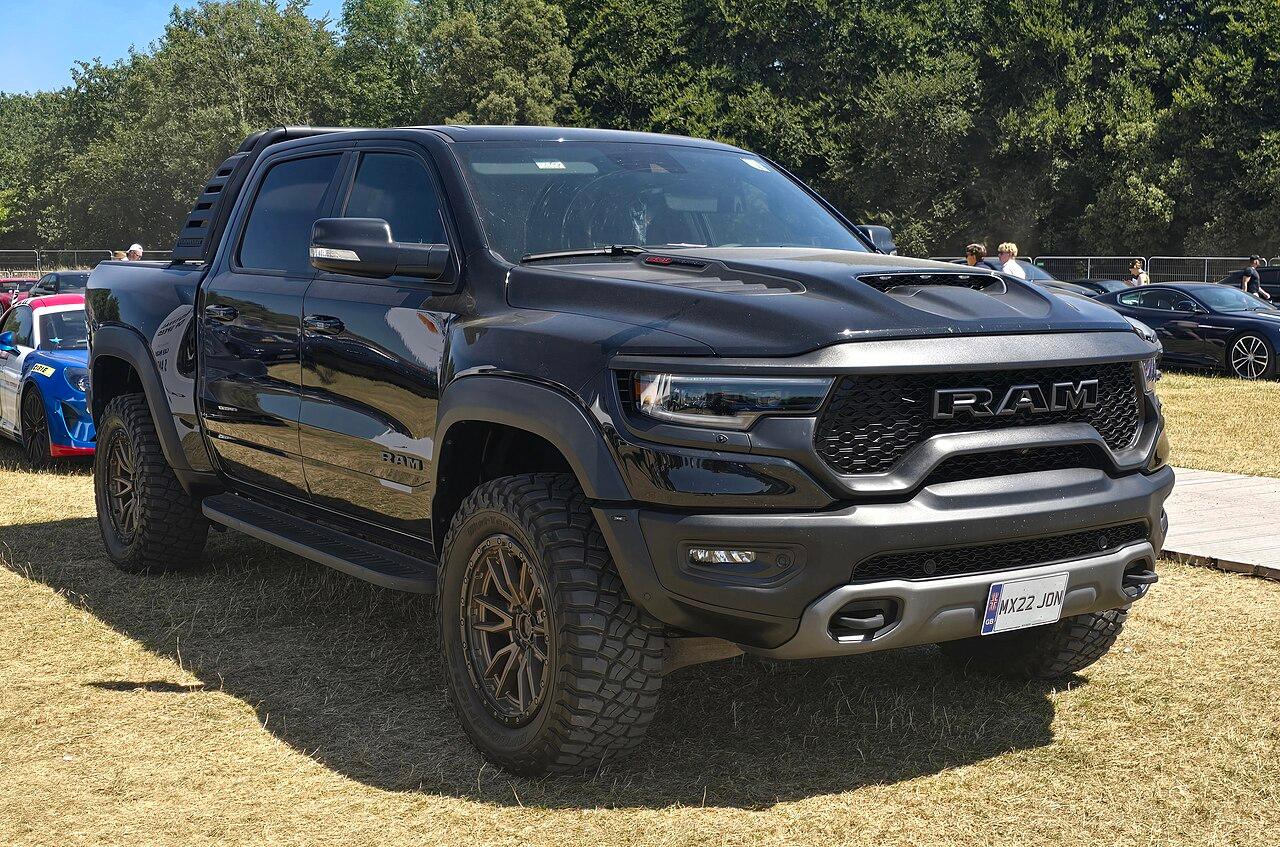
A salvage or rebuilt-title Ram TRX will sell for noticeably less than a clean-title truck of the same year and mileage, but that discount is the price of giving up a conventional loan, full-coverage insurance at a normal rate, and most of the resale market when you go to sell it. If you cannot pay cash and cannot do your own inspection (or pay a specialist to do one), the discount is not worth what you give up. If you can do both, it can be a legitimate way into a 6.2L supercharged HEMI truck for meaningfully less money, but you need to understand exactly what you are trading away first.
This applies almost entirely to the Ram 1500 TRX (2021-2024), since the used market for the truck is deep enough that wrecked and rebuilt examples exist in real numbers. The 2027 Ram SRT TRX has been in customer hands for only a few weeks. There is essentially no salvage inventory of that truck yet, and nothing to say about how it would behave in this market even if there were.
What a salvage or rebuilt title means on a truck priced like a TRX
A salvage title gets issued when an insurer declares a vehicle a total loss, usually because the estimated repair cost exceeds a set percentage of the vehicle's value (the threshold and the exact percentage vary by state). On a truck that lists new for roughly $75,000-$100,000 depending on year and trim, that threshold gets crossed by damage that would barely total a cheaper vehicle, which is part of why salvage TRX trucks exist at all. The truck is not legally drivable on a salvage title. Once someone repairs it and it passes a state inspection, the title gets reissued as "rebuilt," "reconstructed," or similar branding depending on the state. Both labels are permanent. They stay on the title for the life of the vehicle and carry forward to every future owner, even after the truck changes hands five times.
The damage that triggers a total loss is not always catastrophic. It can be collision damage, flood damage, hail, theft recovery, or even a truck that got crushed by a tree in a storm with no mechanical issue at all. The title brand does not tell you which one you are looking at. That is exactly why the inspection matters more here than on any clean-title purchase.
Financing: why a lot of lenders say no before they even look at the truck
Many mainstream auto lenders will not finance a salvage or rebuilt-title vehicle at all, and the ones that will often restrict it to a narrower set of credit unions or specialty lenders, usually at a higher interest rate than you would get on the same truck with a clean title. Some lenders cap the loan-to-value ratio lower, so you need a bigger down payment to get the loan approved. This is not a TRX-specific policy; it is how branded titles get treated across the industry, because the collateral is harder for the lender to value and harder to resell if you default.
Practically, this means you should talk to your bank or credit union about their branded-title policy before you make an offer, not after. A truck priced to look like a deal falls apart fast if you cannot get a loan for it on reasonable terms.
Insurance: liability-only is common, and full coverage costs more when you can get it
A lot of insurers will not write physical-damage coverage (theft, weather, and at-fault collision protection) on a salvage or rebuilt-title vehicle, or they will write it only after their own inspection, and often at a higher premium than a clean-title truck of the same age and value. Some carriers decline branded titles outright. If you can only get liability coverage, that means no payout if the truck is stolen, flooded, or wrecked again. You are covering that risk yourself.
Get a real insurance quote, with the actual VIN if you can get it from the seller, before you commit to buying. A truck that looks cheap on the sales ad can turn expensive fast once you add financing terms and insurance premiums that are worse than what a clean-title truck would get you.
For context on what you are discounting against, our live market breakdown of the current TRX for-sale landscape and our current price data track what clean-title trucks are actually listing and selling for by year. Compare any salvage truck's asking price against that baseline, not against MSRP, before you decide whether the discount is real or just reflects normal market softening.
What to check that a normal pre-purchase inspection does not cover
Our pre-purchase inspection checklist for a used Ram TRX covers the mechanical and cosmetic basics that apply to any used TRX. A salvage or rebuilt-title truck needs three additional things on top of that list, and none of them are optional.
- Frame and structural damage disclosure. Ask the seller directly whether the insurance total-loss report cited frame or structural damage, and ask to see the report if they have it. A frame that has been straightened or sectioned is a different truck than one with cosmetic panel damage, and no visual inspection alone will reliably catch a repaired frame.
- Airbag deployment history. Find out whether any airbags deployed in the incident that totaled the truck, and if so, confirm with a shop or dealer that the airbag modules, seatbelt pretensioners, and related wiring were replaced with correct parts and not just reset. A cleared airbag light does not mean the system was actually repaired correctly.
- Drivetrain damage disclosure. Ask specifically whether the total-loss event involved the engine, the transmission, the transfer case, or the front and rear axles, separate from body damage. A truck totaled for flood damage or a drivetrain-involved collision carries different risk than one totaled for hail or a parking-lot theft recovery, even if the body looks identical today.
Get these answers in writing where you can, and have an independent shop (not the seller's shop, and not the shop that did the rebuild) put the truck on a lift and check the frame rails, suspension mounting points, and drivetrain for repair evidence before you pay for anything. If you are already thinking about what the suspension should look like underneath, our suspension upgrade guide for the TRX is a useful reference for what factory mounting points and hardware are supposed to look like versus an aftermarket or repaired setup. Budget for the inspection itself too: an independent shop doing this kind of lift inspection typically charges in the range of a couple hundred dollars, though the exact figure varies by shop and region, and it is money well spent relative to what you are risking.
There is no reliability record to lean on here, clean title or not
There is no published reliability record or repair-cost history for the Ram TRX as a platform, clean title or otherwise. Nobody has run that study. There is certainly none specific to salvage-repaired trucks. Anyone telling you what tends to go wrong with a rebuilt TRX, or what it tends to cost, is guessing. Weigh that honestly: you are buying into a vehicle with an unknown repair history, on a platform with no public failure-rate data to begin with.
The resale discount is permanent, not temporary
The title brand follows the truck forever. A rebuilt-title TRX will sell for less than a clean-title truck of the same year and mileage every time you go to sell it, not just the first time. Clean-title used TRX values currently average roughly $67,000 to $91,000 depending on model year, per our resale value breakdown using live dealer listings. A rebuilt-title truck sells at a real discount to those averages, and the buyer pool for it is smaller because the same financing and insurance friction you dealt with buying it will apply to whoever buys it from you.
When the discount makes sense, and when it does not
Buy the salvage or rebuilt-title TRX if you are paying cash, you are mechanically fluent enough to evaluate the repair yourself or you are paying a specialist shop to do it, and you plan to keep the truck long enough that the resale discount matters less to you than the purchase-price savings did.
Walk away if you need financing to make the purchase work, if you cannot get a real pre-purchase inspection done by an independent shop, or if the seller will not produce the total-loss report and repair documentation. A seller who cannot or will not answer the frame, airbag, and drivetrain questions directly is not a seller worth doing business with, regardless of how good the price looks.
The short version
- Salvage and rebuilt titles are permanent and follow the truck through every future sale.
- Expect financing friction (fewer lenders, worse rates) and insurance friction (liability-only is common, physical-damage coverage costs more when available).
- Get the total-loss report before you buy: confirm frame/structural involvement, airbag deployment, and drivetrain damage in writing, and budget for an independent lift inspection on top of that.
- No reliability or repair-cost data exists for the TRX platform generally, and none exists for salvage-repaired units specifically, so you are pricing an unknown.
- This only makes sense as a cash purchase with a real independent inspection behind it. Everyone else should buy clean-title and start from our used TRX buying guide instead.