Used Ram TRX Buying Guide: What to Check and What to Pay
A used TRX is now the cheapest way into a 702 hp supercharged truck, and 1,354 of them are sitting on dealer lots. This is how to work through one properly before you sign, and how to tell a fair asking price from an optimistic one.
Gear in this article
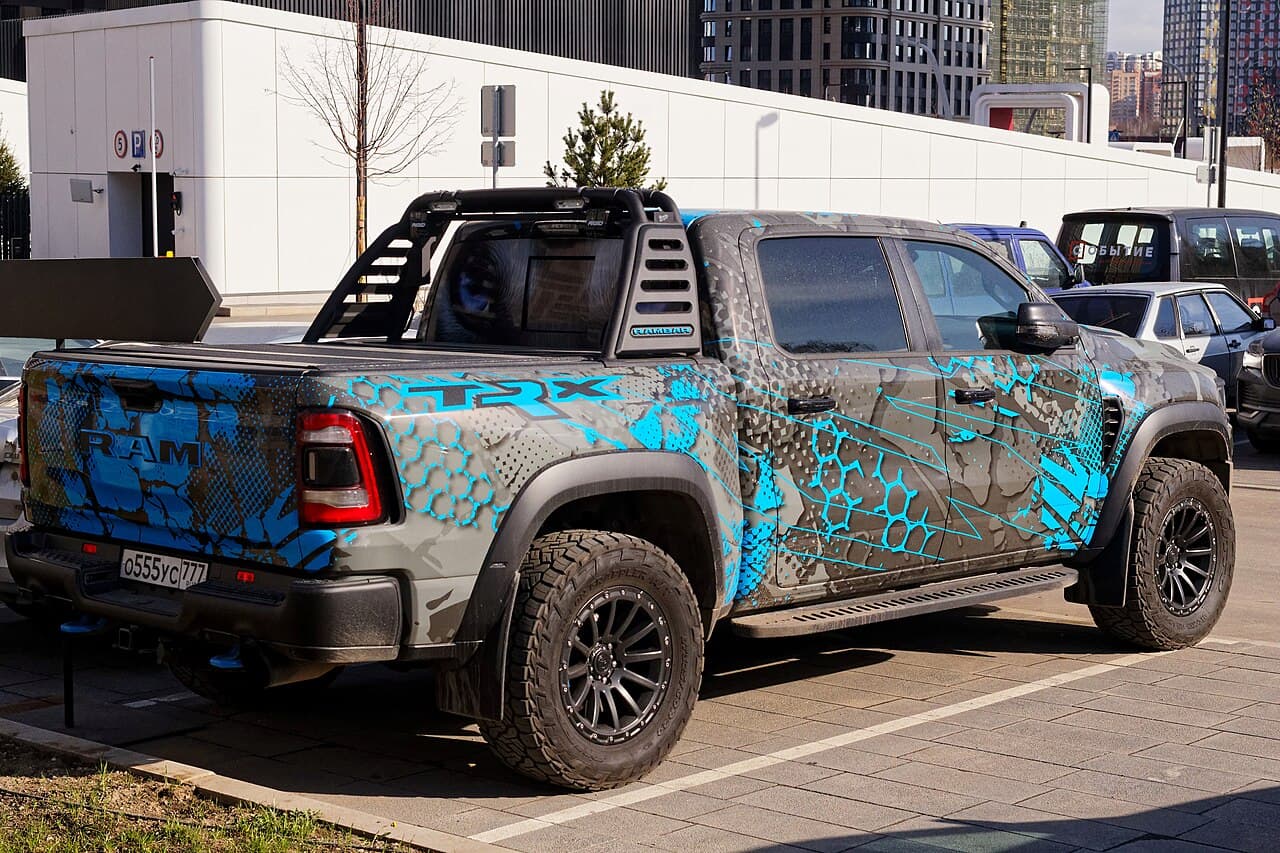
The used market for the Ram 1500 TRX right now is entirely the 2021-2024 truck: 702 hp, 650 lb-ft, a 6.2-liter supercharged HEMI V8 backed by the TorqueFlite 8-speed automatic, 0-60 mph in 4.5 seconds, max tow of 8,100 lb, max payload of 1,310 lb. As of this writing there are 1,354 used TRX listings live against 1,561 total TRX listings site-wide, which means the used truck is not a rounding error in this market, it is most of it. If you are cross-shopping the new Ram 1500 SRT TRX, understand up front that it is a different truck with a different powertrain output, and there is effectively no used SRT TRX market yet.
What "used TRX" actually means right now
Every 2021-2024 TRX came off the same line, Sterling Heights Assembly in Michigan, running December 2020 through February 2024, with the same 702 hp / 650 lb-ft rating for the entire run. There is no mid-cycle power bump to chase and no trim year that got a meaningfully different drivetrain. That is good news for a shopper: you are not trying to figure out which model year "got the good engine." They all have it.
The supply splits like this among live listings:
| Model year | Live listings | Average asking price |
|---|---|---|
| 2021 | 341 | $69,505 |
| 2022 | 521 | $75,944 |
| 2023 | 226 | $84,930 |
| 2024 | 266 | $94,560 |
The remaining roughly 200 listings on the site outside that 1,354 count are new-production SRT TRX trucks at an average of $110,340, which is a separate conversation entirely, covered below.
The pre-purchase inspection: what to actually check
None of what follows is TRX-specific paranoia. This is what any high-output, low-volume performance truck deserves before you sign, whether it is a TRX, a Raptor, or a Trackhawk. Treat it as standard diligence, not a hunt for a known defect, because there is not one to hunt for (more on that below).
1. Full service history. Ask for maintenance records, not just an oil-change sticker. A truck with documented dealer or independent-shop service history at regular intervals is worth more to you than one with none, even at the same asking price, because it tells you the previous owner treated a 702 hp truck like it needed attention.
2. Tire wear and type. The factory tire size and load rating matter for a truck this heavy and this powerful. Check tread depth across all four corners and look for uneven wear that points to alignment issues or aggressive use. If the truck is on aftermarket wheels, such as a set of Method MR 707 wheels, ask what tire and offset combination is actually mounted and whether the stock wheels and tires come with the sale.
3. Brake wear. Pull a wheel if the seller allows it, or have your inspecting shop do it. Rotor thickness and pad life tell you how the previous owner drove, and replacement cost on a heavy performance truck is real money, so factor it into your offer if pads are thin.
4. Evidence of off-road use. Nothing wrong with a TRX that has actually been off-road, that is what it is built for, but you want to know what kind of use it saw. Look underneath for skid plate scrapes, bent brackets, or fluid weeping from the front differential or transfer case housing. A truck that has been genuinely wheeled is not a red flag by itself, but it changes what you inspect next and what you negotiate.
5. Aftermarket suspension or drivetrain work. If the truck has been fitted with something like the Foutz Adjustable Rear Suspension Kit or a full King Shocks package, that is not automatically a negative, but get documentation on when it was installed, by whom, and whether the factory components were kept. Aftermarket suspension work done well can be a selling point. Done poorly, or done to mask abuse, it is a liability. The same goes for supercharger service: ask specifically whether the belt-driven blower has ever been serviced, rebuilt, or opened up, and get it in writing if the seller says yes.
6. Modified engine or exhaust. A truck running a tune, a cold air intake, or a bolt-on like the Corsa Xtreme cat-back exhaust is common and not inherently a problem, but modified engines can complicate a warranty claim if something goes wrong, and a dealer can push back on coverage for a part they can argue was affected by the modification. Ask if anything has been reflashed and whether the seller can put it back to stock calibration.
7. Independent PPI. Pay an independent shop, one that actually knows this platform, to put the truck on a lift before you sign anything. Budget this as a cost of doing business, not an optional extra, and treat any seller who will not allow it as a truck to walk away from.
8. Remaining factory warranty. Ram's basic warranty and powertrain warranty coverage runs from the original in-service date, not from your purchase date, so a 2021 truck with 40,000 miles may have little or nothing left. Get the VIN and call a dealer to confirm exactly what is remaining before you factor "it is still under warranty" into your price.
What is not known, and why that matters
There is no established, published list of common TRX problems. No recurring failure pattern has been documented across the fleet in a way that would let anyone credibly say "these trucks commonly have X issue." If you find a forum thread claiming otherwise, read it as one owner's single experience, not a pattern, and treat any number attached to it (a failure rate, a percentage, a cost) as invented unless the poster can show where it came from. This is a genuine advantage in shopping this truck: you are not working against a known weak point the way you might be on some other platforms. It also means you cannot skip the inspection on the assumption that "the internet would have told me by now" if something were wrong.
What these trucks are actually selling for
Use the table above as your baseline, not a ceiling or a floor. A 2021 TRX averaging $69,505 with full service history, clean tires, and a documented ownership story is worth paying at or slightly above average for. A 2022 at $75,944 with unknown history, worn tires, and undisclosed off-road use is a truck to negotiate down from average, PPI findings in hand. Check current market pricing before you make an offer, because these averages move, and check live listings to see what is actually on the ground in your region right now, since regional supply swings the number more than model year does.
Which year to target
Because the powertrain is identical across the 2021-2024 run, this comes down to supply and depreciation, not mechanical differences. The 2022 model year has the deepest pool of listings (521 live), which gives you the most room to shop for the specific color, mileage, and options you want without waiting. The 2021 trucks are the cheapest on average ($69,505) and offer the largest gap in depreciation already absorbed by the first owner, which is the strongest argument for a 2021 if budget is the deciding factor and the specific truck checks out on inspection. A 2024 at $94,560 buys you the last model year built, more remaining factory coverage, and typically lower mileage, at the smallest discount off original MSRP of any used TRX on the market.
There is no year in this range that is mechanically the "smart" pick over another the way there sometimes is on a platform that changed engines or transmissions mid-cycle. The TRX did not. Buy the specific truck that passes inspection at a fair price relative to its year, not a specific model year on faith.
What about the 2027 SRT TRX
If you are tempted to skip the used market entirely and buy new, know what you are actually comparing: the SRT TRX makes 777 hp and 680 lb-ft, a genuine step up over the 702 hp / 650 lb-ft 2021-2024 truck, starting at $99,995 plus destination. It has been in customer hands for only a few weeks. There is no failure history, no long-term reliability record, and no used SRT TRX market to speak of yet, so there is nothing honest to write here about how it holds up. If you want the full breakdown of how the two platforms differ, including how the Ram RHO fits into the lineup, the honest TRX versus RHO comparison is a useful next read.
The short version
- The used market is the 2021-2024 TRX, mechanically identical across all four model years, with 1,354 live listings.
- Run the full checklist: service history, tire and brake wear, evidence of off-road use, documentation on any aftermarket suspension or supercharger work, and an independent PPI before you sign.
- There is no established list of common TRX problems. Do not let a forum post convince you there is one.
- Buy the truck, not the year: at averages of $69,505 (2021) up to $94,560 (2024), a clean history matters more than the model year on the title.
Owner questions
- What years make up the used Ram TRX market, and are they all mechanically the same?
- The used market is entirely 2021-2024 trucks, all built at Sterling Heights Assembly from December 2020 through February 2024 with the identical 702 hp / 650 lb-ft 6.2-liter supercharged HEMI V8 and TorqueFlite 8-speed automatic. There's no mid-cycle power bump, so no model year has a meaningfully different drivetrain to chase.
- What are used TRX trucks currently selling for by model year?
- Average asking prices are $69,505 for 2021 (341 listings), $75,944 for 2022 (521 listings), $84,930 for 2023 (226 listings), and $94,560 for 2024 (266 listings). New-production SRT TRX trucks average $110,340 separately, out of roughly 1,354 used listings against 1,561 total.
- Should I worry about a specific known defect or failure pattern on used TRX trucks?
- No—there's no established, published list of common TRX problems, and no recurring failure pattern has been documented across the fleet. Any forum post claiming otherwise should be read as one owner's single experience, not a pattern, and any attached failure rate or cost figure should be treated as invented unless sourced.
- What should I check on the supercharger and any aftermarket suspension before buying a used TRX?
- Ask specifically whether the belt-driven blower has ever been serviced, rebuilt, or opened up, and get it in writing if so. For aftermarket work like the Foutz Adjustable Rear Suspension Kit or a King Shocks package, get documentation on install date, installer, and whether factory components were kept.
- Which used TRX model year should I target if I want the most options or the lowest price?
- The 2022 model year has the deepest pool at 521 live listings, giving the most room to shop for color, mileage, and options. The 2021 trucks are cheapest on average at $69,505, the strongest pick if budget is the deciding factor, while 2024 at $94,560 offers the last model year, more warranty coverage, and lower mileage.