Building a Ram TRX for Overlanding: What Your Payload Budget Actually Allows
A rooftop tent, drawers, water, and gear add up fast, and the TRX's payload rating is the real ceiling on what you can safely carry. This guide shows how to budget that weight before you start bolting on parts, not after.
Gear in this article
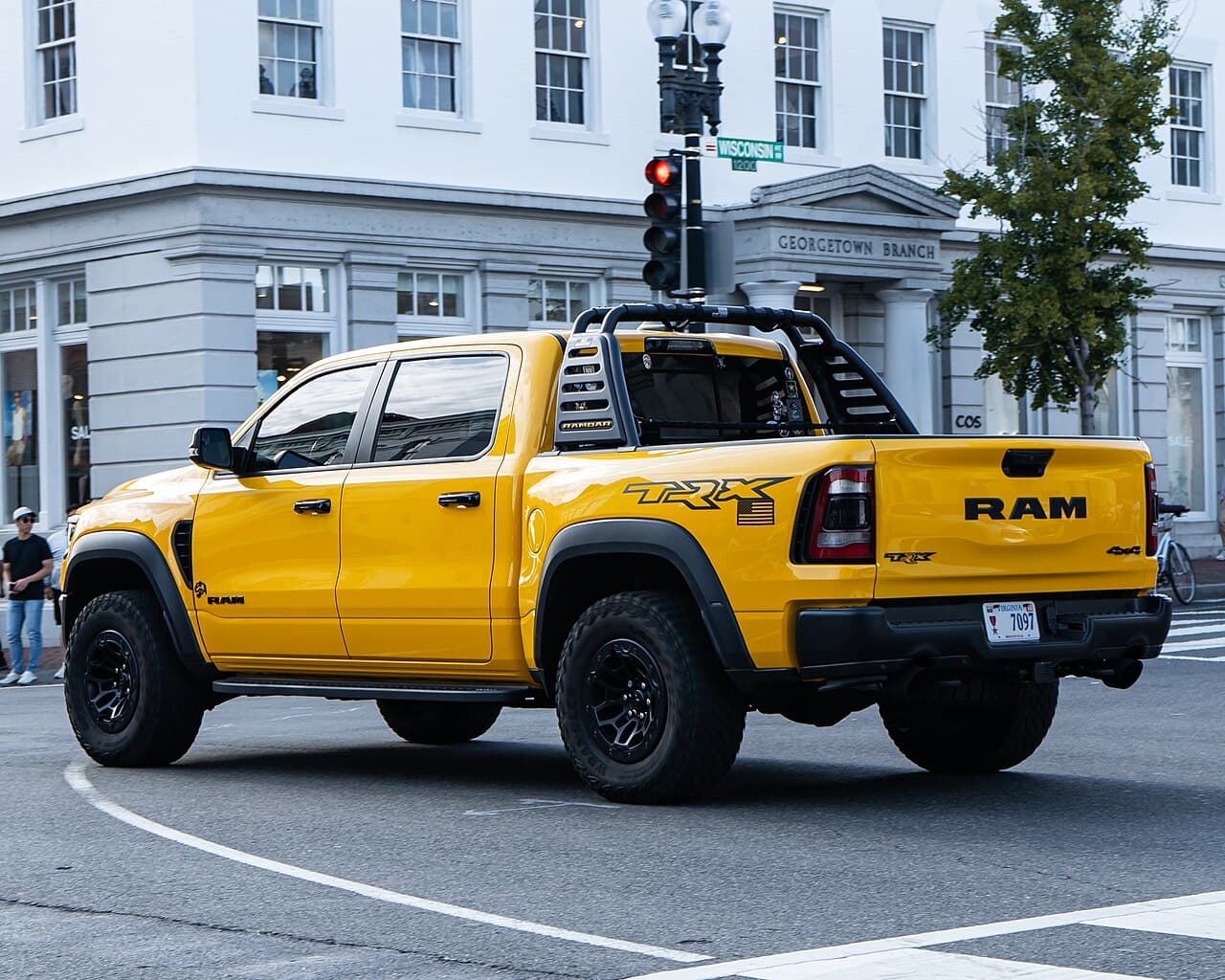
The published max payload for a 2021-2024 Ram 1500 TRX is 1,310 lb, and that number is not a cargo allowance, it is the total weight budget left after the truck's own curb weight for everything you add: driver, passengers, fuel, cargo, and any hardware you bolt to the frame or bed. Build a roof tent, drawer system, and water load without doing this math first and you can be over payload before you've packed a single bag. The fix is not a bigger truck, it's planning the build around the number you actually have.
This guide walks through how to spend that 1,310 lb honestly, using published weight ranges instead of guesses, and why a scale ticket beats a spreadsheet every time.
What the 1,310 lb payload rating actually includes
Payload is GVWR (gross vehicle weight rating, the maximum total weight the truck is engineered to carry including itself) minus curb weight (the truck as it sits empty, with fluids, no people or cargo). Ram doesn't publish one single curb weight for the TRX, because it moves with options, so the real number for your specific truck is on the yellow door jamb sticker, not in a brochure. That sticker also lists your actual payload rating, which can run a little under the 1,310 lb maximum depending on how the truck was optioned from the factory.
Everything comes out of that one number:
- You and every passenger
- A full tank of fuel (gasoline weighs roughly 6.3 lb per gallon, so a full tank is a meaningful chunk on its own)
- Any permanently added hardware: bumpers, winches, armor, drawer systems, auxiliary batteries
- Everything you load for the trip: tent, bedding, water, food, recovery gear, tools
For a deeper breakdown of how that number is built and what it actually buys you empty versus loaded, see our full payload breakdown.
Why the math runs out faster than people expect
Start subtracting and the 1,310 lb goes quickly.
Two adults in the front seats is commonly 300-400 lb depending on who's driving. A full 33-gallon-class tank of gas is roughly 200+ lb. That's potentially 500-600 lb gone before a single piece of gear goes in the truck, leaving well under 1,000 lb for everything else on a loaded overland trip.
Now add the hardware that defines an overland build:
| Category | Typical range (estimate, verify published weight) | Notes |
|---|---|---|
| Hardtop or soft-shell roof tent | roughly 100-180 lb | Varies a lot by brand and mounting hardware; use the manufacturer's published weight, not a forum guess |
| Steel front bumper with winch | roughly 150-300 lb over stock | Heavier than the factory bumper it replaces; see the bumper guide below |
| Drawer system, loaded | roughly 80-150 lb for the system, before gear inside it | A system like the Decked drawer system is built for the TRX's bed and lists its own weight; the gear you put inside is additional |
| Water (5-gallon jugs) | about 8.3 lb per gallon | A 20-gallon onboard tank alone is roughly 165 lb full |
| Recovery gear, tools, recovery boards, traction mats | roughly 50-100 lb combined | See our recovery gear guide below for what's actually worth carrying |
Those are illustrative ranges, not specs for any one product. Before you buy anything, pull the actual published weight from the manufacturer's spec sheet for that exact tent, bumper, or drawer kit, because the range between a basic hardtop tent and a fully kitted one can be more than the difference between two different bumpers.
Add a modest version of all of the above to two passengers and a full tank, and a lot of TRX builds land somewhere between 900 and 1,400 lb of total weight added to the truck's base curb weight, which means an honestly built overland TRX can be at or over its payload rating without anyone noticing until it's on a scale.
How bumpers and armor eat into the budget before you've packed anything
A steel front bumper with a winch mount and light bar is one of the single biggest fixed deductions from your payload budget, because unlike a tent or water jug, it's permanently on the truck whether you're loaded for a trip or just driving to work. Factory bumpers on the TRX are plastic-faced and light by comparison; swapping to steel, even a mid-weight option like the ADD Phantom front bumper or a Stealth Fighter winch plate kit, adds real weight low and far forward on the frame, which also affects front axle loading, not just the total number on the doorjamb sticker.
Rear bumpers, sliders, and skid plates stack on top of that. None of it shows up as "payload" in a way that's obvious until you do the math, because it's not cargo, it's the truck itself getting heavier. The honest way to budget for it is to weigh the stock bumper you're removing (or find its published weight) and subtract that from the new part's listed weight, not just add the new part's full weight to your budget.
We cover fitment, materials, and what to actually check before buying in the bumper and armor upgrade guide.
Why lifting the truck or going to bigger tires does not buy you more payload
A common assumption is that a suspension lift or a set of 37s raises the truck's capacity along with its ride height. It does not. Payload and GVWR are set by the frame, axles, brakes, and factory-rated suspension components, not by ride height or tire diameter. A suspension upgrade like a set of King shocks or a coilover spacer kit changes ride quality, articulation, and ground clearance, and bigger rubber from our tire and lift fitment guide changes traction and clearance, but neither changes the number on the doorjamb sticker. If anything, heavier wheels and tires are their own small subtraction from the same payload budget, since unsprung weight still counts as part of the vehicle's total.
Don't let a taller, more capable-looking truck talk you into believing it can carry more. It can't, unless Ram re-rates the component set, which aftermarket suspension does not do.
Why a certified scale beats paper math every time
Spec-sheet math gets you in the right neighborhood. It does not catch the extra 40 lb of hardware you forgot was on the truck, the full propane tank, or the second battery and inverter someone added last winter. Before any real trip, load the truck exactly as you intend to drive it, including passengers and a full tank, and run it across a certified CAT scale or similar public truck scale. Most charge a small fee per weigh, and many let you get axle-by-axle numbers, not just gross weight, which matters because a TRX overloaded on the front axle from bumper and winch weight behaves very differently than one overloaded evenly.
If the total comes in over your doorjamb-rated payload, something has to come off the truck, not get reclassified as "essential." There is no safe way to argue with a scale ticket.
What voiding warranty has to do with your payload budget
Adding a winch bumper, aftermarket suspension, or a drawer system does not automatically void your powertrain warranty just for existing on the truck. What can create a warranty argument is a failure a dealer can plausibly tie to the modification, for instance a front suspension component failing on a truck running well outside its payload rating with a heavy bumper and a loaded rooftop tent. Overloading the truck is the kind of thing that gives a dealer or Mopar a real argument to deny a claim, separate from whether the mod itself is legal to run. We go through exactly which modifications create that exposure and which don't in the guide to which TRX mods void warranty.
The short version
- Max payload on a 2021-2024 Ram 1500 TRX is 1,310 lb, shared by passengers, fuel, added hardware, and gear, and your specific truck's rated number is on the door jamb sticker, which can run lower.
- Use published product weights from manufacturers, never a guessed or rounded number, when budgeting a bumper, tent, or drawer system.
- Steel bumpers and armor are a fixed, permanent deduction from your payload budget even when you're not loaded for a trip.
- Suspension lifts and bigger tires change ride and clearance, not the factory payload or GVWR rating.
- Weigh the fully loaded truck on a certified scale before a real trip. Paper math gets you close; a scale ticket tells you the truth.
- Running well over payload is one of the few modification-adjacent situations that can genuinely weaken a warranty claim, so build to the number, not past it.