Do Ram TRX Performance Parts Fit the 2027 SRT TRX?
The SRT TRX runs the same supercharged 6.2L HEMI family as the original TRX, so it's natural to wonder if the existing mod ecosystem carries over. It's early — here's what can honestly be said about fitment today, and what every buyer should verify before ordering a part.
Gear in this article
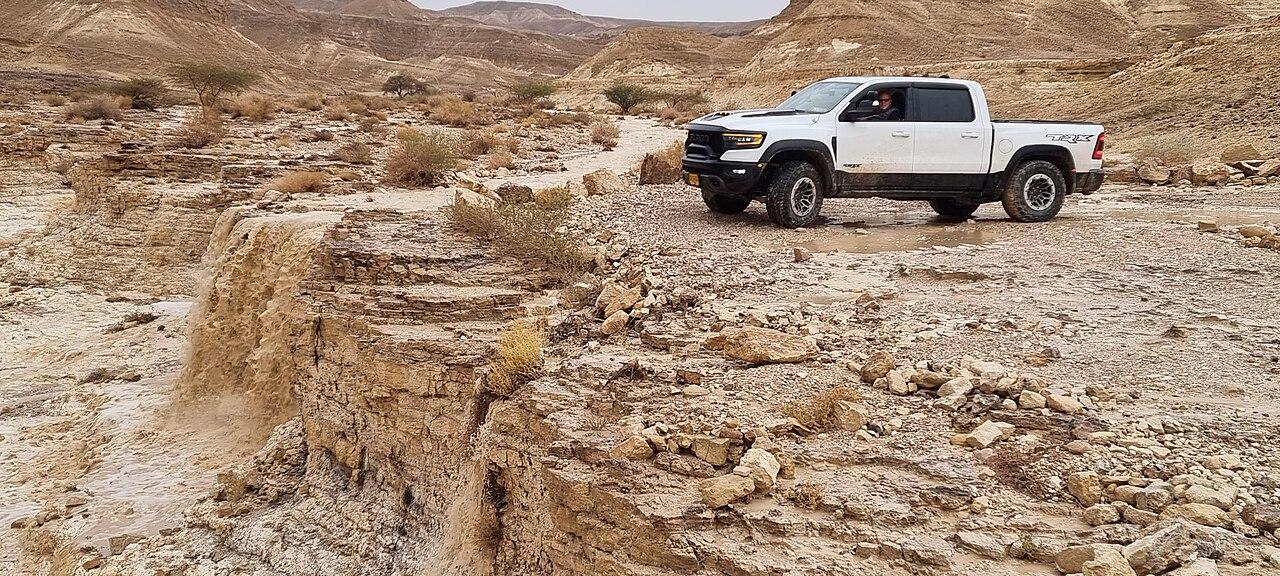
The honest answer today: nobody outside Stellantis and the handful of aftermarket engineering shops that build parts for the Ram 1500 TRX has published a verified fitment list for the 2027 Ram SRT TRX. The truck has been in customer hands for a matter of weeks, not years, and that is not nearly enough time for any manufacturer to test, certify, and publish compatibility data across a parts catalog. Anyone telling you a specific part "fits" the 2027 truck right now is guessing, repeating a forum post, or guessing and calling it a forum post.
That does not mean the answer is a flat no across the board. It means the answer splits by category, and some categories are a lot riskier than others.
Why the shared engine does not mean shared parts
The Ram 1500 TRX (2021-2024) and the 2027 Ram SRT TRX both run a 6.2L supercharged HEMI V8. That is the headline reason people assume parts carry over. It is also where the assumption breaks down.
The 2021-2024 TRX makes 702 hp and 650 lb-ft. The 2027 SRT TRX makes 777 hp and 680 lb-ft, a jump of 75 hp and 30 lb-ft that almost certainly comes from some combination of supercharger pulley or boost changes, a revised ECU calibration, and probably supporting hardware we have not seen a teardown of yet. We cover the output difference in more detail in our breakdown of 702 hp versus 777 hp and in what actually changed for 2027.
The practical point for a parts buyer: "same engine family" is not the same as "same calibration, same supercharger pulley, same exhaust backpressure target, same fuel map." A block casting can be shared while the software and hardware tuned around it are not. Until someone publishes a confirmed spec comparison between the two superchargers and the two ECU calibrations, assume they are different enough that a part built for one is not automatically correct for the other.
The risk tiers, plain and simple
Not every part category carries the same exposure if you guess wrong. Here is how we would rank them.
| Category | Risk level | Why |
|---|---|---|
| Wheels, tires, hitches, bed storage | Lower, but still verify | Mostly bolt pattern, offset, and physical clearance. May carry over if chassis dimensions are unchanged, but that has not been confirmed. |
| Bumpers, armor, winch mounts | Lower-to-moderate | Depends on whether the 2027 front/rear structure, sensors, and crash hardware changed from the 2021-2024 truck. |
| Suspension (coilovers, shocks, spacer kits) | Moderate | Geometry, mounting points, and electronic damper tuning may differ even if travel numbers look similar on paper. |
| Exhaust | High | Tuned specifically to flow and sound targets of one calibration; a system built for a 702 hp truck's backpressure is not guaranteed correct for a 777 hp tune. |
| ECU tuners | High | Written against a specific calibration file. Wrong file, wrong result, and potentially a truck that will not run correctly or throw codes. |
| Supercharger internals (pulleys, upper kits) | High | Changes boost on an engine whose factory tune nobody outside Stellantis has reverse-engineered yet. |
Wheels, tires, and towing hardware: lower risk, still not zero
This is the category most likely to carry over, because it depends on physical dimensions, bolt patterns, and weight ratings rather than engine calibration. If the 2027 SRT TRX shares bolt pattern, hub bore, and offset range with the 2021-2024 truck, a wheel like the Method MR 707 could be a straightforward fit. A bed storage system like the Decked drawer system depends on bed dimensions, which may well be unchanged.
"Could be" is doing real work in that sentence. We do not have a published spec sheet confirming the 2027 truck's bolt pattern, hub bore, or bed dimensions are identical to the outgoing generation. Assuming they are because the name carries over is exactly the kind of guess this piece is warning against. A wheel that is off by a few millimeters of hub bore or a different offset range can rub at full lock or under load in a way you will not catch until you have already paid shipping both ways.
Towing accessories (hitch receivers, brake controllers, weight-distribution hardware) tend to be vehicle-wide rather than trim-specific, but a receiver rated and drilled for one frame is not automatically correct for a frame with different crossmember placement.
Bumpers and armor: check the sensor package before you check the bolt holes
Front bumpers built for the 2021-2024 TRX, like the ADD Phantom front bumper or a light-bar bumper kit built around Baja Designs S8 lighting, are cut and wired around a specific grille opening, specific mounting points, and a specific set of factory sensors (parking sensors, adaptive cruise radar, if equipped). If the 2027 truck changed any of that, even cosmetically, a bumper built for the older truck may not clear, may block a sensor, or may simply not bolt to the right points. The same logic applies to a winch mount built for the earlier chassis, such as the Stealth Fighter winch plate kit.
Exhaust, tuners, and supercharger parts: do not assume, full stop
This is where guessing costs real money and can cost you a running engine.
Take the Whipple Stage 1 supercharger upgrade kit built for the 2021-2024 TRX's 6.2L. That kit is engineered around a known factory boost level, a known factory calibration, and known supporting hardware (injectors, fuel pump output, intercooler circuit) on a 702 hp truck. The 2027 SRT TRX is already making 777 hp from the factory. Adding a boost upgrade designed around a lower-output calibration onto a higher-output starting point is not a question of whether the bolts line up. It is a question of whether the fueling, the factory internals, and the ECU strategy on the newer truck can handle it, and nobody has published that data yet.
Tuners are the clearest example of why "same cylinder count" means nothing. Look at the JB4 tuner built for the Ram RHO: that unit is written specifically for the RHO's 3.0L twin-turbo inline-six Hurricane engine, not the 6.2L V8 at all. It will never work on either TRX, and nobody would assume otherwise once they see the engine listed. The 2021-2024 TRX and 2027 SRT TRX situation is subtler but the same principle applies: a tuner file is written against one specific factory calibration. A tuner proven correct on a 702 hp TRX calibration was not written against the 777 hp SRT TRX's software, and running it blind risks a truck that will not idle right, throws codes, or worse.
Catback systems built for the older truck's exhaust note and backpressure targets, like the Corsa Xtreme catback for the 2021-2024 TRX, sit in the same bucket. Physical fitment (hanger location, pipe diameter at the factory junction) might transfer. Whether it delivers the sound and flow characteristics it was tuned for on a different calibration is a separate question, and one nobody can answer yet.
What to actually do before you order a part
- Get the exact fitment chart from the part manufacturer, not a forum thread or a dealer parts counter guess. Reputable suspension, wheel, and armor makers publish year-specific or VIN-specific compatibility charts. If a listing says "2021-2024 TRX" and does not mention the 2027 SRT TRX, treat that as the manufacturer telling you they have not validated it, not an oversight.
- Call before you buy for anything load-bearing or performance-related. A five-minute call to the manufacturer's tech line asking "has this been tested on the 777 hp 2027 SRT TRX" gets you a real answer faster than any thread search will.
- Have your installer sign off on fitment before the part ships, especially for bumpers, suspension, and anything involving sensors or wiring harnesses. A shop that has actually had a 2027 SRT TRX on a lift is worth more than a hundred posts from people who have not.
- Assume ECU tuners and supercharger internals are a no until a manufacturer explicitly lists 2027 SRT TRX compatibility tied to that calibration. This is not caution for its own sake. Running the wrong tune file on a forced-induction V8 is one of the few mod mistakes that can turn into an expensive repair bill in one drive.
- Watch the gap between MSRP and what people are actually paying. At a starting price of $99,995 plus destination, and with live listings currently averaging around $109,133 for the 2027 SRT TRX, early buyers are already paying a premium for a truck with no track record. Layering an unverified performance part onto that bill multiplies the risk, not just the cost.
For a deeper look at what Stellantis has actually confirmed changed under the 2027 truck's skin, read our full rundown of what changed for the 2027 SRT TRX, and browse the current state of the mod database directly rather than trusting secondhand claims about fitment.
The short version
- No manufacturer has published a verified, VIN/year-specific fitment list for 2027 SRT TRX performance parts yet. The truck is weeks old.
- Wheels, tires, and towing-style accessories carry the lowest risk, but still confirm bolt pattern, offset, and clearance before ordering.
- Bumpers and armor depend on whether the front/rear structure and sensor package changed for 2027. Do not assume a 2021-2024 TRX bumper clears.
- ECU tuners, supercharger internals, and calibration-tuned exhaust are the highest risk category. A part written for a 702 hp calibration is not proven correct on a 777 hp truck, even on the same 6.2L block.
- Wait for a published, manufacturer-confirmed fitment guide before buying TRX-specific performance parts for the 2027 SRT TRX. Guessing on boost and tuning is how you turn a $100,000 truck into a repair bill.