Ram TRX vs Ram RHO: Which Costs More to Insure?
TRX and RHO sit at very different price and power points, and insurers weigh both heavily. This comparison lays out the real variables that drive the gap instead of guessing at a premium number.
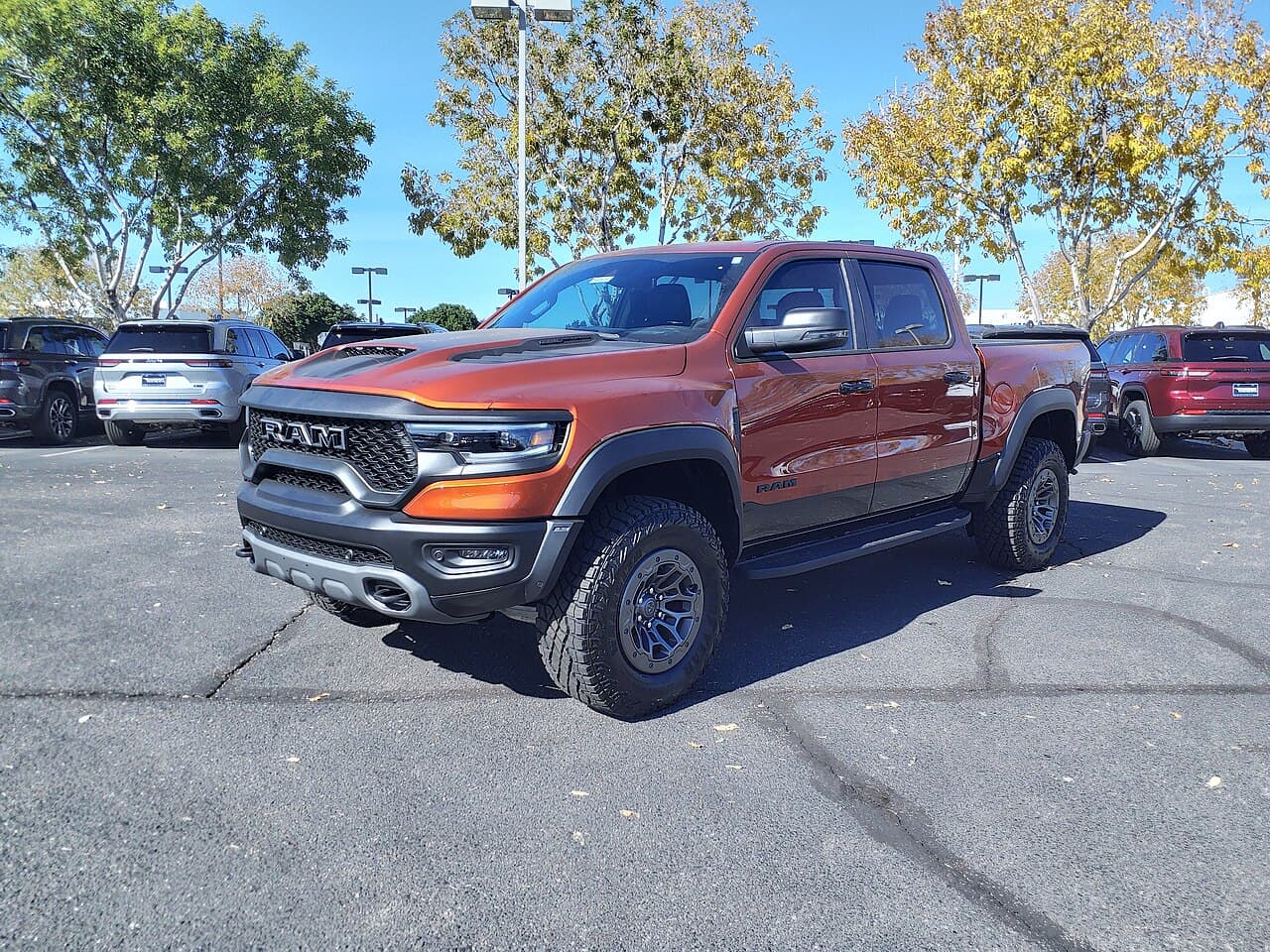
Short answer: on paper, the Ram RHO should land in a lower insurance bracket than either the 2021-2024 Ram 1500 TRX or the 2027 Ram SRT TRX, because it starts cheaper to replace and makes less power. That is a general underwriting tendency, not a guaranteed dollar gap. The only number that matters is a same-terms quote run against your own driving record for the specific truck you are buying.
This page does not hand you a premium figure for either truck. Nobody honest can. Insurance pricing is built from your ZIP code, your driving history, your insurance score in states that allow it, and the carrier's own claims data, not just the vehicle. What we can do is lay out the variables that actually move the needle and tell you which way each one leans.
For the TRX-specific breakdown, see Ram TRX Insurance Cost: What to Expect Before You Buy. For the 2027 SRT TRX, see 2027 Ram SRT TRX Insurance and Ownership Costs: What to Budget Before the Data Exists. This article is the side-by-side synthesis of those two, with the RHO added in.
The numbers that are actually confirmed, for reference: the 2021-2024 TRX makes 702 hp and 650 lb-ft; the 2027 SRT TRX makes 777 hp and 680 lb-ft and starts at $99,995 plus $2,595 destination; used TRX listings currently average $67,255 for a 2021 up to $90,826 for a 2024, and live 2027 SRT TRX listings average $109,133. None of that is an insurance premium. It is the replacement-cost and performance data a carrier's rating engine actually consumes.
What underwriters actually look at
Four factors do most of the work in pricing a policy on a truck like these. None of them is a mystery, and none of them is unique to Ram.
Replacement cost (MSRP and depreciation curve). An insurer's first question is what it costs to put you back in an equivalent truck if yours is totaled. A higher sticker, or a higher used-market value, generally means a higher collision and comp premium, all else equal. "Comp" here means the coverage that pays for non-collision losses like theft, fire, and weather damage.
The 2027 SRT TRX starts at $99,995 plus $2,595 destination, and live listings on this site currently average $109,133. The 2021-2024 TRX ranges from an average of roughly $67,255 for a 2021 up to about $90,826 for a 2024 on the used market, according to our own TRX price pages. The RHO starts well under both. For the current figures, see Ram RHO Price and Specs. Lower replacement cost is the single biggest reason RHO tends to underwrite cheaper.
Horsepower and performance classification. Insurers bucket vehicles partly by output and by how the factory markets the vehicle's performance intent. The TRX (2021-2024) makes 702 hp and 650 lb-ft from its supercharged 6.2L HEMI. The 2027 SRT TRX, built by the relaunched SRT performance division, makes 777 hp and 680 lb-ft from the same architecture. Both get sorted into a high-performance truck category by most carriers' rating engines.
The RHO runs a twin-turbo inline-six (the Hurricane engine, covered on the RHO price and specs page) rather than a supercharged V8, and it is tuned for a different mission than outright power. Less peak horsepower generally correlates with a lower performance surcharge, though the exact cutoffs each insurer uses are proprietary and not published anywhere you or we can check.
Theft and claims data for the segment. High-output trucks with aftermarket followings and strong resale value draw more theft interest in some markets, and insurers price that in using loss data they do not release publicly. We are not aware of any published, segment-specific theft or claims-frequency study that breaks out TRX, SRT TRX, and RHO separately, and we are not going to invent one.
What we can say honestly: a vehicle with a smaller production run and a more specialized buyer pool has no claims history yet for an insurer to price against. The 2027 SRT TRX fits that description right now. Early rating on a truck like that sometimes comes in more conservative, not less, simply because the carrier has nothing to anchor it to.
Repair-cost category. This is the one TRX and RHO owners underrate. A supercharged 6.2L HEMI with a belt-driven blower is expensive to repair after a collision or a mechanical claim. Parts availability and labor hours both factor into a carrier's repair-cost index for the vehicle.
The RHO's turbocharged six is a different parts bin and, on paper, a different repair-cost profile. "Different" does not automatically mean "cheaper" once you account for turbo hardware and a newer platform's parts pricing. Neither truck is cheap to fix after a fender-bender, and the RHO being less powerful does not make it collision-cheap.
How the three trucks line up, qualitatively
| Factor | Ram TRX (2021-2024) | Ram SRT TRX (2027) | Ram RHO |
|---|---|---|---|
| Starting MSRP / typical used price | Used averages run roughly $67,255 (2021) to $90,826 (2024) | $99,995 + $2,595 destination; live listings averaging $109,133 | Lower than both; see the RHO price and specs page |
| Horsepower | 702 hp / 650 lb-ft | 777 hp / 680 lb-ft | Lower than TRX/SRT TRX; turbocharged six, not supercharged V8 |
| Performance classification risk | High-performance truck bucket at most carriers | Same bucket, newer and rarer | Likely a lower-tier performance classification, though this is a tendency, not a rule any carrier publishes |
| Claims/loss history available | Multiple model years of real-world data | None yet, this nameplate is only weeks into customer hands | Limited, platform is recent |
Nothing in that table is a premium number. It is a direction of pressure on a quote, and directions do not always add up the way you expect once a specific carrier's rating model runs your ZIP code and driving record through it.
Why RHO "should" be cheaper, and why that is not a promise
Lower MSRP plus lower horsepower is the textbook combination for a lower premium in standard underwriting logic. That holds across almost every vehicle category, not just Ram trucks.
A buyer cross-shopping the Ram 1500 TRX against the Ram 1500 RHO should expect the RHO to quote lower, most of the time, at the same coverage limits.
But "most of the time" is doing real work in that sentence. Your actual premium also depends on things that have nothing to do with the truck. Your age, your claims history, whether you are financing (lenders often require full coverage with specific limits), your state's rules on performance-vehicle surcharges, and even your ZIP code's rate of hail, theft, or deer-strike claims all factor in before the vehicle itself does. A RHO owner with a recent at-fault claim can easily pay more than a TRX owner with a clean twenty-year record. The truck is one input, not the whole formula.
How to get a real comparison instead of a guess
Do this before you buy, not after:
- Call your own carrier, or get quotes from two or three, and ask for a quote on each specific truck by trim and model year. Use a VIN if you have one in hand, or a build sheet if you are ordering.
- Hold every variable constant except the vehicle. Same liability limits, same collision and comp deductible, same driver listed, same annual mileage estimate.
- Ask specifically whether the carrier applies a performance-vehicle or high-horsepower surcharge, and at what threshold. Some do it by horsepower, some by body style, some by MSRP band, and the cutoffs are not public.
- If you are cross-shopping a used 2021-2024 TRX against a new RHO, get the TRX quote on the specific model year and mileage you are actually looking at. Our used TRX buying guide and the live pricing in our TRX for sale market breakdown will help you pin down which year you are really comparing.
- If the 2027 SRT TRX is in the mix, expect the quote itself to take longer to get. Some carriers are slower to rate a new nameplate with no loss history. That is a process annoyance, not evidence of a higher or lower price either way.
A same-terms, same-driver, VIN-specific quote from your own carrier is the only number that answers "which costs more to insure" for your situation. Everything above it is a tendency.
The short version
- RHO's lower MSRP and lower horsepower than the TRX or SRT TRX typically push its insurance quote lower under standard underwriting logic, but that is a general tendency, not a guaranteed dollar gap.
- The 6.2L supercharged HEMI in both TRX generations lands in a higher repair-cost and performance classification at most carriers. The RHO's turbocharged six is a different risk profile but not automatically a cheap one to fix.
- The 2027 SRT TRX has no claims or loss history yet, so any insurance commentary on it is a process note, not a cost conclusion.
- Get VIN-specific quotes at identical coverage limits and deductibles for both trucks before you decide. If you have not settled on a truck at all yet, start with the full TRX vs RHO comparison and work backward from there.