Ram TRX vs RHO in Snow: Which Off-Road Ram Actually Handles Winter Better
Horsepower doesn't win on ice, so buyers cross-shopping these two want to know which setup actually behaves better in snow. This comparison breaks down the real variables, tires, weight, and ground clearance, rather than declaring a winner on spec sheet alone.
Gear in this article
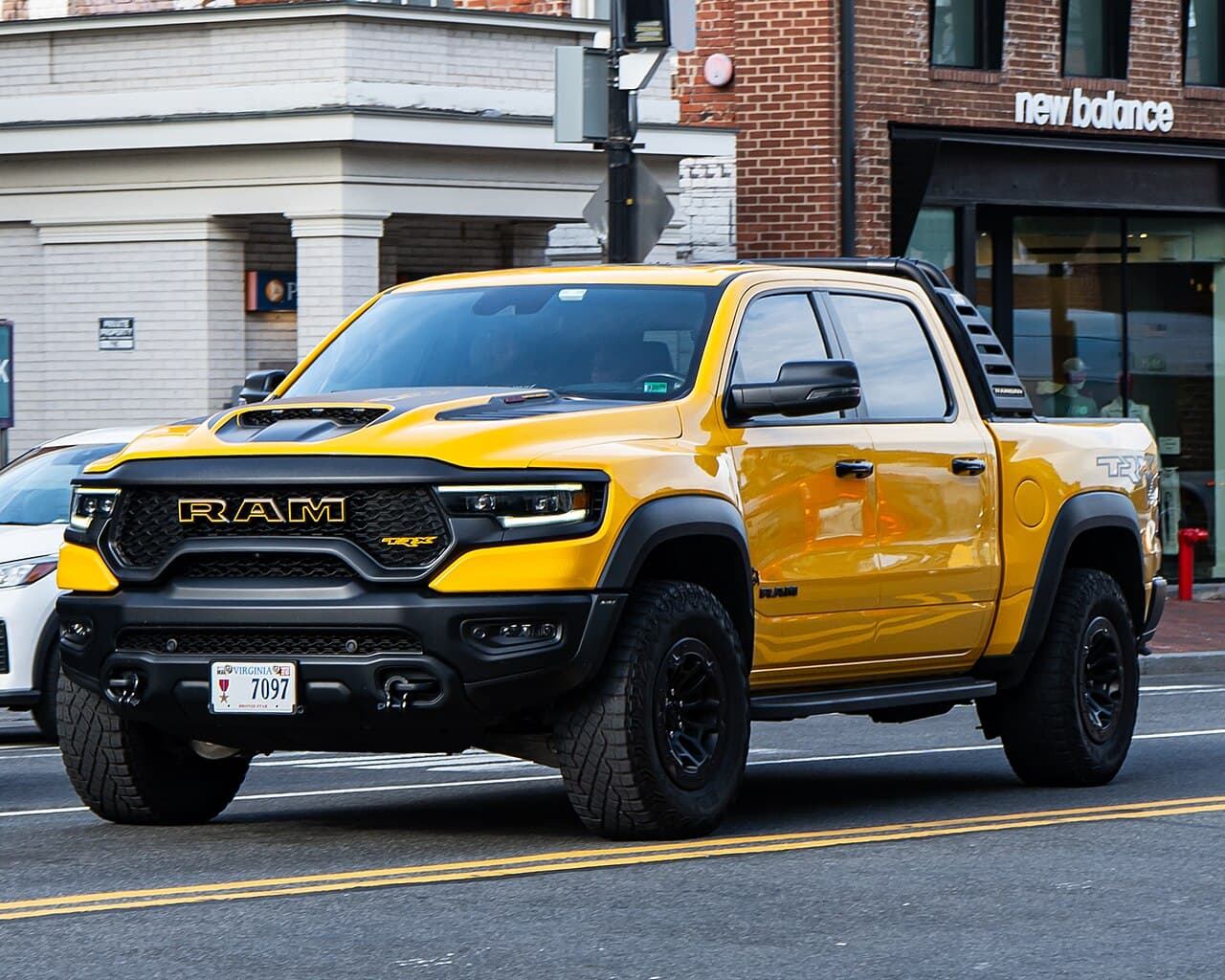
The short answer: neither truck has a built-in winter advantage from its engine, and the comparison that matters is tires, weight distribution, and ground clearance, not the horsepower gap between a 702 hp Ram 1500 TRX and a Ram 1500 RHO running Ram's twin-turbo six. A 2021-2024 TRX on worn all-terrains will lose to a RHO on a good winter tire every time, and the reverse is just as true. This is a design-tradeoff comparison, not a measured outcome, because neither truck has a published long-term winter test from this site or anyone else.
Why horsepower doesn't decide this
More power only matters once you already have traction. On snow and ice, the limiting factor is how much grip the contact patch can generate, and that is a function of tire compound, tread design, tire pressure, and how smoothly the driver asks for throttle. A 777 hp 2027 SRT TRX and a 702 hp 2021-2024 TRX will both spin a tire the instant you ask for more torque than the snow can hold. The extra 75 hp and 30 lb-ft the 2027 truck carries over the earlier generation (detailed in our TRX horsepower breakdown) changes acceleration on dry pavement. It does nothing for you on a packed, snow-covered on-ramp, and if anything it makes it easier to overwhelm the rear tires if you are heavy-footed.
The RHO's turbocharged six makes less peak power than either TRX, and that is close to irrelevant here too. What actually separates the two trucks in snow is the stuff that never shows up on a spec sheet comparison: curb weight split front to rear, the factory tire, and how much of the chassis's travel is wasted compressing snow instead of finding grip underneath it.
Weight and the engine you are carrying over the front axle
The 6.2L supercharged HEMI in both TRX generations is a heavy iron-block V8 with a belt-driven blower sitting in the valley, and it sits ahead of the front axle. That nose weight helps front-tire bite in some low-speed snow situations (digging out of a parking spot, climbing a snowed-in driveway) and hurts it in others (more weight transfer under braking, more tendency to push straight in a turn on ice).
The RHO's Hurricane twin-turbo inline-six is meaningfully lighter than the supercharged V8, which shifts the truck's front-to-rear balance rearward compared to a TRX. Exact curb weights and the resulting distribution are published in our RHO price and specs breakdown; we are not going to guess at numbers here. The practical effect is a RHO that tends to feel lighter on its front tires at low speed and less prone to front-end push on glare ice, but also with less weight pressing the front contact patch into loose snow when you need it to dig in.
Neither effect is a clear win. A heavier nose helps you claw out of a snowbank; it also means more mass to stop on ice. This is a tradeoff a spec sheet cannot settle, and neither can a comparison that has not been run back to back in a controlled test, which this one has not.
Tires are the single biggest lever on either truck
If you remember one thing from this article, make it this: the factory all-terrain tire on either truck, TRX or RHO, is not a winter tire, and tire choice will move the needle more than any other variable discussed here. All-terrain tread is a compromise for gravel, mud, and highway wear, and it gets hard and loses bite below about 40 degrees Fahrenheit regardless of tread depth. A dedicated winter tire, or at minimum a true three-peak-mountain-snowflake-rated all-terrain, will out-brake and out-turn either truck's stock rubber on packed snow and ice by a wide margin.
This matters more for the TRX than people expect, because the factory wheel and fender package on the 2021-2024 truck is built around a specific tire diameter and offset, and swapping to a different winter-specific tire size without checking clearance can cause rubbing you will not notice until you are loaded up with snow in the wheel well. Our tire and lift fitment guide for the TRX covers what actually clears without guesswork, including what changes if you also run a leveling kit or coilover spacer like the ICON coilover spacer kit for TRX and RHO.
The RHO's factory tire is smaller in diameter than the TRX's, which has its own tradeoffs in snow depth (discussed below) but generally gives you more off-the-shelf winter tire options without the fitment puzzle the TRX's 35-inch factory diameter creates. Confirm exact sizing for your model year before you buy, since RHO trim levels vary.
Ground clearance and deep snow
Both trucks sit higher than a standard Ram 1500 Rebel, and both were designed with off-road suspension travel as a priority, which is a genuine advantage once snow gets deep enough to push against the frame rails and differential housings rather than just the tires. The TRX's wider track and reinforced front and rear suspension were built around desert running, not snow, but the ground clearance benefit carries over: more room between the undercarriage and the snowpack means less chance of high-centering in a drift. Our breakdown of what the TRX's desert-tuned suspension is actually good for and the equivalent RHO suspension breakdown both cover this in more depth than a snow-specific comparison needs to.
The honest read: if your winters mean regular unplowed driveways or snow deep enough to drag on the frame, the TRX's larger factory tire and higher stance give it a real edge in raw clearance. If your winters mean mostly plowed roads with occasional ice, that advantage mostly disappears and tire choice takes over as the deciding factor.
What we don't know yet
There is no published long-term winter reliability data for the RHO, and there is none for the 2027 Ram 1500 SRT TRX either. The 2027 truck has been in customer hands for a matter of weeks. Neither this site nor anyone else has run a controlled back-to-back snow test of a TRX against a RHO, and any article claiming a measured winter traction advantage for either truck right now is not working from real data. What follows from here is design-tradeoff reasoning, not a test result, and we want that stated plainly rather than buried in a hedge. For a broader look at how the two trucks compare outside of winter conditions, see our full TRX vs RHO comparison.
How to actually choose between them for winter
Run this in order:
- What tire will you actually run. If you are willing to buy a dedicated winter tire or a strong 3PMSF-rated all-terrain for either truck, that single decision outweighs everything else in this article. If you plan to run whatever the dealer put on it, the comparison tilts toward whichever truck's stock tire you trust more for your specific climate, and neither manufacturer markets either tire as a winter tire.
- How deep does your snow actually get. Regular unplowed depth favors the TRX's larger tire and higher factory stance. Mostly plowed roads with ice patches make ground clearance close to a non-factor and put tires and driver input back in charge.
- What you're comfortable paying to get there. A clean 2021 TRX now averages roughly $66,800 on the used market, while a 2024 averages closer to $89,400; the 2027 SRT TRX starts at $99,995 before destination. A new RHO's pricing and trim spread is broken out in the RHO specs article linked above. Winter capability on either truck is a fraction of what you'll spend on the truck itself, so buy the one you'll actually enjoy owning the other nine months of the year, and budget separately for the right tire.
If you are cross-shopping a used TRX against a new RHO specifically for snow, read our dedicated guide to TRX winter driving before you decide anything else; most of what determines a bad winter with either truck is driver habit, not hardware.
The short version
- Horsepower is not the variable that matters in snow; tire compound and driver input are.
- The TRX's heavier supercharged V8 sits further forward than the RHO's lighter turbo six, which cuts both ways for traction and braking.
- The TRX's larger factory tire and higher stance help in deep, unplowed snow; that edge shrinks fast on plowed roads with ice.
- There is no published long-term winter data for the RHO or the 2027 SRT TRX. Treat any claim of a tested winter winner between these trucks, including implied ones, as unverified.
- Decide on ground clearance needs, tire budget, and the truck you'll want to drive the rest of the year, then confirm fitment before you buy tires for either one.