Selling Your Ram TRX: Trade-In vs. Private Party
A used TRX market with over a thousand live listings gives sellers real leverage, but trading in at a dealer and selling private-party lead to very different outcomes. Here's how to decide which route fits your situation.
Gear in this article
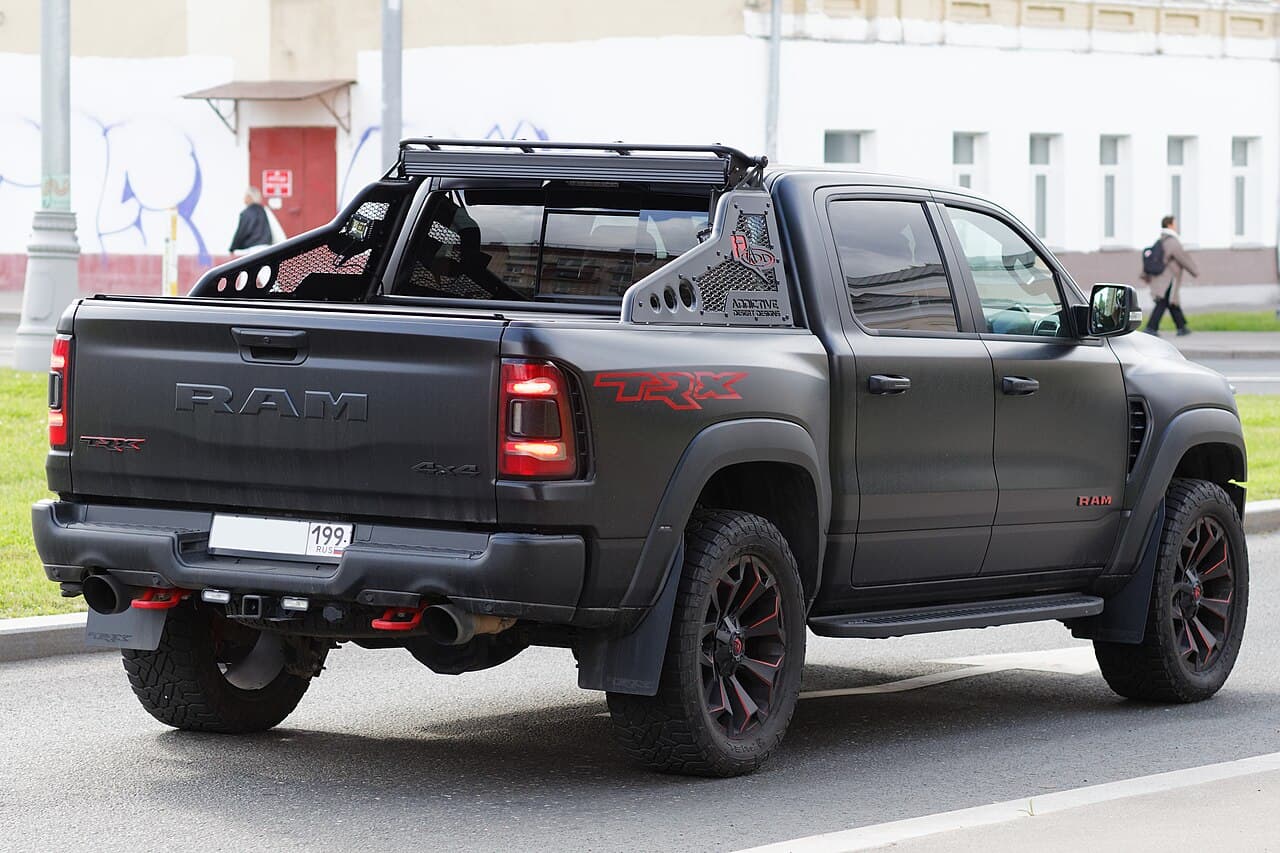
Trade-in gets you a check in an hour and takes the tax hit off your next purchase in most states. Private-party sale almost always nets more money, but it costs you time, some risk, and that tax offset. With 1,561 TRX listings live across dealer lots right now, neither path is starved for comparables, which is exactly why you should price the truck before you pick a lane.
The short version of the decision: if your time is worth more than the gap between offers, trade in. If the gap is real money and you have a few weeks to manage it, sell private party. The right answer also depends on which truck you own, a 2021-2024 TRX with years of resale history behind it, or a 2027 SRT TRX that is still weeks old with no track record at all. Below is how to find out which situation you are actually in.
What the current market looks like before you decide anything
The live inventory the dealer network is working with right now breaks down like this: 341 listings for 2021 TRX, 521 for 2022, 226 for 2023, 266 for 2024, and 206 for the new 2027 SRT TRX. That is 1,561 trucks a buyer can cross-shop against yours before they ever call you back.
This matters for two reasons. First, 2022 is the deepest model year on lots right now by a wide margin, which means a 2022 seller is competing against more trucks than a 2023 seller, who is working a noticeably thinner field. Second, none of this tells you what your specific truck is worth. It tells you how crowded your lane is. For an actual number, start with the full breakdown of what live listings show about resale value and the current live-market snapshot, both of which track these same listings in more depth than a generic used-car valuation tool will give you.
The 2027 SRT TRX's 206 listings are a different animal. Production only started in August 2026, so those are overwhelmingly new or near-new trucks moving through dealer allocation, not a resale market with any depreciation history behind it. If you are weighing selling a 2027, you are not comparing against years of trade-in data the way a 2021-2024 TRX owner can; you are comparing against other very early examples, some of which may still be carrying dealer markups over the $99,995 starting MSRP. Read what has actually changed on the 2027 SRT TRX before you assume its resale behavior will mirror the older truck's.
Do not use this article, or any single number in it, as your valuation. Use the linked market pages, pull your model year and mileage band, and come back with a realistic range before you talk to anyone.
Trade-in: what you are actually buying with the convenience
A dealer trade-in is the path of least resistance. You drive in, they run the VIN, you sign, you drive out in the new truck. No listing photos, no strangers in your driveway, no financing fall-throughs two weeks in.
The real financial advantage in most states is the sales-tax offset: you pay tax only on the difference between the new truck's price and your trade-in value, not on the full purchase price. Depending on your state's tax rate and the gap between the two trucks, that can be worth real money, sometimes enough to close most of the gap between a trade-in offer and a private-party sale. Check your state's rule specifically. A few states tax the full purchase price regardless of trade-in, which erases this advantage entirely.
What you give up is pricing room. The dealer is pricing your trade against the same wholesale auction data and the same glut of 2022s everyone else is looking at, and they have to leave room to recondition and resell at a margin. We are not going to hand you a percentage off retail, because nobody tracks that number honestly across markets, and the dealer that quotes you low this week may quote differently next week with different inventory on their lot. Get the trade-in number in writing, then check it against what the same model year and mileage is actually listing for using the live market page before you sign anything.
Trading in a 2027 SRT TRX is a different conversation entirely. With production two months old, a dealer has almost no trade-in comps to work from, and there is no established depreciation curve to point to. If you are trading one in this early, you are either upgrading trims, correcting an order mistake, or cashing out on a truck that is still in demand at or near MSRP. That last scenario can actually favor the seller, since dealers chasing allocation may value a clean, low-mile 2027 differently than they would a five-year-old truck with known mileage and known wear.
Private party: more work, usually more money, real friction
Selling private party means you are the one answering texts from people who will not show up, hosting test drives, and handling the paperwork your state requires for title transfer. It is a part-time job for a few weeks.
The upside is that you are selling at something closer to retail instead of wholesale, because you are not leaving margin for a dealer to resell the truck. How much more that nets you depends entirely on your model year, mileage, condition, and how patient you are willing to be with the listing. We are not going to quote you a specific premium, because it swings by region, by season, and by how badly the buyer wants your specific color combination. Price it using the same live comparables you would use for a trade-in, listed at what the live market actually shows, and be honest about where your truck's mileage and options actually land in that range.
For a 2021-2024 TRX, that comparable pool is deep and the private-party market is well established; owners sell and buy these trucks every day. For a 2027 SRT TRX, private-party sales this early are rare, and most of the examples changing hands outside dealer lots right now are closer to flips than ordinary resales. If you bought a 2027 recently and need to sell, expect a thinner, more unpredictable buyer pool than you would get with an older TRX.
The other cost is risk. You are carrying the truck on your insurance and your title until the sale actually closes, you are the one filtering out people who want to "take it for a loan appraisal," and you are the one who has to say no to a cashier's check from a buyer you have never met. None of that is hypothetical with a $70,000-$110,000 truck; TRX and SRT TRX listings attract their share of scam inquiries precisely because the price point is high enough to be worth someone's effort.
Buyers will want a pre-purchase inspection. Plan for it either way.
Whether you trade in or sell private party, assume a serious buyer is going to want the truck looked at before money changes hands. On a trade-in, the dealer does their own inspection and that is baked into their offer. On a private-party sale, the buyer may show up with their own mechanic or ask to take it to one.
Walk through the pre-purchase inspection checklist for a used Ram TRX yourself before you list the truck, not after a buyer finds something you did not know about. Fluid leaks, worn ball joints, tire wear patterns on the factory-sized tires, and supercharger belt condition are all things a buyer's inspector will flag on a 2021-2024 TRX, and it is better for you to know about them, and price around them or fix them first, than to get a lowball counter-offer after the fact.
A 2027 SRT TRX will not have wear items to worry about yet, since there is no failure history on a truck this new. A buyer's inspection on one is really a check for delivery damage, dealer-installed accessories, and whether everything on the build sheet matches what is actually on the truck, not a search for known problems.
Modifications change the math on both sides
If your TRX has aftermarket parts, that changes both offers, and not always in the way you would hope. A tune from something like the Whipple Stage 1 supercharger upgrade or a tuner box adds real power but makes a dealer's used-car desk nervous, because reconditioning and reselling a modified performance truck is a different calculation than a stock one. Trade-in offers on heavily modified trucks tend to reflect that caution.
Private-party buyers split into two camps: some specifically want a built truck and will pay for it, others want factory-stock and will walk the moment they see an aftermarket exhaust or a lift kit. Before you price a modified truck for either path, read which TRX mods actually void your warranty and which don't. A buyer evaluating your truck is going to ask the same question, and having a clear answer matters: there is a federal rule, generally known by the case that established it, that says a manufacturer cannot deny an otherwise unrelated warranty claim just because you installed an aftermarket part, unless they can show that part actually caused the failure. Knowing where that line sits, and where a dealer could still argue a specific mod caused specific damage, makes you look like a seller who knows their own truck instead of one hoping nobody asks.
Cosmetic mods, wheels like a set of Method MR 707s, or a bed storage system like a Decked drawer system, generally do not spook either a dealer or a private buyer the way a tune or a supercharger swap does. Reversible, bolt-on items are a much smaller conversation than anything that touches the powertrain's calibration. This whole question is largely moot for a 2027 SRT TRX for now; the truck is too new for a meaningful aftermarket catalog to exist yet.
The short version
- Trade in if speed and the sales-tax offset matter more to you than squeezing out the last few thousand dollars, and get the dealer's number in writing before you compare it to anything.
- Sell private party if you have a few weeks to manage buyers and want a price closer to retail, and price it using live comparables, not a guess.
- A 2021-2024 TRX has years of resale data behind it; a 2027 SRT TRX does not, so treat any trade-in or private-party number on one as an early estimate, not an established market price.
- Check the current live TRX market and the resale value breakdown for your exact model year before you accept any number from anyone.
- Run your own pre-purchase inspection before listing, and have a straight answer ready on what your mods do to warranty coverage if the truck is modified.