Ram TRX vs. Ram Power Wagon: Which Off-Road Ram Actually Fits You
Both are factory off-road Rams, but one is built for high-speed desert running and the other for low-speed rock crawling and winching. Here's how to decide which one actually matches how you drive and tow.
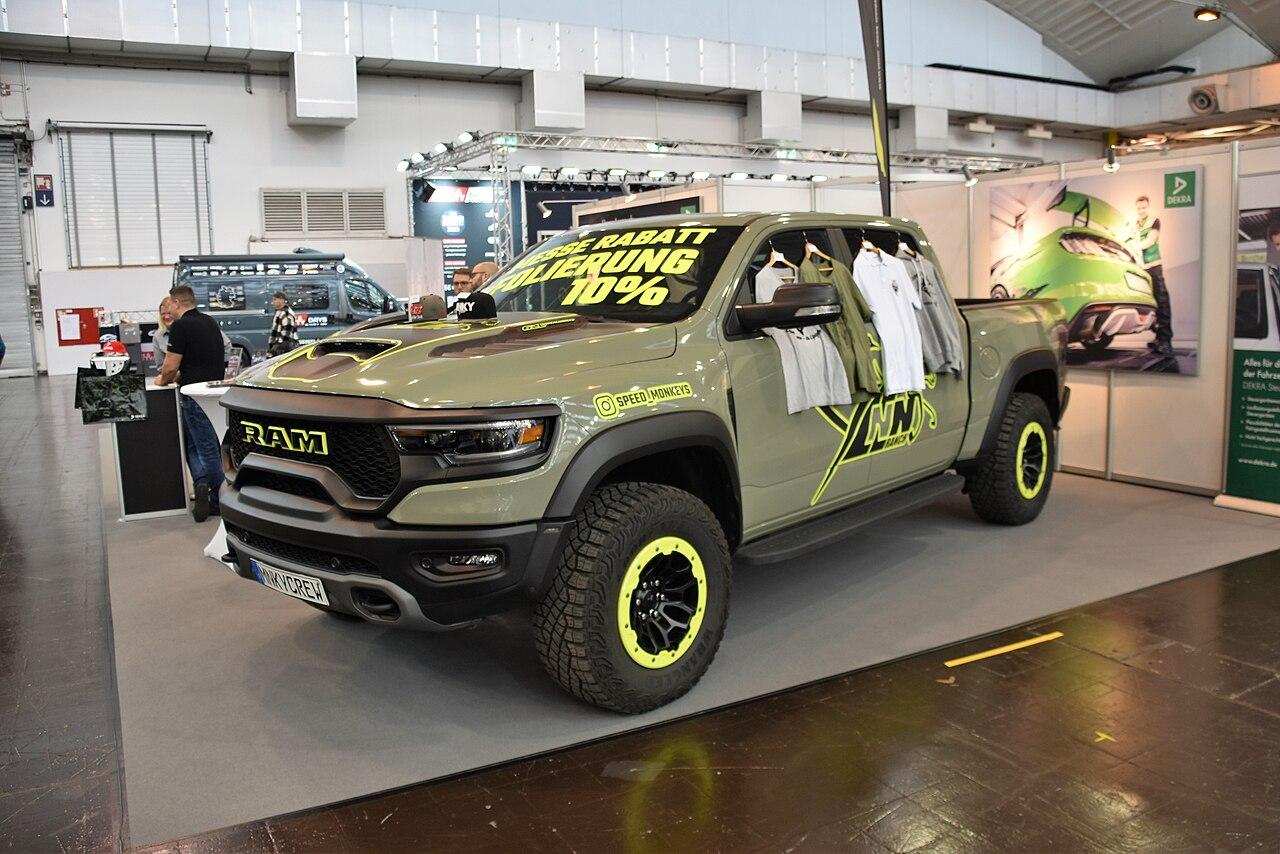
If you need to cover 60 miles of open desert at 90 mph without breaking the truck, buy the TRX or the 2027 SRT TRX. If you need to winch a dead tractor out of a creek bed, crawl a rock ledge in low range, or tow a heavy trailer with a truck that can take real abuse on a work site, the Power Wagon is built for that job and the TRX is not. They are both factory Ram off-roaders, they are not built to do the same thing, and picking the wrong one for your actual use case is the expensive mistake.
This is a buying guide, not a shootout. One of these trucks will be obviously wrong for you once you read the next few sections.
What each truck is actually built to do
The Ram 1500 TRX (2021-2024) and the Ram 1500 SRT TRX (2027-present) are half-ton trucks tuned for one thing: holding speed over rough, open terrain. Long-travel coilover suspension, external-reservoir shocks tuned for high-speed compression, and a wide track built to soak up whoops and washboard at speeds that would shake a normal pickup apart. It is a desert truck first. We cover what that suspension is actually good for, and where it falls short, in our breakdown of TRX off-road capability.
The Power Wagon is a different animal built for a different job. It is based on Ram's heavy-duty 2500 platform, not the 1500, which means a heavier frame, solid front and rear axles instead of the TRX's independent front suspension, and a factory-equipped winch mounted up front. The signature Power Wagon features, going back to the nameplate's 2005 revival, are front and rear locking differentials and an electronically disconnecting front sway bar that lets the front axle articulate far beyond what a TRX's independent front end can do. That is a low-speed rock-crawling and recovery tool, not a desert runner. Specific current-year output, torque, and the exact winch capacity on today's Power Wagon should be verified against Ram's current build sheet before you make a decision based on a number, since this article does not carry verified figures for that truck.
Engine and performance: what is confirmed and what is not
Here is what we can state as fact, because it is published and verified for TRX Central:
| Truck | Engine | Output | 0-60 |
|---|---|---|---|
| Ram 1500 TRX (2021-2024) | 6.2L supercharged HEMI V8 | 702 hp / 650 lb-ft | 4.5 seconds |
| Ram 1500 SRT TRX (2027) | 6.2L supercharged HEMI V8 | 777 hp / 680 lb-ft | not yet published |
| Ram 2500 Power Wagon | verify current engine and output with your dealer | verify | verify |
The Power Wagon has historically run a naturally aspirated 6.4L HEMI V8, not the supercharged 6.2L in the TRX lineup, but exact horsepower, torque, and whether that remains the powertrain for the current model year is something you need to confirm against Ram's current spec sheet, not a number pulled from memory or a forum thread. Do not shop a Power Wagon against the TRX on horsepower alone. They are not solving the same problem, and a supercharged half-ton will out-accelerate a heavy-duty three-quarter-ton truck every time without that gap telling you anything useful about which one survives a rock ledge.
For more on what the extra 75 hp and 30 lb-ft actually buys you in the 2027 SRT TRX over the outgoing truck, see our 702 vs 777 breakdown, and for the full list of what changed in the 2027 redesign, see what actually changed for 2027.
Chassis and off-road hardware: desert suspension versus solid-axle crawler
This is the real fork in the road, more than horsepower.
The TRX and SRT TRX run an independent front suspension with long-travel coilovers and bypass shocks (dampers with external tubes that let oil skip the piston near the end of travel, so the ride stays controlled at speed without getting harsh). That geometry is why the truck is stable landing a jump or holding a line through a rutted wash at 70 mph. It is also why it does not have the same low-speed axle articulation as a true rock crawler. Independent front suspension limits how far one wheel can droop relative to the other compared to a solid axle, and that matters when you are trying to keep all four tires in contact with an uneven rock face at 2 mph.
The Power Wagon's solid front axle, locking differentials front and rear, and disconnecting sway bar exist specifically to solve that low-speed problem. Disconnect the sway bar and the front axle can flex independently of the frame, letting a tire drop into a hole while the opposite tire stays planted. That is a genuinely different design philosophy, built for technical trail obstacles and winching, not high-speed stability. A factory-mounted winch comes standard on the Power Wagon, which the TRX does not offer from the factory; TRX owners who want recovery capability add a winch-compatible front bumper and a winch as an aftermarket build, which is a real cost to factor in if trail recovery matters to you.
Neither truck does the other's job well. A TRX with 35s and a winch bumper is still riding on independent front suspension without locking differentials. A Power Wagon at highway speed on washboard will not feel like a desert truck, because it was never tuned to be one.
Towing and payload: what the numbers actually mean for you
The TRX (2021-2024) is rated for a maximum tow of 8,100 lb and maximum payload of 1,310 lb. The 2027 SRT TRX has not published a full towing figure difference breakdown as of this writing beyond the drivetrain change; check our towing capacity article for the current confirmed numbers before you shop based on a trailer weight.
The Power Wagon, built on the heavier 2500 chassis, is generally going to carry more payload and tow more than a half-ton TRX, which tracks with its role as a heavy-duty truck with off-road hardware bolted on rather than a performance truck with light off-road upgrades. But do not take a tow rating from memory into a dealership. Confirm the current year's tow and payload ratings for the specific Power Wagon trim and cab configuration you are looking at, because those numbers move with cab size, bed length, and axle ratio in ways the TRX lineup does not.
If towing a travel trailer or a car hauler on a regular basis is the actual use case driving this purchase, that alone should push you toward the Power Wagon's heavier chassis rather than the TRX's.
What they actually cost
Based on TRX Central's own live market data, used Ram TRX pricing by model year currently averages:
| Model year | Average listed price |
|---|---|
| 2021 TRX | $67,255 |
| 2022 TRX | $73,476 |
| 2023 TRX | $82,568 |
| 2024 TRX | $90,826 |
| 2027 SRT TRX | $109,133 |
The 2027 SRT TRX starts at $99,995 plus $2,595 destination from the factory, with live listings currently averaging above that sticker, which reflects demand on a truck that has only been in customer hands for a few weeks. For the full current pricing picture across both generations, see our live pricing page and our deeper look at new MSRP versus used market reality.
We are not going to state a Power Wagon price here. Power Wagon pricing depends heavily on cab configuration, bed length, and trim package in a way the single-configuration TRX lineup does not, and any number we printed would be stale or wrong for your build the moment you walked into a dealership. Pull the current window sticker or build-and-price tool for the exact configuration you want and compare that real number against the TRX pricing above. Do not assume one is categorically cheaper than the other without doing that math for your specific trucks, because trim and options can close or widen that gap more than people expect.
Which one actually fits you
Work through this honestly before you shop:
- You drive mostly pavement and open desert, want to hold triple-digit speeds on rough ground, and rarely need low range. The TRX or 2027 SRT TRX is the right truck. Start with our used TRX buying guide if you are shopping the outgoing generation.
- You winch regularly, crawl rock ledges, or need true low-speed axle articulation on technical trails. The Power Wagon's solid axles, locking diffs, and factory winch solve a problem the TRX's suspension was never designed for.
- Towing a heavy trailer is a real, recurring part of your life, not an occasional job. The Power Wagon's heavier-duty chassis is the more honest answer, independent of off-road preference.
- You want both high-speed stability and heavier-duty towing, and you are willing to look outside the Ram 1500 off-road lineup entirely. That is a real tension these two trucks do not resolve for you, and it is worth cross-shopping against the lighter, turbocharged Ram 1500 RHO before you commit either way.
The short version
The TRX and SRT TRX are desert speed trucks on a half-ton chassis. The Power Wagon is a heavy-duty rock-crawling and winching truck on a three-quarter-ton chassis with solid axles and locking differentials. Horsepower comparisons between them do not tell you which one is right, your terrain and towing needs do. Verify current Power Wagon horsepower, torque, winch rating, and pricing directly with Ram before you buy, since none of those numbers are settled enough here to quote as fact, and check the live TRX pricing page for where used and new TRX pricing actually sits today.