Setting Up a Ram TRX to Tow: Hitches, Weight Distribution, and Brake Controllers
A factory tow rating is only useful if the hitch, weight-distribution setup, and brake controller behind it are matched correctly to the truck. Here's how to think through the equipment side of towing with a TRX without guessing at numbers that aren't published.
Gear in this article
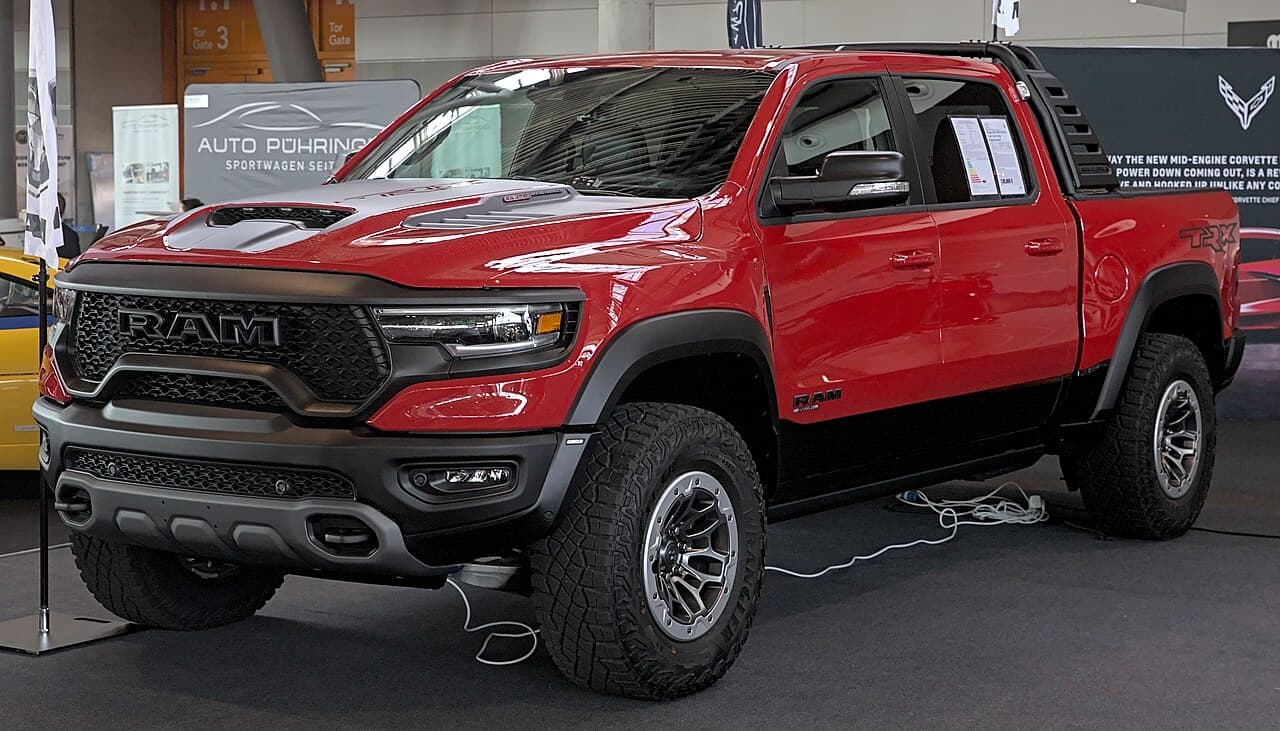
The Ram 1500 TRX is rated to tow 8,100 lb maximum and carry 1,310 lb of payload, and neither number changes because you bought a nicer hitch. Every piece of towing equipment on this truck, the receiver, the weight-distribution hardware, the brake controller, exists to help you use that rating safely, not to raise it. Get the equipment wrong and you can turn a truck that tows fine into one that sways, squats, or stops badly, well under its rated capacity.
This piece is about the hardware behind the hitch ball. For what the TRX can actually pull in the real world and how it behaves doing it, see our breakdown of what the TRX can actually pull and a trip report on towing a travel trailer with a TRX. This article covers the receiver, the weight-distribution question, and the brake controller.
The hard ceiling: 8,100 lb tow, 1,310 lb payload
Every Ram 1500 TRX built from the 2021 through 2024 model years carries the same factory numbers: 8,100 lb max tow rating and 1,310 lb max payload. Both figures come from Ram's own published ratings for the TRX, not from the hitch, not from the brake controller, and not from a dealer's add-on package.
Payload matters here more than people expect. Tongue weight from a trailer (typically 10 to 15 percent of trailer weight for a conventional hitch) comes out of your payload budget, along with passengers, cargo, and any bed-mounted gear like a drawer storage system. A TRX that's rated to tow 8,100 lb can still run out of payload before it runs out of tow rating if the tongue weight and the people in the cab add up fast enough. Do that math with your actual trailer's tongue weight and your actual truck's door-jamb payload sticker, not the press-release number, before you assume you're within limits.
None of this has a published equivalent yet for the 2027 Ram SRT TRX. The extra 75 hp and 30 lb-ft over the 2021-2024 truck (777 hp and 680 lb-ft total) do not automatically mean a higher tow or payload rating, and we are not going to guess at one. Confirm the window sticker and the owner's manual for your specific SRT TRX build before you plan a trailer around it.
Hitch receiver classes: what they mean, and why you still have to check yours
Hitch receivers are rated in classes, and the class tells you the ballpark of what the receiver itself is built to handle, not what your truck is rated for.
- Class III receivers (2-inch receiver tube) typically top out in the 6,000 to 8,000 lb range depending on the specific hitch and whether it's used with or without weight distribution.
- Class IV receivers (also usually a 2-inch tube, heavier construction) commonly run from roughly 8,000 up to 10,000-12,000 lb, again depending on the specific part and whether weight distribution is in use.
- Class V receivers step up further, often with a 2.5-inch tube, and are built for the kind of towing most TRX owners will never approach.
Those ranges are generalizations about how the industry labels receiver classes, not a rating for any specific hitch. A factory-style receiver hitch for the TRX is typically sold in the Class IV range, which clears the 8,100 lb max tow rating with room to spare, but "Class IV" on a label does not mean every Class IV hitch is rated to 8,100 lb or beyond. The actual number is stamped on the hitch itself or listed on its spec sheet, and it is the lower of the hitch's rating and the truck's rating that governs what you can legally and safely tow.
Before you buy or reuse a hitch:
- Confirm the hitch's stamped weight rating and whether it assumes weight distribution or not (some hitches carry a materially higher rating with a WD system installed).
- Confirm the receiver tube size matches your weight-distribution hardware and any accessories (bike racks, cargo carriers) you plan to run in the same receiver.
- Confirm the hitch is listed as fitting your specific model year of TRX. Bumper and frame mounting points have not changed dramatically across 2021-2024, but always check fitment against your exact year rather than assuming a listing that says "TRX" covers every one.
Does a TRX need a weight-distribution hitch?
Weight-distribution hitches (hardware that uses spring bars to transfer some of the trailer's tongue weight back onto the tow vehicle's front axle and forward onto the trailer's axles) exist to fix a specific problem: a nose-heavy tow vehicle and a tail-heavy trailer that wants to sway.
The TRX complicates this in a way a Rebel or a regular Ram 1500 does not. The TRX rides on a factory-raised, off-road-tuned suspension with a longer wheel travel than any other Ram 1500 trim, and that suspension already sits softer and taller at the front than a street truck's. Loading a conventional ball-mount hitch with a heavy tongue weight squats the rear and can lift the front in a way that's more noticeable on this suspension than on a standard-height half-ton.
For a trailer with a lighter tongue weight (small utility trailer, light single-axle camper) relative to the truck's payload, a standard weight-carrying hitch is often fine, and adding weight distribution gains you very little. For a heavier travel trailer where tongue weight starts eating a meaningful chunk of that 1,310 lb payload number, weight distribution helps level the truck, improves headlight aim and steering feel, and reduces trailer sway.
The tradeoff on a TRX specifically: the truck already sits high, and a weight-distribution system that over-corrects can push the front end up further and change the geometry of a suspension that was tuned for off-road articulation, not for towing. Spring bars that are too stiff for the trailer can also fight the TRX's factory ride height instead of working with it. The fix isn't to avoid weight distribution outright, it's to have the system's spring bar weight rating matched to your actual loaded tongue weight, and to re-check ride height front and rear once it's hooked up, not just eyeball it in the driveway unloaded.
If you've already changed the suspension (a taller set of King Shocks, a coilover spacer lift kit, or an adjustable rear suspension kit), that changes your starting ride height and your squat behavior under tongue weight, so re-evaluate whether weight distribution is still needed and at what bar weight, rather than reusing a setup that was dialed in for the factory suspension.
Integrated versus aftermarket trailer brake controllers
A trailer brake controller tells an electric or electric-over-hydraulic trailer brake how hard to apply when you hit the truck's brake pedal (or when you manually activate it). You need one any time you're towing a trailer with its own brakes, which for most TRX owners means anything beyond a small unbraked utility trailer.
The 2021-2024 Ram 1500 TRX can be ordered with a factory integrated trailer brake controller built into the dash, and this is the simplest path if your truck already has it: no separate box to mount, calibrated through the truck's own instrument cluster menu, and it reads the truck's own brake pedal input directly rather than through an aftermarket sensor.
If your TRX wasn't built with the integrated controller, or you're adding one after the fact, the aftermarket route splits into two basic types:
- Proportional controllers use an accelerometer or the truck's brake-pedal signal to apply trailer brakes in proportion to how hard you're braking. These give smoother, more predictable trailer braking and are the better choice for regular towing.
- Time-delayed controllers apply trailer brakes on a fixed ramp-up once you touch the pedal, regardless of how hard you're actually braking. They're simpler and cheaper but less precise, and most buyers shopping today reasonably skip straight to proportional units.
What actually matters when choosing one, regardless of brand:
- Compatibility with the TRX's brake and wiring harness. Most late-model trucks, TRX included, use a connector designed for a specific style of controller; confirm the unit is listed for your model year rather than assuming universal fitment.
- Output amperage versus your trailer's brake load. More axles and heavier brakes need a controller rated to drive that load without derating.
- Mounting location and visibility if it's a dash-mounted aftermarket unit, since you'll be adjusting gain on the fly in real traffic.
- Setup and gain calibration for your actual trailer, not a generic default. A controller set too aggressive locks trailer brakes and causes sway; set too soft, it does nothing to help stop a loaded trailer, and the truck's own brakes absorb more work than they should.
There is no reason to pay for features you won't use. If you tow a small trailer twice a year, a basic proportional controller does the job. If you're running a heavier travel trailer regularly, the extra control and diagnostics on a higher-end unit are worth the money.
Hitch and suspension changes can affect warranty coverage
Adding a hitch is generally considered normal use and is not, by itself, the kind of thing that puts your factory warranty at risk. Where things get murkier is when hitch or towing setups are paired with suspension modifications, like a lift kit or aftermarket shocks chosen to correct ride height under tongue weight. Modified suspension components can complicate a warranty claim on a related part, and how a dealer or Ram treats that claim depends on the specific part, the specific failure, and the service writer you get. We lay out what's actually documented on this in our guide to which TRX mods void your warranty and which don't; read that before you combine a hitch upgrade with a suspension change on a truck still under factory coverage.
The short version
- The TRX's 8,100 lb tow rating and 1,310 lb payload rating are fixed by Ram, not by your hitch, weight-distribution bars, or brake controller.
- Match your hitch's stamped class and rating to your trailer, don't assume a label like "Class IV" guarantees a specific number.
- Weight distribution helps most when tongue weight is a real chunk of your payload, but match spring bar weight carefully on a TRX given its already-raised, softer-tuned suspension.
- A factory integrated brake controller is the simplest path if your TRX has one; otherwise pick a proportional aftermarket controller sized to your trailer's brake load and confirm harness compatibility for your model year.
- Check the warranty implications before pairing a hitch upgrade with any suspension modification.