Ram RHO Resale Value: What Early Dealer Listings Show
The RHO hasn't been on the road long enough to have a real used-market track record, so early resale signals come almost entirely from current dealer listings and pricing patterns. Here's what that data can and can't tell you yet.
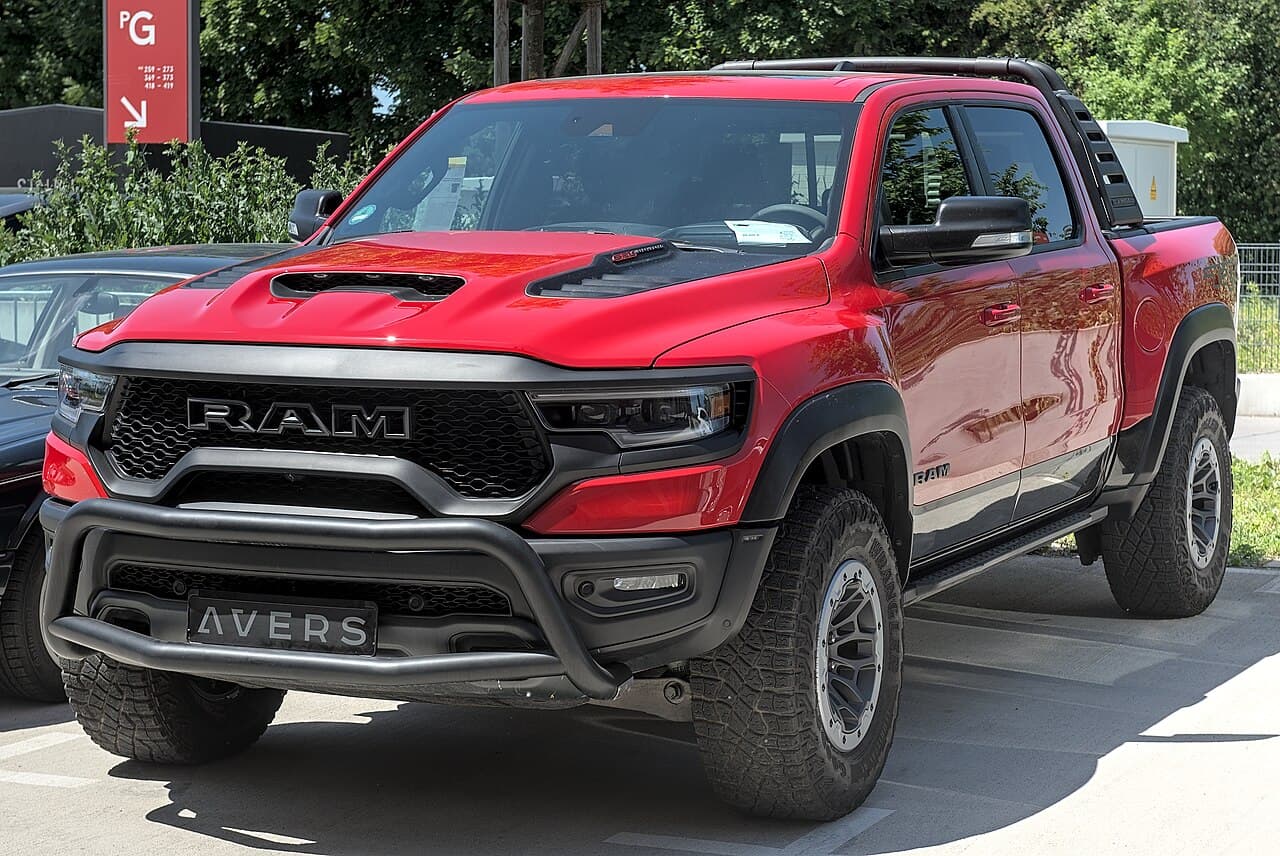
Short answer: there isn't any resale data on the Ram RHO yet, and anyone quoting you a depreciation percentage right now is guessing. The RHO has been in dealer lots for well under a model year. What you can look at today is new-vehicle listing prices against MSRP and how dealers are pricing allocation, which tells you something about current demand but nothing about what the truck will be worth in three years.
That distinction matters more than it sounds like it should. "Resale value" implies a track record: a curve built from actual trade-ins, auction results, and private-party sales over time. The RHO does not have that curve. It has a sticker price, a flow of fresh listings, and whatever dealers are currently asking relative to MSRP. Those are real signals, but they are leading indicators of demand, not a verdict on long-term value retention.
What "early resale signals" actually means right now
When a truck has been out for years, you can pull live listings across model years and see a depreciation pattern settle out. That's exactly what we do on the TRX resale value page, where the 2021-2024 trucks show a clear, model-year-by-model-year spread in what they're actually trading for on the used market today.
The RHO has none of that. Every RHO you'll find for sale right now is a new or barely-used dealer unit, not a truck that's gone through a full ownership cycle and come back onto the used market. So the only honest thing to look at is:
- New-vehicle listing prices relative to MSRP. Are dealers holding at sticker, marking up, or already discounting to move inventory.
- How that pricing moves over weeks and months, not a one-time snapshot.
- Incentive activity from the factory, which is usually the first real tell that a vehicle is sitting longer than planned.
None of that is resale value. It's the leading edge of it. Check current published pricing for where things stand today rather than trusting anything static printed in an article, because this is exactly the kind of number that goes stale fast.
Why the TRX's resale pattern doesn't transfer to the RHO
It's tempting to look at how the original Ram 1500 TRX held value after Ram discontinued it in early 2024 and assume the RHO will follow a similar arc. Don't. The situations aren't comparable, for a few concrete reasons.
The TRX's used-market pricing today reflects a truck that is out of production, with a fixed and shrinking supply. A 2021 TRX now averages roughly $66,846 across live listings, a 2024 averages roughly $89,365, and that spread exists because buyers know no more TRXs are coming off the line at Sterling Heights Assembly Plant. Scarcity after the fact is doing real work in that pricing.
The RHO is the opposite situation. It's in current production, dealers are actively ordering and stocking it, and supply is still ramping rather than fixed. A truck in that phase of its life can see very different early pricing behavior than one at the end of its run. If you want the full picture on why the TRX held the value it did after Ram pulled the plug, the TRX resale value article walks through the discontinuation effect in detail. It's useful background, but treat it as context for a different truck, not a forecast for this one.
There's also the positioning question. The RHO sits in a different part of Ram's off-road lineup than the TRX did, and if you haven't already, the honest comparison between the TRX and the RHO is worth reading before you assume they'll behave the same way in the used market just because they're both Ram off-roaders.
The methodology we're applying here (and why)
We ran into this exact problem with the 2027 SRT TRX, which launched even more recently than the RHO. Rather than invent a depreciation number nobody has yet, our early-signals piece on the SRT TRX sets out the ground rules we think apply to any truck in its first months on sale: look at listing price versus MSRP, look at how fast inventory moves, flag incentive activity the moment it appears, and say plainly when the sample size is too thin to mean anything.
That's the same discipline we're applying to the RHO. The alternative, which is backfilling a confident-sounding percentage from a sample of a few weeks of listings, is how forums end up with numbers that get repeated as fact for years after they were never true. We'd rather tell you the data doesn't exist yet than hand you a number we made up to fill space.
Structural factors that tend to matter, without pretending to predict the RHO's number
Resale strength on a performance truck is generally shaped by a handful of things that have nothing to do with how good the truck is to drive:
- Production volume. A trim that stays relatively limited tends to hold value better than one Ram builds in high volume, because used supply stays tighter for longer.
- Trim and option mix. Which packages dealers actually order affects what's available used later. A truck where everyone ordered the same mid-spec configuration behaves differently in resale than one with a wide spread of trims.
- Regional demand. Off-road performance trucks sell differently in different parts of the country, and a glut of listings in one region can drag down asking prices there while another region stays tight.
All three of these will shape the RHO's eventual resale curve. None of them can be measured yet from a few months of new-vehicle listings, so resist the urge to extrapolate a percentage from what you're seeing on dealer lots today.
What a buyer today should actually expect
If you're ordering or buying a RHO now, set your expectations around what you can control, not around a trade-in number nobody can give you honestly:
- Expect to pay close to the current advertised price, whatever that happens to be when you're shopping, since there's no used-market comparable to negotiate against yet.
- Don't expect a dealer trade-in appraisal to reflect any long-term holding pattern. Early trade-in offers on a new-production truck are driven by that dealer's current inventory needs, not a depreciation curve.
- Expect the real resale picture to take at least a full model year or two of used listings before it means anything. That's roughly the point at which we were able to say something concrete about the original TRX's year-over-year spread.
- Treat any RHO-specific depreciation percentage you see online right now, including ballpark guesses, as somebody's opinion dressed up as data.
If resale certainty matters more to you than being early to a new platform, a used TRX with a few years of real listing history behind it is the more knowable purchase today. If you want the new-production truck, that's a legitimate choice, but you're making it without a resale map, and you should know that going in.
The short version
- There is no used-market track record for the RHO yet, and no honest percentage to quote for its depreciation.
- The only real signal available now is new-vehicle listing price versus MSRP, which you can check against current published pricing.
- The TRX's post-discontinuation resale strength doesn't predict the RHO's future value, because the RHO is in active production with growing supply, not a fixed, shrinking one.
- Expect real resale data to take a year or more of actual used listings to materialize. Until then, buy the RHO for what it is today, not for a trade-in number nobody can give you yet.