Should You Lease or Finance a Ram RHO?
The RHO sits in a different price and depreciation lane than the TRX it's often cross-shopped against, which changes the lease-vs-finance math. This walks through the real tradeoffs so you can decide with your own numbers, not a sales pitch.
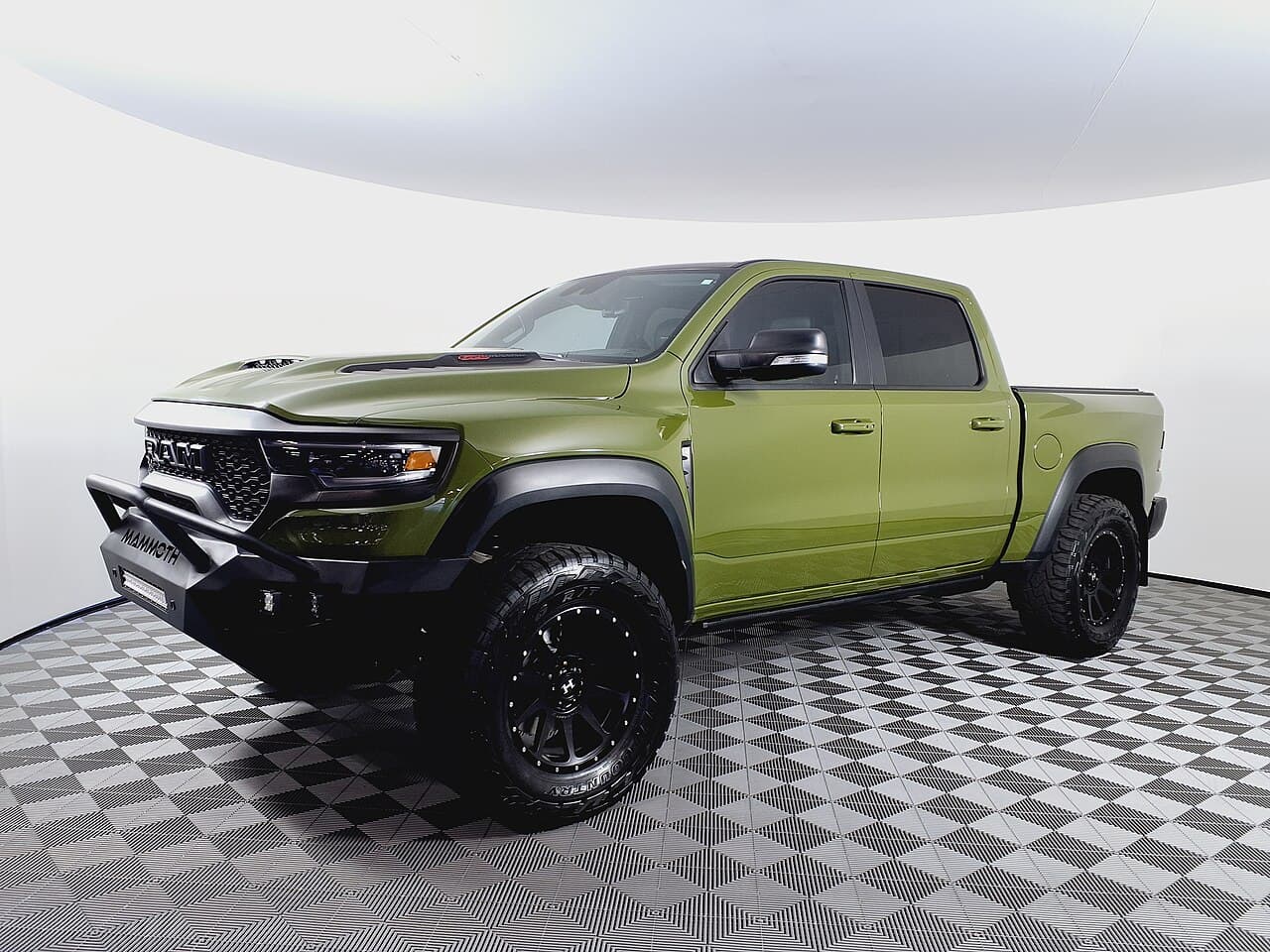
Should you lease or finance a Ram RHO comes down to one thing more than any other: nobody has three years of resale data on this truck yet, which means the residual value a lease is built on is closer to a dealer's guess than a market fact. If you plan to keep the truck past the loan term and you drive a normal number of miles a year, finance it. If you want a new one every few years, drive low miles, and can stomach that the lease-end numbers are less proven than they'd be on an established nameplate, a lease can still make sense, but go in knowing you're accepting more uncertainty than you would leasing, say, a Ram 1500 Rebel that's been in production for a decade.
This isn't the same conversation as leasing or financing a Ram TRX or leasing or financing a 2027 SRT TRX. Those two trucks sit at a different price point, with different depreciation curves and, in the TRX's case, several years of live resale data this site already tracks. The RHO is cheaper to start, which changes the lease math in some ways and does nothing to fix the "no resale history" problem in others.
Why the RHO is a different math problem than the TRX
The Ram 1500 TRX (2021-2024) and the Ram 1500 SRT TRX both carry the 6.2L supercharged HEMI V8 and a price tag that starts near six figures once you option one out. The Ram 1500 RHO costs meaningfully less to buy new. Check the current RHO price and spec breakdown for the exact MSRP by trim rather than trusting a number repeated secondhand, because configuration swings it.
A lower purchase price changes the lease conversation in one specific way: your monthly payment on a lease is driven by the gap between the truck's price and its projected residual, multiplied by a financing rate (the money factor), then divided across the term. A cheaper truck usually means a smaller gap in dollar terms even if the percentage depreciation is similar. That can make an RHO lease payment look more approachable than a TRX lease payment in raw numbers, even if the two trucks depreciate at similar rates as a percentage of MSRP.
What a lower price does not fix is the second variable: how confident anyone is in that residual number. That's the part that's actually different about the RHO right now, and it has nothing to do with price.
The lease-vs-finance tradeoffs, in general terms
Strip away the specific truck and the lease-versus-finance decision comes down to four things.
Residual value assumptions. A lease payment is built around what the bank or captive lender (Stellantis Financial, in Ram's case) thinks the truck will be worth at lease-end, known as the residual. Set that number too high relative to where the truck actually lands in the used market, and the lender eats the loss, not you, which is part of why lenders are conservative on new or unproven nameplates. Set it right and a lease can be a genuinely efficient way to drive a depreciating asset. You never see the residual percentage advertised; you have to ask for it.
Mileage caps. Lease contracts cap annual mileage, commonly in the 10,000 to 15,000 mile range, with a per-mile charge for every mile over at lease-end. If you tow, overland, or just drive a lot, those overage charges can erase whatever payment advantage the lease had. Financing has no mileage cap at all; you own the miles you put on it.
Equity building. Every loan payment on a finance deal builds equity in a truck you'll eventually own outright or trade. Every lease payment buys you the right to use the truck for a term and then hand the keys back, equity, if any, only in the form of a potential buyout right you may or may not exercise. If you keep trucks for five, seven, ten years, financing is almost always the better math over that horizon.
Early-model depreciation risk. First-year and early-production vehicles of any new nameplate tend to depreciate faster in year one than an established model, because the used market hasn't decided yet what a three-year-old example is worth and early buyers absorb that uncertainty. That risk is lower if you lease, since the depreciation hit lands on the lender, not you, and higher if you finance and plan to sell or trade before the loan is paid down.
Why "no resale history" makes a lease harder to evaluate right now
A lease deal is only as good as the residual baked into it, and residuals on a genuinely new nameplate are set with limited data. The RHO hasn't been on the road long enough for three-year-old examples to exist in meaningful numbers, which means the usual tools, like checking live dealer listings for three-year-old trucks at similar mileage, don't exist yet for this specific truck the way they do for the TRX.
You can get a read on where the RHO sits today by checking what the live RHO market actually shows, but that's a snapshot of new and near-new asking prices, not a depreciation curve. A depreciation curve needs years of data this truck doesn't have yet. Compare that to the TRX, where this site tracks live listing averages across five model years and the pattern is visible: a 2021 TRX averaging in the mid-$60,000s against a 2024 averaging near $90,000 across hundreds of live listings tells you something real about how that specific truck holds value year over year. There is no RHO equivalent of that chart yet, and anyone who tells you with confidence what a 2025 or 2026 RHO will be worth in 2029 is guessing, dealer or not.
That uncertainty cuts both ways on a lease. If the lender set the residual conservatively (lower than the truck actually turns out to be worth), you got a worse payment than the truck's real depreciation justified, but there's no risk to you at turn-in. If they set it aggressively (higher than the truck turns out to be worth) to win your business with a lower payment, you got a good deal for the term and the lender takes the loss when the truck comes back. Either way, you as the lessee aren't exposed to getting the forecast wrong. The exposure sits with whoever insures the lease. That is, in a sense, the entire argument for leasing an unproven vehicle: it moves the resale-risk nobody can quantify yet off your balance sheet and onto someone else's.
Questions to ask before you sign, not answers to assume
Don't walk in asking what the payment is. Walk in asking what the payment is built on.
- What residual percentage is this lease using, and is that a Stellantis Financial program residual or a dealer-adjusted number?
- What's the money factor, and what would it convert to as an approximate APR for comparison against a finance offer?
- What's the mileage allowance, and what's the per-mile charge over that limit at lease-end?
- What's the disposition fee if you turn the truck in rather than buy it out, and is it waived if you lease another Ram?
- What's the purchase option price at lease-end, and how does that compare to what you'd expect the truck to be worth on the open market at that mileage?
- Are there lease cash or subvented-rate incentives on the RHO specifically right now, separate from whatever's advertised on a TRX or Rebel?
- On the finance side, what's the actual APR offer with your credit tier, and is there a captive-lender rate special that beats your bank or credit union?
Get these in writing before you compare anything. A sales floor quote without the residual and money factor attached is not a number you can evaluate, it's a payment with its inputs hidden.
The decision framework
Run this against your own plans, not a sales pitch:
- Keeping it past five years, or driving more than about 15,000 miles a year: finance. Equity and no mileage cap both favor ownership over that horizon.
- Wanting a new truck every two to three years, driving under the lease's mileage cap, and comfortable with residual uncertainty on a vehicle with no track record yet: a lease can work, provided the money factor and residual check out against the math above.
- Unsure which category you're in: finance. You can always sell or trade a financed truck early if your plans change; you can't un-sign a lease without an early termination penalty that's rarely worth it.
For a head-to-head look at how the RHO stacks up against the TRX on more than financing, the honest TRX vs RHO comparison covers the capability and price gap in full.
The short version
- The RHO's lower starting price changes the lease payment math but doesn't fix the core problem: there's no multi-year resale track record to validate the residual a lease is built on.
- Financing favors anyone keeping the truck long-term or driving high annual miles; leasing moves resale-forecast risk off your plate but only pays off if the residual and money factor are actually competitive.
- Get the residual percentage, money factor, mileage cap, and disposition fee in writing before comparing any lease quote to a finance offer, and compare them against current live RHO listings and the published spec sheet rather than a dealer's verbal estimate.