TRX vs Raptor: An Honest Comparison of Two Very Different Trucks
The TRX and the Raptor are the two trucks everyone cross-shops, and the arguments about them are mostly repeated rather than checked. Here is what each one actually is, where they genuinely differ, and which one fits which buyer.
Gear in this article
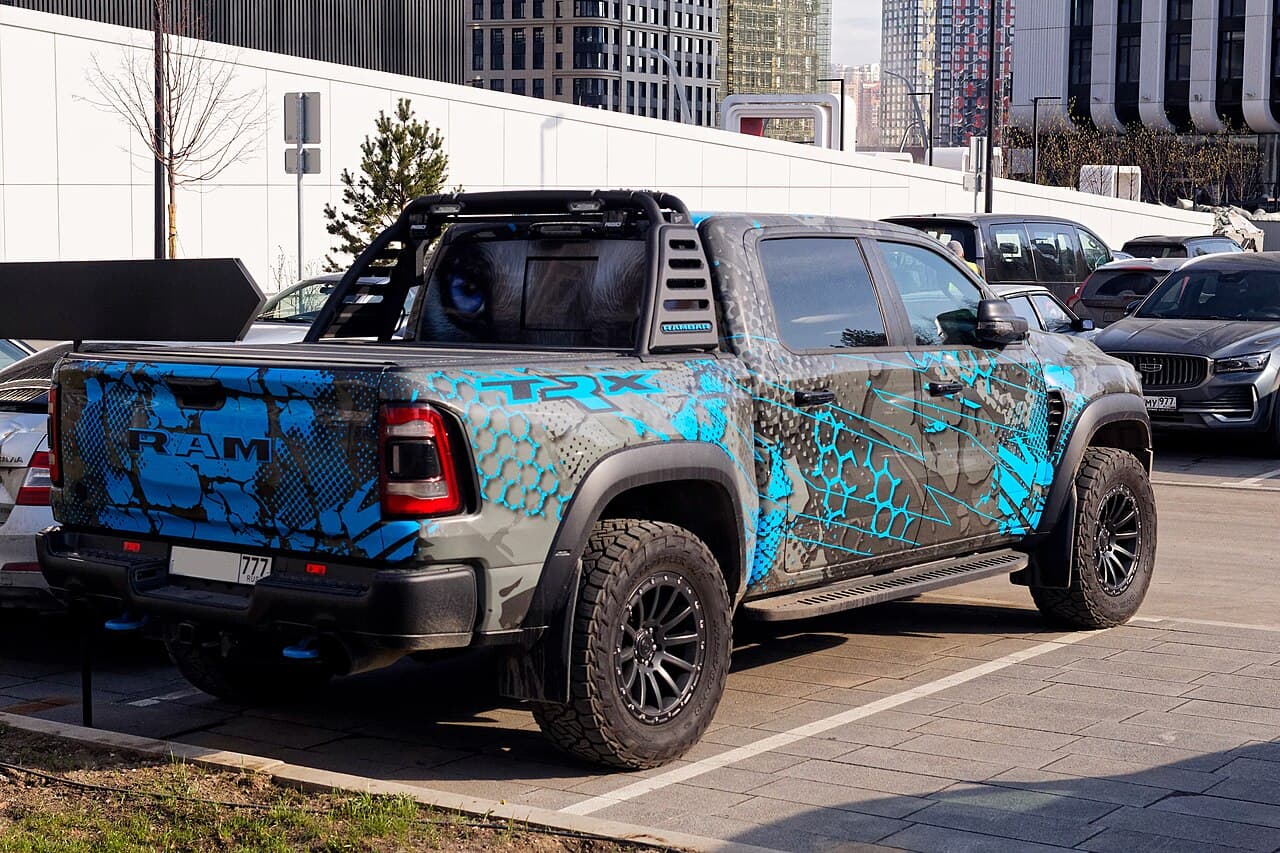
The short answer: the Ram 1500 TRX and the Ford F-150 Raptor are not really fighting over the same buyer once you get past the shared "off-road half-ton with a giant engine" pitch. The TRX is a supercharged V8 grafted onto a half-ton frame, all low-end shove and blower whine. The base Raptor is a twin-turbo V6 built around turbo lag and top-end pull, and it only becomes a genuine horsepower rival to the TRX in its Raptor R form. Which one is right for you comes down to whether you want V8 character or turbo character, and how much you care about buying new versus buying used.
Before any of that, you have to be honest about which Raptor you mean, because "the Raptor" has been at least three different trucks.
Which Raptor are we even talking about
Ford has sold three generations of F-150 Raptor. The first ran 2010-2014 with a naturally aspirated V8, the second ran 2017-2020 with the first EcoBoost V6, and the current, third generation launched for 2021 and runs alongside the Ram 1500 TRX in the used market today. Since 2023, Ford has also sold a Raptor R, which swaps the standard truck's twin-turbo V6 for a supercharged 5.2L V8, the same basic architecture used in the Shelby GT500.
That distinction matters more than almost anything else in this comparison. A base third-generation Raptor and a Raptor R are different engines, different character, and a different price bracket. Every Raptor figure below is called out by variant and year for that reason, and any number we could not verify against Ford's own published specifications has been left out rather than guessed at.
Engine character: supercharged V8 versus twin-turbo V6 versus Raptor R
The 2021-2024 Ram 1500 TRX runs a 6.2L supercharged HEMI V8 rated at 702 hp and 650 lb-ft, paired with a TorqueFlite 8-speed automatic. It gets to 60 mph in a factory-quoted 4.5 seconds. That power shows up instantly off idle because a supercharger, unlike a turbo, is driven directly off the crank and does not need exhaust flow to build boost. There is no lag to manage, just a wall of torque and a mechanical whine that owners either love or eventually mod away.
The third-generation Raptor, in its standard form, uses a 3.5L twin-turbo EcoBoost V6 rated at 450 hp and 510 lb-ft, per Ford's published specifications, backed by a 10-speed automatic. That is a genuinely different truck to drive. Turbo lag is smaller than it used to be, but the power comes on with a rising boost curve rather than the TRX's instant shove, and the V6 saves real weight over the nose compared with a V8.
The Raptor R closes that gap. Its supercharged 5.2L "Predator" V8 is rated by Ford at 700 hp and 640 lb-ft, also with a 10-speed automatic. That puts it within 2 hp and 10 lb-ft of the 2021-2024 TRX's 702 hp and 650 lb-ft, which makes the Raptor R, not the base Raptor, the true apples-to-apples rival for anyone cross-shopping a 2021-2024 TRX on power alone.
Ford does not publish a factory 0-60 time for either the Raptor or the Raptor R. Independent published tests have generally put the Raptor R a half second to a full second behind the TRX's 4.5-second run, but treat any single outlet's number as one truck on one day, not a spec you can rely on the way you can rely on a manufacturer figure.
The 2027 SRT TRX raises the TRX side of this fight again. It uses the same 6.2L supercharged HEMI, now tuned to 777 hp and 680 lb-ft, a 75 hp and 30 lb-ft gain over the 2021-2024 truck. Ford has not published a Raptor R update that matches that increase, so as of this writing the SRT TRX outguns the Raptor R by 77 hp and 40 lb-ft on paper. We are not quoting a 0-60 time for the SRT TRX because no verified figure exists yet; it has been in customer hands for a matter of weeks.
Suspension approach: adaptive dampers on both sides, different hardware
Both trucks chase the same goal, a half-ton that can run at speed over rough terrain without beating the driver up, and both do it with long-travel, electronically adjustable dampers rather than passive shocks.
The 2021-2024 TRX runs Bilstein Black Hawk e2 adaptive dampers, position and velocity sensitive units that adjust damping in real time, with roughly 13 inches of front travel and 14 inches of rear travel. It is a coil-sprung front and rear setup on a solid rear axle, tuned specifically to keep the truck controlled at highway speed over whoops rather than to win a desert race outright.
The current Raptor family uses Fox Live Valve shocks, Fox's own electronically adjustable damper, on a similar long-travel front and rear layout. Ford's published travel figures land in a comparable range to the TRX's, though we are not going to repeat an exact inch figure here without a confirmed source; check Ford's current spec sheet for the model year you are cross-shopping.
The practical difference owners report is less about the numbers and more about the tuning philosophy: TRX suspension leans toward controlled and planted at speed, Raptor suspension has a reputation, earned over three generations of desert-truck development, for feeling looser and more eager to get sideways. That is a driving-feel claim, not a measured one, and it is the kind of thing worth a back-to-back test drive before you commit either way.
If neither factory suspension is aggressive enough for what you actually run, the aftermarket for the TRX includes real long-travel options like the King Shocks Complete Package and the Foutz Adjustable Rear Suspension Kit, both built specifically around this platform's geometry.
Size and usability
Both trucks are built around a crew cab, short bed layout as their only configuration. The TRX uses the Ram 1500's crew cab with a 5-foot-7-inch bed. The Raptor uses the F-150 SuperCrew with a 5.5-foot bed. In practical terms the two trucks haul and tow similarly sized loads and fit in the same parking spaces; neither is meaningfully more of a "daily driver" than the other. The TRX's factory-rated 1,310 lb payload and 8,100 lb max tow give you a real number to work from on the Ram side. We are not quoting Raptor tow and payload figures here because we could not verify the exact current numbers with confidence, and a wrong number on a spec sheet you might actually load a trailer against is worse than no number at all. Pull the window sticker or Ford's build-and-price tool for the specific model year you are looking at.
Price position
The TRX's used market gives you a real price curve to work from, based on live listings this site tracks: 2021 trucks average $69,505 across 341 listings, 2022 trucks average $75,944 across 521 listings, 2023 trucks average $84,930 across 226 listings, and 2024 trucks, the final model year, average $94,560 across 266 listings. The new 2027 SRT TRX starts at $99,995 before a $2,595 destination charge, and live listings for it average $110,340 across 206 listings, almost all of them new-vehicle dealer inventory rather than a resale market, since the truck has only been shipping since August 2026.
On the Ford side, published starting prices for the base EcoBoost Raptor have generally sat in the high $70,000s to low $80,000s across the current generation's run, and Ford's press materials put the 2023 Raptor R's starting price at roughly $109,000 before destination, close to where the new 2027 SRT TRX lands. Treat both of those Ford figures as approximate; Ford revises pricing yearly and we have not verified the exact current-model-year number here.
The pattern that matters: a clean early TRX is the cheapest way into a 702 hp supercharged V8 half-ton on this list, full stop. A Raptor R and a new SRT TRX are priced within shouting distance of each other, and that is the real head-to-head if money is not the constraint.
Availability: what the live market actually shows
This is the one axis we can quantify honestly, because it is our own data. As of mid-August 2026, there were 1,561 live TRX listings tracked across the 2021-2024 model years, concentrated the way you would expect for a truck with a roughly three-year production run (December 2020 through February 2024 at Sterling Heights Assembly). That is a finite, shrinking pool; Ram is not building more of them.
We do not track Raptor inventory on this site, so we are not going to invent a comparable number. What we can say without a citation problem: the F-150 outsells the Ram 1500 nationally, and the Raptor has been in production across three generations for close to two decades against the TRX's single generation. Used Raptor listings, especially of the EcoBoost variant, are generally easier to find in volume than TRX listings are, simply because more of them exist. If you want the full picture on what is currently listed and at what price, the live TRX market breakdown tracks this in more depth, and the used TRX buying guide covers what to check before you buy one of those 1,561 trucks.
The verdict
This part is opinion, not measurement, and we want to be clear about that line.
If you want V8 character, the loudest possible personality, and the cheapest entry point into that experience, a used 2021-2024 TRX is the buy. A 2021 truck averaging $69,505 gets you 702 hp and a supercharger whine for less money than a new base Raptor, let alone a Raptor R.
If you want the widest used selection, more configuration history to shop across, and do not need the last word in raw torque, a third-generation Raptor is a reasonable and easier truck to find in volume.
If money is not the deciding factor and you want the most power available new, the choice is between the 2027 SRT TRX at 777 hp and the Raptor R at Ford's published 700 hp, priced within roughly $10,000 of each other depending on configuration. That comparison comes down to whether you prefer a supercharged HEMI's immediate torque or a supercharged Predator V8 with Ford's own suspension and drivetrain calibration, and neither preference is wrong.
Owners cross-shopping inside the Ram lineup instead of against Ford should also look at the Ram 1500 RHO, a twin-turbo six-cylinder alternative to the TRX's supercharged V8, covered in full in our TRX versus RHO comparison.
The short version
- The 2021-2024 TRX (702 hp, 650 lb-ft, 4.5 seconds to 60) is the cheapest way into a supercharged V8 half-ton, with used prices averaging $69,505 to $94,560 depending on model year.
- The base third-generation Raptor is a twin-turbo V6 at 450 hp, per Ford, a different character truck entirely; the Raptor R's supercharged V8 at 700 hp and 640 lb-ft is the real power rival to the 2021-2024 TRX.
- The 2027 SRT TRX (777 hp, 680 lb-ft, starting at $99,995 plus destination) currently outguns Ford's published Raptor R figures by 77 hp and 40 lb-ft, with no independent long-term data yet since it has only been in customer hands for a few weeks.
- TRX inventory is a finite, shrinking pool from a roughly three-year production run; Raptor inventory is generally more plentiful nationally simply because Ford has built more of them, longer.
Owner questions
- Is the base Ford Raptor as powerful as the Ram TRX?
- No. The base third-generation Raptor uses a 3.5L twin-turbo EcoBoost V6 rated at 450 hp and 510 lb-ft, while the 2021-2024 TRX's 6.2L supercharged HEMI V8 makes 702 hp and 650 lb-ft. The true power rival is the Raptor R, whose supercharged 5.2L Predator V8 makes 700 hp and 640 lb-ft, within 2 hp and 10 lb-ft of the TRX.
- How does the 2027 SRT TRX compare to the Raptor R on power?
- The 2027 SRT TRX uses the same 6.2L supercharged HEMI tuned to 777 hp and 680 lb-ft, a 75 hp and 30 lb-ft gain over the 2021-2024 TRX. Since Ford hasn't published a matching Raptor R update, the SRT TRX currently outguns the Raptor R's 700 hp and 640 lb-ft by 77 hp and 40 lb-ft on paper.
- What's the cheapest way to get into a 700-plus horsepower supercharged V8 half-ton truck?
- A used 2021-2024 Ram TRX is the cheapest entry point. Live listings average $69,505 for 2021 trucks (341 listings), rising to $75,944 for 2022, $84,930 for 2023, and $94,560 for 2024, all delivering 702 hp and 650 lb-ft for far less than a new base Raptor or Raptor R.
- What suspension hardware do the TRX and Raptor use, and how does the tuning feel differ?
- The 2021-2024 TRX runs Bilstein Black Hawk e2 adaptive dampers with roughly 13 inches of front and 14 inches of rear travel, coil-sprung front and rear on a solid rear axle. The current Raptor family uses Fox Live Valve shocks. TRX tuning leans controlled and planted at speed, while Raptor suspension has a reputation for feeling looser and more eager to get sideways.
- Is TRX or Raptor inventory easier to find on the used market?
- Raptor inventory is generally easier to find. As of mid-August 2026 there were 1,561 live TRX listings across the 2021-2024 model years, a finite pool since Ram only built them from December 2020 through February 2024. The F-150 outsells the Ram 1500 nationally and the Raptor has spanned three generations over nearly two decades, so used Raptors, especially EcoBoost versions, exist in greater volume.