Should You Lease or Finance a 2027 Ram SRT TRX?
At $99,995-plus before options, the monthly math on a new SRT TRX is steep either way — and leasing math is especially shaky on a nameplate with zero residual history. This piece lays out the real tradeoffs instead of guessing at payments.
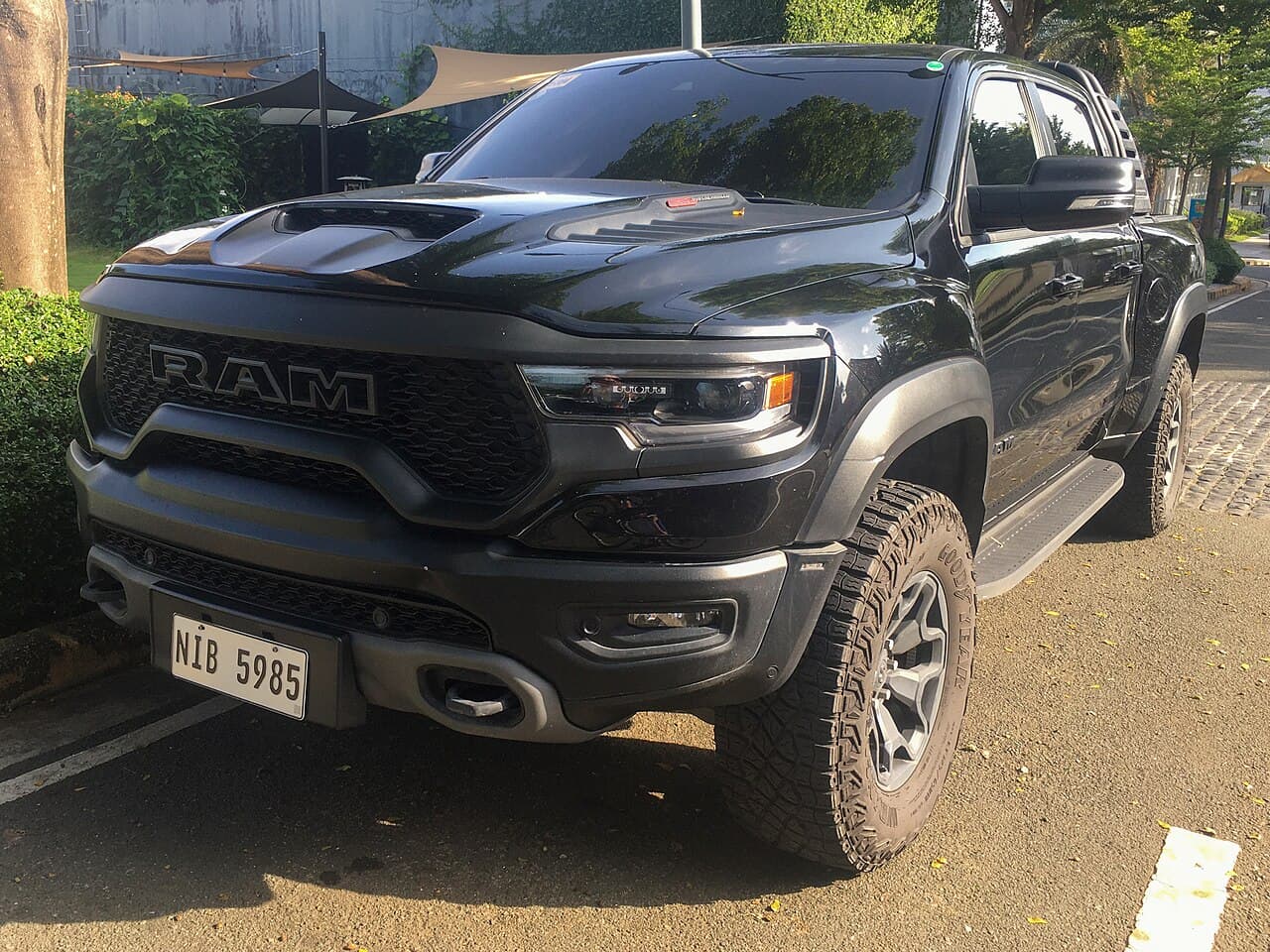
At $99,995 plus $2,595 destination, a 2027 Ram SRT TRX starts north of $102,000 before a single option box is checked, and that number is the only hard figure either a lease or a loan can be built on right now. Everything else, the money factor a bank will quote you, the residual percentage a lease uses to set your payment, the interest rate your credit union offers, is unpublished, unproven, or both. For most buyers, financing is the lower-risk default on this truck today, simply because nobody, including the dealer, actually knows what a 2027 SRT TRX will be worth in three years.
This is not the usual "lease versus buy" hand-waving. It is a specific problem with a specific truck that has been in customer hands for a matter of weeks. Here is how to think through it without trusting a number nobody can back up yet.
The starting point: $99,995 plus destination, before anything else
Every payment conversation, lease or loan, starts from the same base: $99,995 MSRP plus $2,595 destination, call it $102,590 before options. Add the SRT division's option sheet, a protection package, or anything beyond the base build, and that number moves up fast.
That starting figure matters more on a lease than a loan. A loan's payment is driven mostly by the price you pay and the rate you qualify for. A lease's payment is driven by the gap between that price (the "cap cost") and the residual the bank predicts the truck will be worth at lease-end, run through a money factor (the lease equivalent of an interest rate). If either side of that equation is a guess, the payment it produces is a guess too.
Right now, for the 2027 SRT TRX, the residual side is a guess.
Why lease residuals on this truck are not established yet
A bank sets a lease residual by looking at how vehicles like it have historically held value. The 2027 SRT TRX cannot be benchmarked that way. It is the first launch of the relaunched SRT performance division, production started 2026-08-03, and it has been on sale and in customer hands for only a couple of months at most, and for some buyers considerably less. There is no auction data, no three-year-old examples trading hands, no pattern to extrapolate from.
That does not mean a dealer cannot write you a lease quote today. It means the residual percentage and money factor behind that quote are the captive lender's best early estimate, not a number backed by years of this specific truck depreciating in the real world. Two lenders could hand you two different payments on the identical build for that exact reason.
The only responsible move here: get the actual money factor and residual percentage from the dealer in writing, and treat any number you see published anywhere else, including round, confident estimates, as unverified until your own paperwork confirms it. Ask the finance manager directly: what residual are you using, and is that from the captive lender's current program or an estimate they are building themselves. If they cannot answer plainly, that tells you something too.
What the original Ram TRX's resale data actually shows
Contrast that with the 2021-2024 Ram 1500 TRX, which has real years of resale history behind it now. Live listings on this site currently average $67,255 for a 2021, climbing to $73,476 for a 2022, $82,568 for a 2023, and $90,826 for a 2024, against an original MSRP that started well under six figures. That is a truck with an actual depreciation curve a lender can model, and it is part of why lease-versus-finance math on the first-generation TRX is a more answerable question. We cover that comparison in detail in our piece on leasing versus financing a Ram TRX, and it is worth reading even if you are cross-shopping a 2027, because it shows what a mature residual curve on this platform actually looks like once the data exists.
Notably, used 2027 SRT TRX listings are already averaging $109,133 across more than a thousand live listings, above the $102,590 base sticker. That is early-adoption demand and scarcity pricing talking, not a residual projection, and it says nothing reliable about what the truck will be worth once more of them are on the road and the initial allocation crunch eases. Do not let a strong resale number weeks into production talk you into assuming the lease residual three years from now will look anything like it.
Markup inflates both paths, so settle that first
Before any lease-versus-finance decision, settle what you are actually paying over that $102,590 base. Dealer markup on a 2027 SRT TRX, if you pay it, becomes part of the lease's cap cost or the loan's principal either way, and it compounds every month you carry the truck. We go through how to evaluate and negotiate that in our breakdown of 2027 SRT TRX dealer markups. Read that before you talk payment structure with a finance manager, because a market adjustment of any size changes a lease payment more than it changes a loan payment of the same size, since depreciation on the marked-up amount gets charged back to you over a shorter lease term.
The generic lease-vs-finance tradeoffs on a halo truck
Set the residual uncertainty aside for a second and the usual tradeoffs for a six-figure performance halo truck still apply:
- Ownership cycle. A lease suits someone who expects to want whatever SRT builds next, not necessarily this exact truck in four years. A loan suits someone who already knows this is a long-term keeper.
- Mileage caps versus how you actually use it. Lease mileage allowances vary by lender and by the term you negotiate, so get the actual number in writing rather than assuming a figure, and price out the per-mile overage charge while you are at it. A TRX-family truck that sees regular towing, trail days, or a long commute can blow through a tight lease mileage allowance fast, and the overage charges at lease-end can erase any payment advantage the lease looked like it had.
- Equity risk versus flexibility. Financing means you own the depreciation curve, good or bad, and if the SRT TRX turns out to hold value unusually well or unusually poorly, that result is yours. Leasing hands that risk to the lender in exchange for a payment built on their (currently unproven) guess about it.
- Mods. If you plan to run a tuner, a different exhaust, or suspension work, financing is the only sane path. Lease-end inspections do not reward modified trucks, and returning a built truck at lease-end usually means undoing the work first.
Who should actually lease, and who should finance
Lease it if: you want a short hold, you expect to want the next SRT truck whenever it arrives, your annual mileage is genuinely light, and you are getting a money factor and residual in writing that you have independently sanity-checked, not just the first number quoted.
Finance it if: this is a long-term truck for you, you plan to tow, run trails, or put real mileage on it, you want to modify it, or you simply do not want to make a three-year bet on a residual number nobody, including the bank writing it, has real data behind yet.
If you are still deciding between a brand-new 2027 and a well-sorted used 2021-2024, that is a separate and arguably more important question than lease versus finance, and we walk through it in our comparison of a new SRT TRX against a used TRX.
The short version
- The only certain number right now is the starting price: $99,995 MSRP plus $2,595 destination, before options.
- Lease payments depend on a residual that has no real-world track record yet for the 2027 SRT TRX, which has been in customer hands for only a matter of weeks. Get the dealer's actual money factor and residual in writing before you trust any payment estimate, including ours.
- The original 2021-2024 TRX has years of resale data behind it and is a fairer truck to run lease math on today.
- Settle any markup over MSRP first, since it inflates a lease cap cost or a loan principal the same way.
- Default to financing unless you have a specific, well-documented reason to lease: a short planned hold, light mileage, and lease terms you have actually verified rather than assumed.