Ram 1500 TRX vs Ram 1500 Rebel: Which Off-Road Ram Actually Fits Your Budget
The TRX gets the headlines, but the Rebel costs tens of thousands less and still wears the off-road badge — so which one actually matches what a buyer needs. This comparison breaks down price, capability, and use case so you don't overbuy or underbuy.
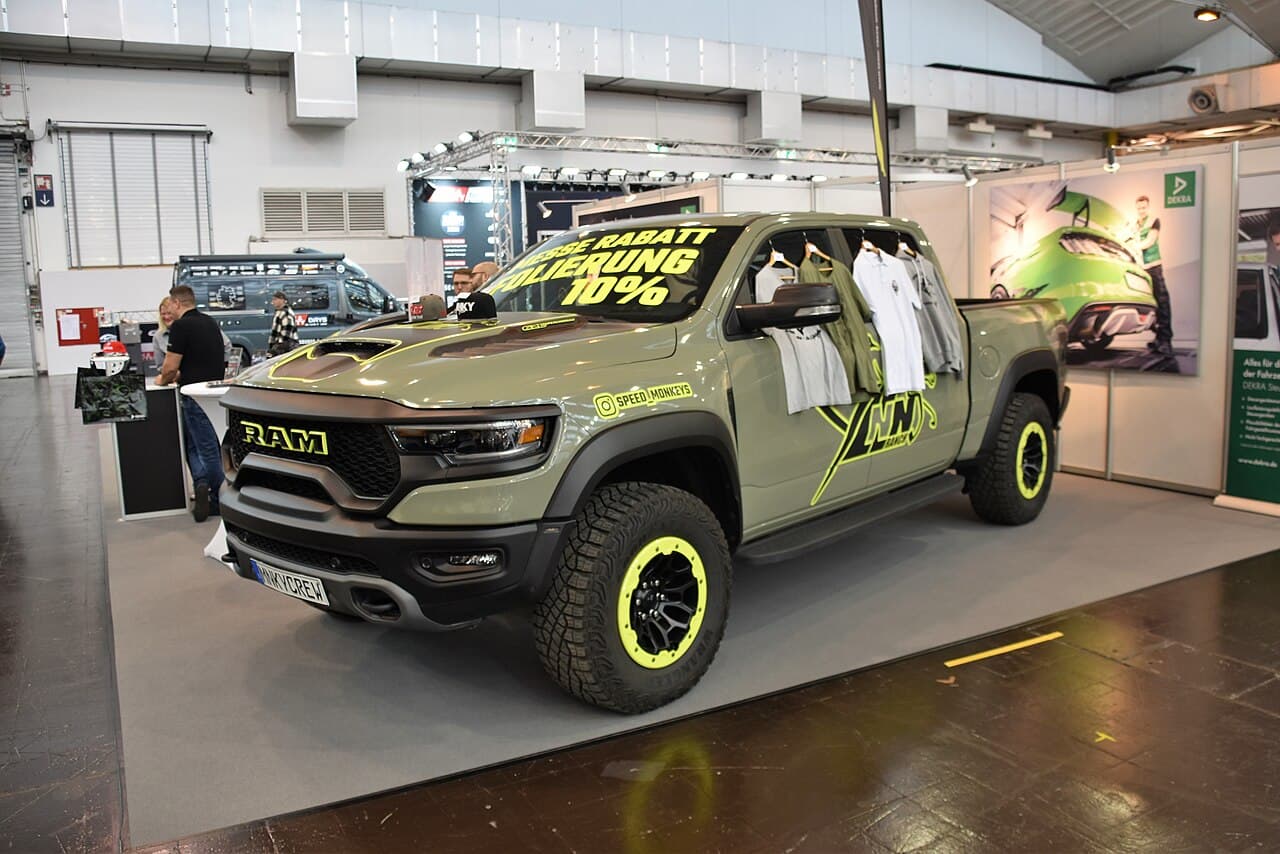
The TRX makes more than any Rebel configuration on the market and costs roughly double, used, before you even get to a new one. If your off-road driving is dirt roads, moderate trails, and overlanding with a trailer, the Rebel does that job for a lot less money. If what you actually want is a supercharged truck that can run fast across open desert, the TRX is the only one of the two that does it, and you pay for that capability whether you use it or not.
That is the whole decision. Everything below is the math behind it.
What each truck actually is
The Ram 1500 TRX is a factory-built desert truck. Ram took the 6.2L supercharged HEMI V8 out of the old Hellcat parts bin, dropped it in a 1500, and built a suspension around it with long-travel dampers meant to take high-speed hits off-road. The 2021-2024 TRX runs 702 hp and 650 lb-ft, with a factory 0-60 time of 4.5 seconds. The 2027 SRT TRX, built under the relaunched SRT performance division, bumps that to 777 hp and 680 lb-ft, a 75 hp and 30 lb-ft gain over the outgoing truck. Both run the same TorqueFlite 8-speed automatic.
The Rebel is a different animal entirely. It is Ram's mid-tier off-road trim, positioned below the TRX and now below the newer Ram 1500 RHO as well, built around a non-supercharged engine lineup that has changed across model years. We are not going to hand you a Rebel horsepower number here, because Ram's Rebel engine options have shifted (naturally aspirated V8 in some years, different six-cylinder options in others depending on model year), and guessing at a figure to make a cleaner comparison table is exactly the kind of mistake that gets someone's buying decision wrong. Check the window sticker or Ram's current build-and-price tool for the exact engine and output on the model year you are looking at.
What you can say with confidence: the Rebel is not supercharged, it is not marketed or engineered as a desert-running performance truck, and it occupies a different price tier entirely.
The price gap, in real numbers
We publish live used-market averages across the TRX lineup, and they tell you where the floor actually sits for this truck:
| Model year | Average used price | Listings sampled |
|---|---|---|
| 2021 TRX | $68,532 | 332 |
| 2022 TRX | $74,727 | 496 |
| 2023 TRX | $84,087 | 220 |
| 2024 TRX | $93,144 | 264 |
| 2027 SRT TRX | $108,629 | 501 |
The 2027 SRT TRX starts at $99,995 plus $2,595 destination new, and used examples are already trading above that sticker given how few are on the ground weeks into production.
A Rebel, by contrast, is priced as a mainstream 1500 trim, not a halo truck. We are not going to invent an MSRP here because Rebel pricing moves by model year, cab configuration, and engine choice, but the gap between a loaded Rebel and even the cheapest 2021 TRX on our market page is routinely tens of thousands of dollars. For the exact spread on what TRX trucks are actually selling for by year, see our breakdown of what Ram TRX trucks actually sell for. That price gap is the entire argument for most buyers: you are not choosing between two off-road trims, you are choosing between a mainstream pickup with off-road equipment and a dedicated performance truck.
Power, towing, and payload: the numbers that actually matter
The TRX's 702 hp (2021-2024) or 777 hp (2027 SRT) output is real and independently confirmed. What it buys you is straight-line speed and the ability to maintain speed over rough terrain without the engine running out of breath. It does not automatically buy you more towing capacity or payload than a work-oriented 1500.
The TRX's max tow rating is 8,100 lb and max payload is 1,310 lb, both lower than a half-ton Ram configured for towing, because the TRX's suspension and gearing are tuned for off-road travel, not trailer duty. We break down exactly what that number means in practice, including why it is lower than you might expect for a truck with this much horsepower, in our piece on what the TRX can actually pull.
Do not assume the Rebel matches or beats those figures just because it is a lighter, less powerful truck. Tow and payload ratings depend on axle gearing, cooling packages, and suspension tuning, not horsepower alone, and Rebel numbers vary by engine option and model year. Confirm the specific Rebel configuration's tow and payload ratings against Ram's current documentation before you assume anything based on the TRX numbers above.
Which use case actually fits you
This is the real fork in the decision, more than the spec sheet.
Daily off-road trail driving and overlanding. If your trail time is technical rock crawling, forest roads, moderate washboard, and weekend trips with a rooftop tent or a small trailer, you do not need 777 hp or even 702 hp to do it well. A Rebel with good tires and a modest suspension lift covers this ground at a fraction of the purchase price, the insurance cost, and the fuel bill. The TRX's supercharger and long-travel suspension are solving a problem you do not have at trail speeds.
High-speed desert running. If what you actually want is to hold 60-80 mph across open desert terrain and have the suspension soak up whoops and washes at that speed, nothing in the Rebel lineup does that job. That is what the TRX's suspension geometry and power band are built for, and it is the one capability the Rebel genuinely cannot match at any price.
Most buyers overestimate how much of their actual driving falls into the second category. Be honest about how often you are actually running desert terrain at speed versus how often you are on a forest service road at 25 mph, because that answer decides which of these two trucks is the right one.
What it costs to own, not just to buy
The purchase price is the smallest line item most TRX owners underestimate going in. Supercharger service, tire replacement on the factory off-road rubber, and insurance on a 700+ hp truck all run higher than a Rebel's ownership costs, and they do not show up on the window sticker. We lay out the real ongoing budget, item by item, in our guide to TRX cost of ownership. If the Rebel's lower purchase price is the whole appeal to you, run that ownership math before you commit either way, because it changes the real gap between the two trucks.
If you are shopping the whole Ram off-road lineup
The Rebel and the TRX are not the only two off-road Ram 1500 trims anymore. The RHO sits between them on price and capability, and a lot of buyers cross-shopping a Rebel against a TRX should actually be looking at that truck too. Our comparison of the Ram RHO against the Rebel walks through that adjacent decision if the TRX turns out to be more truck, and more money, than you need.
The short version
- The TRX makes verified 702 hp (2021-2024) or 777 hp (2027 SRT TRX), max tow 8,100 lb, max payload 1,310 lb. The Rebel's engine output, towing, and payload must be confirmed separately against current Ram documentation, not assumed from the TRX numbers.
- Used TRX pricing currently averages $68,532 to $93,144 depending on model year (2021-2024), with the 2027 SRT TRX averaging $108,629 used against a $99,995 starting MSRP. A Rebel costs tens of thousands less at every comparable trim level.
- Buy the Rebel if your off-road use is trail driving, forest roads, and overlanding at moderate speed. Buy the TRX only if high-speed desert running is something you will actually do, not just something you like the idea of owning.