Ram TRX vs Ford Raptor R: How the Two Flagships Actually Compare
Ford's Raptor R claims the outright horsepower crown among performance off-road trucks, but the Ram TRX still undercuts it on price and keeps a supercharged V8 alive. This piece lines up the two flagships on the numbers that matter and tells you which one earns its price tag.
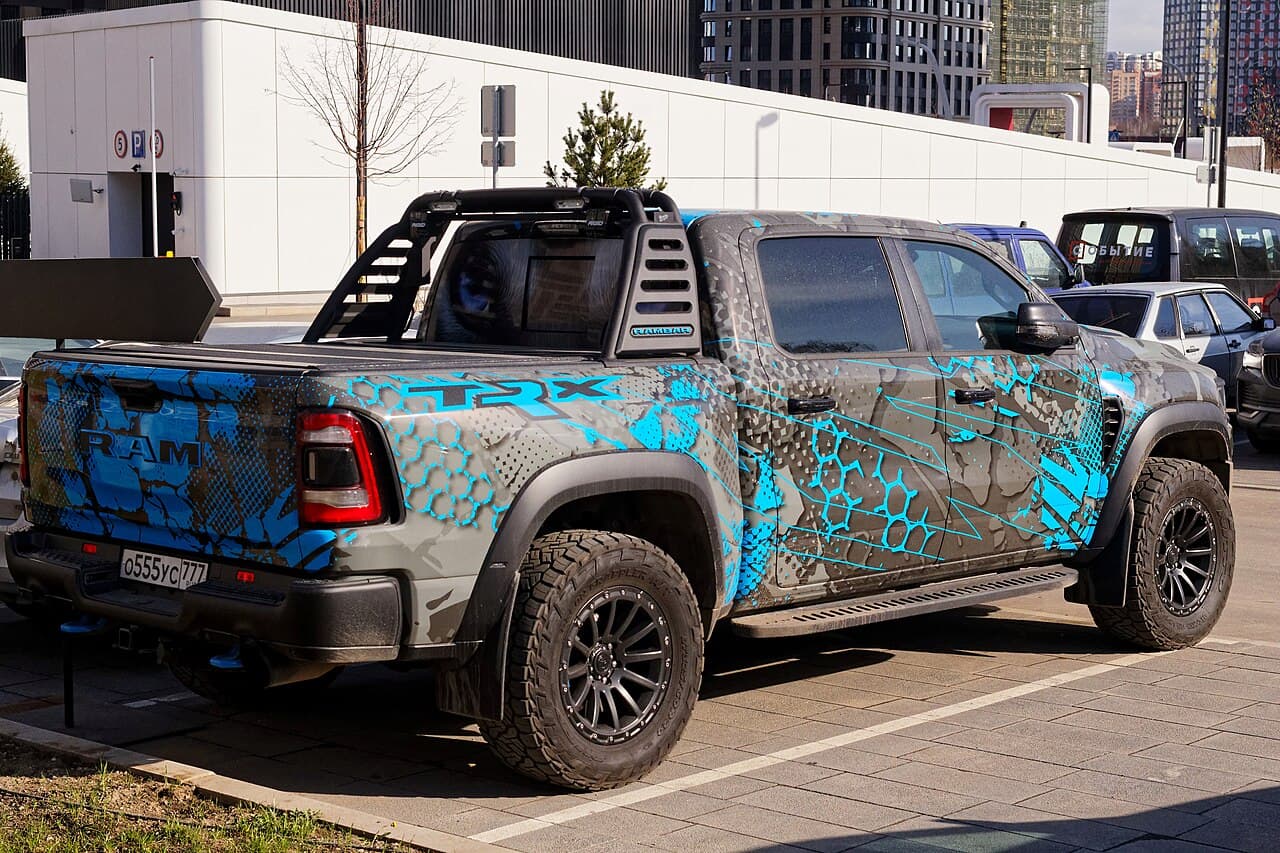
Ford's Raptor R has never had to compete with a number as high as 777 horsepower from Ram, and Ram has never had to answer Ford's supercharged 5.2-liter V8 with anything but its own supercharged 6.2-liter HEMI. Neither truck has a clean win on paper right now unless you check the current numbers on both manufacturers' own spec sheets on the day you're actually shopping, because both companies have moved figures by small amounts across model years. What we can tell you without hedging: Ram's flagship undercuts Ford's on price by a wide margin, and it does it while keeping a supercharged V8 in a segment where Ford now reserves that engine for one trim only.
This is the flagship-vs-flagship version of a comparison we've already run once. If you're cross-shopping a base Ford Raptor against a TRX, that piece covers the twin-turbo V6 Raptor and is the right starting point. This one is about the top of each lineup: the Raptor R against the Ram 1500 TRX and the Ram 1500 SRT TRX.
The horsepower and torque numbers, and why we're not calling a winner
Here is what's actually verified. The 2021-2024 Ram 1500 TRX made a certified 702 hp and 650 lb-ft from its supercharged 6.2L HEMI V8. The 2027 Ram 1500 SRT TRX, the first truck out of the relaunched SRT division, raised that to 777 hp and 680 lb-ft, a jump of 75 hp and 30 lb-ft over the outgoing truck. Both of those numbers come from Ram's own certified figures and you can build your budget around them.
Ford's Raptor R runs a supercharged 5.2-liter V8 (a relative of the engine Ford used in the Shelby GT500), and Ford's own spec sheet is the only source we're going to trust for its current output. Recent model years have put that figure in the neighborhood of 700 hp, but pull the exact current number off Ford's site before you use it to compare trucks, because Ford has adjusted small details on this engine before and we are not going to print a figure we haven't personally checked against the sheet current at the time you're reading this. If Ford's current number is still near 700 hp, the 777-hp SRT TRX beats it outright. If Ford has moved it since, do that math yourself with both companies' current published figures in front of you.
0-60 times: one is certified, one is an estimate
The 2021-2024 TRX's 4.5-second 0-60 time is a figure Ram has stood behind since launch. The 2027 SRT TRX doesn't have a published, independently confirmed 0-60 time yet worth quoting here; our full breakdown of TRX 0-60 numbers covers what's confirmed and what isn't as more data comes in.
Ford doesn't consistently publish an official factory 0-60 time for the Raptor R. The numbers you've seen floating around forums and buff-book reviews (generally in the high-3-second range) come from outlets that strapped their own gear to the truck, not from Ford's spec sheet. Treat those as independent test results, not a manufacturer claim, and note that test conditions (surface, driver, elevation) move a number like that by several tenths.
Price: sticker to sticker
This is where the comparison stops being close. The 2027 Ram 1500 SRT TRX starts at $99,995 plus $2,595 destination, putting a new one on the road for a bit over $102,000 before options. Ford's Raptor R has started well north of $100,000 in recent model years; check Ford's current build-and-price tool for the exact number on the day you're comparing, since MSRP on that truck has moved by several thousand dollars between model years and we're not going to hand you a stale figure as if it's current.
If you're shopping used rather than new, our live market data shows what buyers are actually paying: 2021-2024 TRX averages run from roughly $68,500 (2021) up to about $93,100 (2024) across current listings, and 2027 SRT TRX units are averaging around $108,600 in a market that's barely two weeks into production and still working off allocation scarcity rather than depreciation. For a full side-by-side on resale and long-term value against the Raptor lineup, we cover that separately in our TRX versus Raptor used-market value comparison rather than repeating it here.
Two different engineering bets
Ram's approach across both generations of TRX has been one engine, one philosophy: a Roots-type supercharger (a belt-driven blower that spins with the crank and builds boost immediately, with no wait for exhaust gas to spool anything) bolted to the 6.2L HEMI, used across the entire flagship line since 2021. It's the same basic supercharged-V8 architecture Stellantis has used across its Hellcat-badged performance cars, scaled and packaged for a truck.
Ford split its Raptor lineup instead. The standard F-150 Raptor runs a twin-turbo V6 (a pair of exhaust-driven turbochargers feeding a 3.5-liter EcoBoost engine), which is a different power-delivery character entirely: turbo lag at low rpm, a stronger pull once the turbos spool, and a smaller displacement doing more of the work through boost. Only the Raptor R trades that V6 for the supercharged 5.2L V8, which is Ford's answer to Ram keeping a supercharged eight-cylinder in the conversation at all.
Neither approach is more durable or more reliable than the other as a blanket claim, and we're not going to make that call here. A supercharger driven directly off the crank and a pair of turbos spun by exhaust gas are just different ways of forcing more air into a cylinder, and both have been in production long enough in other applications that neither is exotic. What they actually mean for you is driving character and packaging, not a durability verdict either of us can back up without a service history that doesn't exist yet for the 2027 truck.
What each truck is built to do beyond the drag strip
The TRX side of this has numbers you can plan a build or a tow rig around: 8,100 lb max tow and 1,310 lb max payload on both the 2021-2024 TRX and, as far as Ram has published, the same basic capability class on the 2027 SRT TRX (confirm the exact current SRT TRX ratings against Ram's spec sheet, since payload in particular can shift with options and axle ratios). If towing capacity is a real factor in your decision, our dedicated towing breakdown goes deeper than we will here.
We're not going to print Raptor R towing and payload figures from memory. If that number matters to your purchase, put Ford's current printed rating next to Ram's on the same day, because both companies change these figures by trim and option package more often than horsepower.
The short version
- The 2021-2024 Ram 1500 TRX's 702 hp, 650 lb-ft, and 4.5-second 0-60 are certified numbers you can quote with confidence.
- The 2027 Ram 1500 SRT TRX raises that to a certified 777 hp and 680 lb-ft, starting at $99,995 plus destination, and it is weeks old with no long-term ownership data yet.
- Any Raptor R figure you use for horsepower, torque, 0-60, or price needs to come off Ford's current spec sheet the day you compare trucks, not from a number you saw quoted somewhere else.
- If your priority is the lowest price for a supercharged flagship truck, Ram wins that argument outright. If your priority is chasing whichever engine currently posts the higher number on Ford's own sheet, go check that sheet before you decide anything.