Is a Mopar Extended Warranty Worth It on a Ram TRX?
An extended warranty on a 702-to-777-horsepower supercharged truck sounds like obvious insurance, but it isn't free and it isn't automatic. Here's how to think through the decision without relying on repair-cost data that doesn't exist yet.
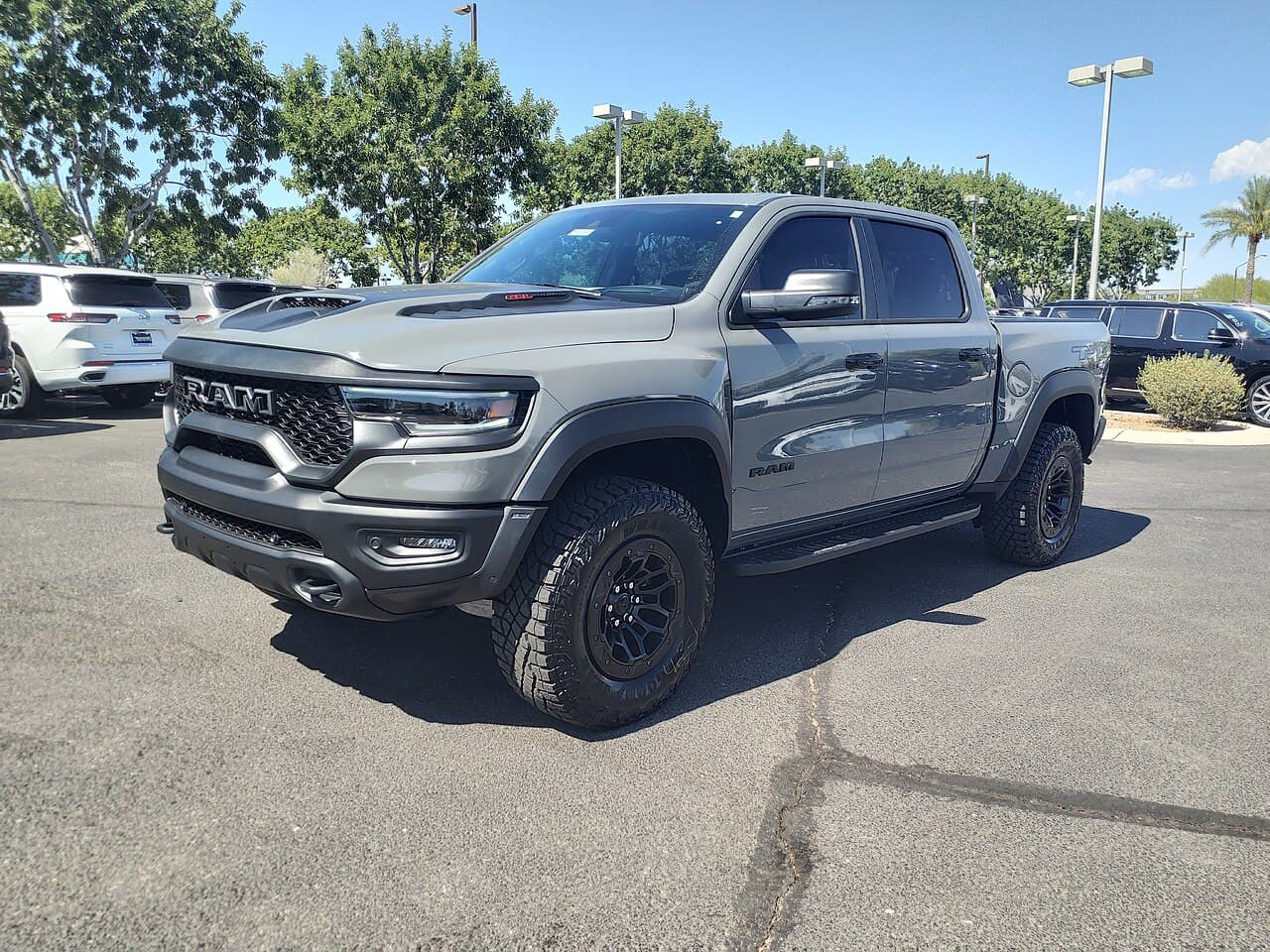
The honest answer is nobody at TRX Central can tell you whether a Mopar extended warranty will pay for itself on your specific truck, because that would require repair-cost and failure-rate data that does not exist yet for either generation. What we can do is lay out how to think about the bet: how much factory coverage you already have, how you actually use the truck, and how much risk you are willing to carry yourself. That framework gets you to a real answer faster than any "is it worth it" roundup that pretends to know numbers nobody has published.
What the factory warranty actually covers, and why you have to check it yourself
Every Ram 1500 TRX (2021-2024) and Ram 1500 SRT TRX (2027) comes with Stellantis' basic and powertrain warranty coverage. The exact term lengths, mileage caps, and what counts as a "powertrain" component for warranty purposes are things you need to pull from the current Mopar/Stellantis warranty documentation for your specific model year and build date, not from a forum post or a dealer's verbal summary. Warranty terms have changed across Stellantis brands before, and a number quoted confidently in 2022 is not a safe assumption for a 2024 build, let alone a 2027 SRT TRX. Call your dealer with the VIN, or pull the documentation yourself, before you make any financial decision based on what you think is covered.
The same goes for a Mopar extended warranty (sold as a vehicle service contract). Mopar sells more than one tier, the tiers cover different component lists, and some exclude wear items or modified vehicles outright. If you plan to run a tuner, a cold air intake, or anything else that touches the powertrain's calibration or airflow, read the contract's modification clause before you buy, not after you file a claim. The dealer finance office quoting you a price on a Thursday afternoon is not the authority on what that contract pays for. The document is.
This matters more on a truck like this than on a base Ram 1500. The 6.2L supercharged HEMI making 702 horsepower in the 2021-2024 truck and 777 horsepower in the 2027 SRT TRX (see the full breakdown of what the extra 75 horsepower actually does) is a specialty engine built in far lower volume than the naturally aspirated and six-cylinder engines across the rest of the Ram lineup. Lower volume generally means a smaller independent-shop knowledge base and fewer salvage-yard parts floating around, which is a separate question from reliability but still affects what a repair costs you out of pocket if the warranty has run out.
Why there is no repair-cost or failure-rate data to lean on yet
There is no published, reliable repair-cost or failure-rate data for the 2021-2024 TRX. Owners talk about issues on forums and in Facebook groups, and some of that is useful anecdotally, but nobody has aggregated it into a number worth quoting, and this site will not invent one to make this article feel more complete. The same is true, more strongly, for the 2027 SRT TRX, which has been in customer hands for a matter of weeks. There is no long-term ownership record for it at all. Any "here's what tends to break" section you read elsewhere about either truck right now is either guessing or lying.
What that means for you: you cannot buy a Mopar extended warranty on this truck as a hedge against a known failure mode, because there is no known failure mode to hedge against. You are buying it as a hedge against the general proposition that a 702-to-777-horsepower supercharged engine, an eight-speed automatic moving that torque, and an off-road suspension system subjected to real use are more complex and more expensive to fix than a standard half-ton truck, independent of any specific documented problem. That is a reasonable thing to hedge against. It is a different claim than "the supercharger is known to fail," which nobody can currently say about either generation.
How your actual use of the truck changes the math
The value of an extended warranty scales with how hard you use the truck and how much a surprise bill would hurt.
Towing near the TRX's rated capacity (8,100 lb max on the 2021-2024 truck, a figure worth checking against the TRX towing capacity breakdown for how that number holds up loaded versus unloaded) puts sustained load on the transmission, the cooling system, and the drivetrain in a way that occasional daily driving does not. Regular high-speed desert running or rock-crawling puts a different kind of stress on the suspension, the transfer case, and the underbody. Neither use case comes with a published failure rate attached to it for this truck, but both are the kind of use that, in general, tends to accelerate wear relative to a truck that mostly commutes and tows a light trailer twice a year.
If your TRX or SRT TRX is doing real work, close to its rated limits, on a regular basis, that argues for more coverage, not because a specific part is known to fail under that load, but because the cost of being wrong is higher and the odds of needing some kind of repair over a long ownership window go up with miles and stress, same as any vehicle. If your truck is a weekend toy that sees light duty and low annual mileage, the math shifts toward self-insuring, since you are paying for coverage against a scenario you are statistically less likely to trigger.
Used TRX buyers: what remaining factory coverage changes
If you are buying used, the extended-warranty decision starts with a question most buyers skip: how much of the factory bumper-to-bumper and powertrain coverage is actually left on the truck you are looking at, measured in both time and mileage. A 2021 TRX (averaging roughly $68,500 across current live listings) bought with 40,000 miles on it is in a very different coverage position than a 2023 TRX (averaging roughly $84,000) bought with 15,000 miles on it, even though both are "used." Pull the window sticker's in-service date and the odometer reading, then check both against the documented warranty term for that model year, not an assumption carried over from a newer truck.
This is also where a pre-purchase inspection earns its cost before you ever get to the warranty-or-not question. If the truck has a modified air intake, a tune, or aftermarket suspension, find out now whether that affects what Mopar coverage will pay for later. The used Ram TRX buying guide covers the inspection checklist and what to verify on the title and service history before you are signing anything, extended warranty or not.
The general rule: the less factory coverage remains, the more an extended warranty is replacing real, immediate risk rather than extending a safety net you already have for free. A truck with 50,000 miles and an expired powertrain warranty is a different purchase than a certified pre-owned unit still inside its original coverage window, and the warranty math should reflect that difference, not ignore it.
A decision framework that does not depend on numbers nobody has
Skip the invented dollar figures and work through these four questions instead:
- How long do you plan to keep the truck, and for how many miles? A three-year ownership plan on a truck still under full factory powertrain coverage gets less value from an extended warranty than a plan to keep it past that coverage window.
- How hard do you actually use it? Regular towing near capacity, off-road running, or high annual mileage pushes the value of extended coverage up. Light daily use and low mileage push it down.
- Can you self-insure a four-figure or low-five-figure repair without changing your financial plans? If a surprise bill would be a genuine problem, paying a known, fixed amount up front for a contract has real value even if you never use it. If it would not be a problem, you are paying for peace of mind you may not need.
- How much factory coverage is already left, if the truck is used? Check the in-service date and mileage against the current documented terms before pricing any extended contract. Do not let a dealer's summary stand in for the document.
None of those questions require a failure-rate number that does not exist. They require an honest look at your own ownership plan, which is information you already have.
For the broader picture of what owning either truck costs beyond the warranty question, see what to actually budget for TRX ownership and, for the 2027 SRT TRX specifically, the early ownership and insurance budget breakdown, which is as far as the data on that truck currently goes.
The short version
- Verify your actual factory warranty terms against current Mopar/Stellantis documentation before assuming anything, especially on a used truck.
- There is no published repair-cost or failure-rate data for the 2021-2024 TRX or the 2027 SRT TRX. Treat any specific "what breaks" claim you read elsewhere as unverified.
- Buy extended coverage based on how long you will own the truck, how hard you use it, and whether a surprise bill would actually hurt, not based on a specific failure you think is coming.
- On a used truck, check remaining factory coverage first. The less time and mileage left on the original warranty, the more an extended contract is replacing real risk rather than duplicating coverage you already have.