What Fuel Does the Ram RHO Actually Need?
One of the most-asked RHO questions is whether it will run on 87. The answer matters more than usual on a turbocharged engine, and it is worth getting from the manual rather than from a forum.
Gear in this article
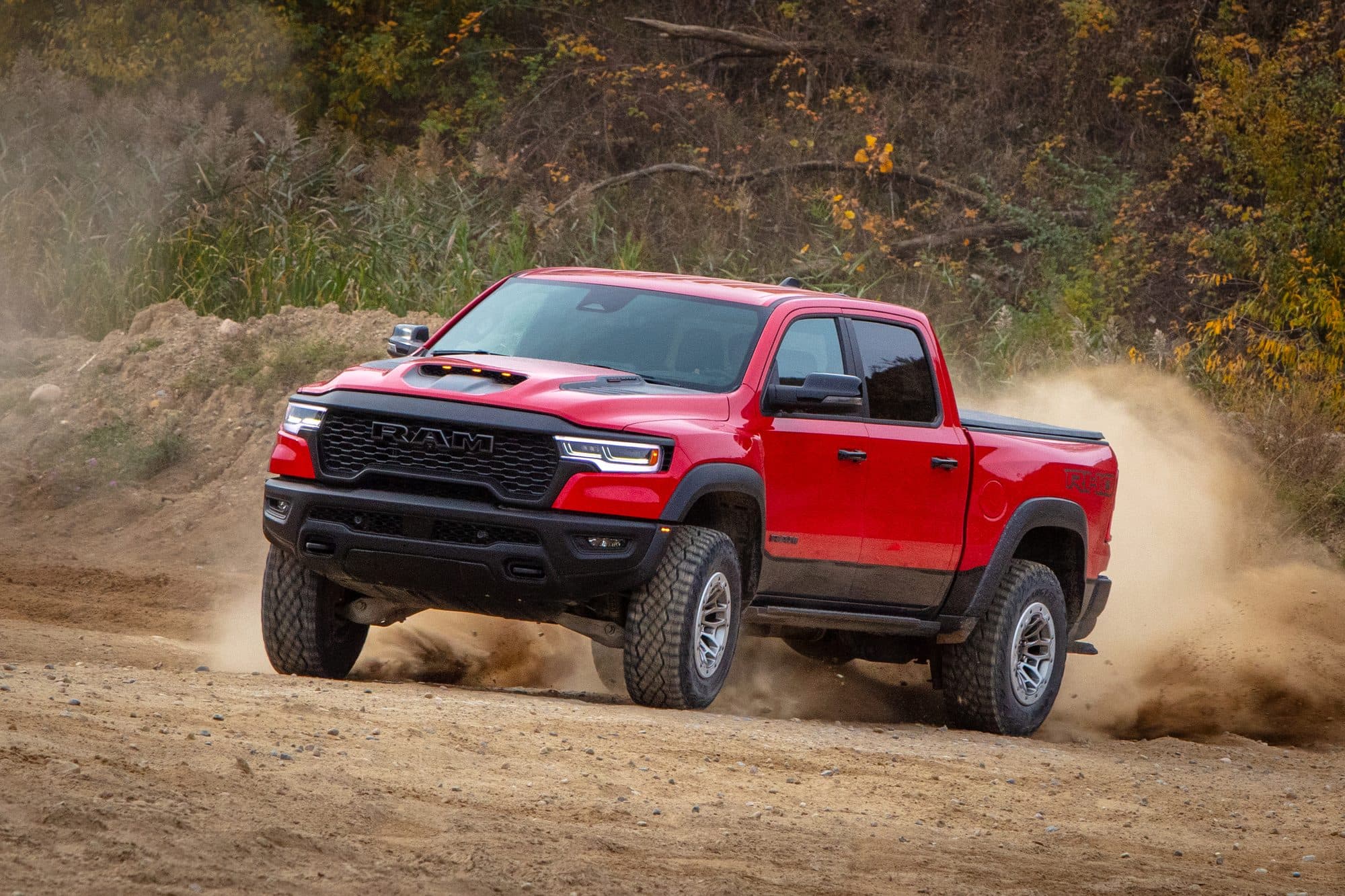
Run 87 octane regular in the Ram RHO and the truck will start, run, and drive normally every day. Ram's own fuel guidance for the RHO's twin-turbocharged Hurricane High-Output engine (540 hp, 521 lb-ft) lists 87 octane as the minimum fuel the engine requires, and calls for a higher-octane premium fuel as recommended to get the engine's full rated output. Required and recommended are two different claims, and conflating them is exactly where most forum threads on this topic go wrong.
What Ram's guidance actually says
Ram publishes this distinction in two places you can check yourself without taking our word for it: the fuel door sticker on the truck and the owner's manual that ships with it. Both carry the same basic structure, a minimum required octane and a separate recommended octane for full output.
Here is where we are going to hedge on purpose. Pump premium is not one universal number. Depending on the state, premium is sold as 91 octane in some regions and 93 in others, and the exact figure printed in Ram's documentation reflects whichever standard applies where the truck is registered. Rather than repeat a specific number we cannot verify against every printing of the manual, the honest answer is this: 87 octane regular is the floor, a higher-octane premium fuel is what Ram recommends for the engine's full rated 540 hp and 521 lb-ft, and the exact premium number for your truck is on your fuel door and in your glovebox, not on a forum post, and not on this page either.
That structure, minimum required plus a separate recommended figure for peak output, is standard across modern turbocharged engines generally, not a hedge unique to Ram. Running the Ram 1500 RHO on the minimum required fuel does not void the powertrain warranty.
Why octane matters more on a turbo engine than it did on the old supercharged V8
Octane rating measures how well a fuel resists igniting on its own under heat and compression, rather than burning cleanly when the spark plug fires it. Low-octane fuel under high cylinder pressure can pre-ignite, or "knock," burning unevenly instead of in one controlled event.
A turbocharged engine like the RHO's Hurricane High-Output makes its power by packing more air into the cylinder using boost from the turbos (the two exhaust-driven pumps that force intake air in under pressure), then igniting a bigger air-fuel charge. More boost means higher cylinder pressure, and higher cylinder pressure is exactly the condition where low-octane fuel is most likely to knock.
The engine's ECU (the computer that manages timing, fueling, and boost) has a knock sensor that listens for that pre-ignition and reacts by pulling ignition timing and, on some calibrations, trimming boost to protect the engine. That protection is automatic and it is the actual mechanism, not a guess: run a lower-octane fuel under load and the computer defends the engine by making less power, not by risking damage.
This is a meaningfully different relationship to fuel than the Ram 1500 TRX's 6.2L supercharged HEMI, where the supercharger is belt-driven off the crank rather than spun by exhaust gas. If you are cross-shopping the two trucks, the honest comparison between TRX and RHO covers how differently the two engines make their power, which is part of why their fuel guidance is not identical.
What actually happens if you run 87 anyway
Nothing dramatic, and nothing that should worry a daily driver. The ECU pulls timing to prevent knock, and you get less power and less torque than the truck's rated 540 hp and 521 lb-ft, particularly under hard acceleration or towing where boost and cylinder pressure are highest. At light throttle and steady cruising, the difference is close to unnoticeable because the engine is not asking for much boost anyway.
What we cannot responsibly tell you is a precise horsepower number lost on 87 versus premium, because Stellantis has not published one and nobody has run a controlled dyno comparison worth citing. Anyone quoting you an exact figure ("you lose 40 hp on regular") is guessing, and so would we be if we repeated it.
If you tow with the RHO regularly or you live somewhere with long grades and hot ambient temperatures, both conditions that push the engine toward more sustained boost, premium is the fuel that lets the engine deliver what it is rated for. If your driving is mostly commuting and light truck duty, running 87 will not hurt anything and will save real money at the pump over a year of ownership.
What the EPA rating actually says about fuel economy
We are not going to quote an MPG figure here without a verified source. The EPA rating for the Ram RHO, by trim and model year, is published at fueleconomy.gov, and that is the number to pull before you budget fuel costs, not a forum estimate and not a number we have not confirmed against the current listing for your exact model year and cab configuration. Ratings vary by 4x4 configuration and by model year revision, so check the number against your specific build before you plan around it.
Does this change if you add a tuner or intake?
Yes, and it is worth knowing before you buy either. A tuner like the JB4 for the RHO's 3.0L twin-turbo works by adjusting the boost and timing maps the factory ECU runs, and many aftermarket tunes for turbocharged engines are calibrated assuming premium fuel, because the extra timing they add is exactly the kind of load where 87 octane is more likely to trigger knock retard and erase the gain you paid for. A cold air intake like the aftermarket unit built for the 2025-2026 RHO does not change the octane requirement on its own, since it is not adding boost, but check any tune's documentation for its fuel requirement before you install it.
If you are shopping a used RHO and do not know what the previous owner ran or tuned, that is a legitimate question to ask before you buy, alongside checking current asking prices on our pricing page and cross-referencing listings on the marketplace. A truck tuned for premium and then run on regular for months is not something a quick test drive will necessarily flag, but it is worth asking about.
The short version
- The RHO's Hurricane High-Output engine requires 87 octane regular as the minimum fuel and separately lists a higher-octane premium fuel as recommended for full rated output. Required and recommended are different claims.
- The exact premium octane number varies by region (91 in some states, 93 in others). Confirm it against the fuel door sticker and owner's manual on your specific truck rather than a number repeated online, including this one.
- Running 87 will not damage the engine or void the powertrain warranty. The ECU pulls timing under boost and you get less of the truck's 540 hp and 521 lb-ft, not a broken engine.
- Nobody, including this site, has a verified figure for exactly how much power that costs you on 87 versus premium.
- Check fueleconomy.gov for the EPA rating on your exact model year before budgeting fuel costs.
- If you tow often or you are running a tune, premium is the fuel to run. If you are commuting, 87 is fine.